DAY 1: CUSCO - OCONGATE - TINKI COMMUNITY
We leave the city of Cusco in a private transport, in the direction of Tinki (3800m/12464ft). On the way we stop in Urcos, where we may visit a beautiful lake with the same name. We then go on to Cattca, where we can appreciate the region’s spectacular views and finally pass through Ocongate, capital of the district with the same name and only half an hour away from our destination. After an approximated of 6-hour drive, we arrive at Tinki, Tinki will be our first campsite and start the trek the next morning.
DAY 2: TINKI - PACCHANTA - QOMERQOCHA LAGOON
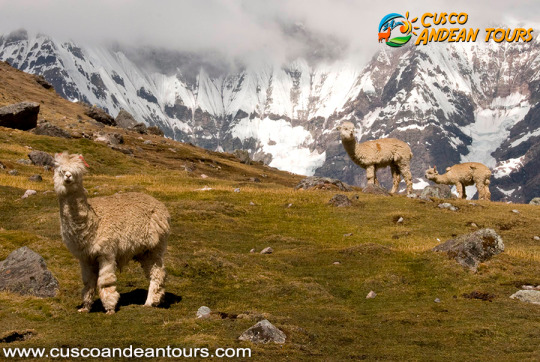
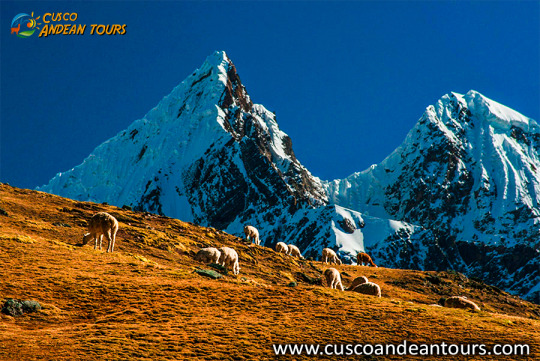
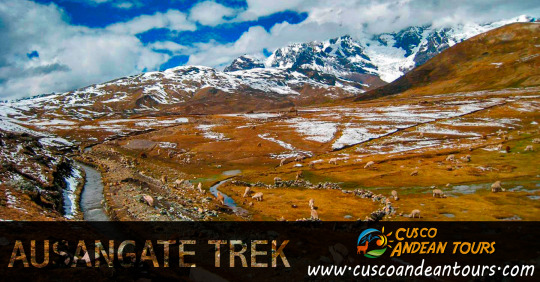
After breakfast, we will spend some time visiting the Tinki public school and will have the chance to meet the children of the neighboring communities that study at this place. Then We then leave Tinki and start a 2,5h walk towards Pacchanta (4100m/13448ft), where we stop for lunch. Pacchanta is a rural community that boasts some well-known hot springs where we can enjoy a nice dip, offering awesome views of Ausangate Mountain. In the afternoon we follow our trek through a slight climb up the Pacchanta valley, having the chance to spot llamas and alpacas, until we reach the beautiful Qomercocha lagoon where we set our camp and have dinner. Our campsite will be set in a spectacular spot with amazing views of Ausangate. RAINBOW MOUNTAIN AND AUSANGATE ROUTE INFORMATION
DAY 3: QOMERQOCHA LAGOON TO YANAMAYO
We leave Qomercocha lagoon around at 7.00 am and continue on towards the first mountain pass of our trek, the Abra Q´ampa at 5000m/16400ft, which we will reach after about 4h. then We will descend towards the Ticllaqocha Lagoons, a beautiful group of little turquoise lagoons next to which we have lunch. In the afternoon we continue our hike for an additional 2-3h until we reach Yanamayo where we set our camp in an impressive valley overlooked by the impressive Tres Picos.
DAY 4: YANAMAYO TO CONDORPASO
We leave camp and start a gradual climb up toward Yanaqocha or “Black Lagoon” its name being due to the dark color of its waters. We will go over Yanaqocha mountain pass (5050m/16564ft) to then discover a surprisingly beautiful valley with an explosion of colored mountains, three spectacular lagoons and the presence of llamas and alpacas, which we will cross to head towards our next mountain pass (5100m/16728ft). From this point, an additional hour of hike leads us to Condor pass, our next campsite, located very close to the mountain pass of the same name which will be our challenge for the next day. AUSANGATE TREK CLASSIC INFORMATION
DAY 5: CONDOR PASS TO SOURCE OF SIBINACOCHA LAGOON
After breakfast, we continue on a gradual climb up the valley that takes us to the mountain pass Abra del Condor (5200m/17056ft) after an approximated two hour walk. We have spectacular views of the Vilcanota mountain range and the Sibinacocha Lagoon, our next milestone, where can see wild vicuñas. Immediately. we continue our hike for 3 hours, crossing another mountain pass on the way and then descending into the valley of the Sibinacocha Lagoon’s source. We will camp next to the lagoon and very close from its source. The lagoon boasts a wide bio-diversity, where we can see Andean Coots, “Huallatas” or Andean Geese as well as Andean Ducks from our camp.
DAY 6: SOURCE OF SIBINACOCHA LAGOON TO CCASCANA
Today, we depart early to walk along the shores of the Sibinacocha Lagoon for 3h until we reach the Yayamari community, (5500m/18040ft). We then continue accross a pampa where we will most probably see hundreds of llamas, alpacas and hopefully vicuñas, to then follow towards the Abra Ccascana at 5000m/16400ft, which will lead us to the lagoon of the same name, in where we will set our last camp and we may have the chance to spot ¨Huallatas¨ or Andean geese and maybe even flamingos.
DAY 7: CCASCARA TO PHINAYA VILLAGE AND BACK TO CUSCO
After our breakfast, we leave Ccascara to walk for 3 and 30 minutes towards Phinaya. This is a small Andean community with a beautiful little church, where we will have lunch. In the afternoon, we meet our private transport that will drive us back to Cusco, where we expect to arrive after nightfall.
MORE INFORMATION OF AUSANGATE AND SIBINACOCHA
Every year, hundreds of climbers visit the mountain region of Peru. However, there are not many who know the existence of Ausangate, one of the Inca divinities of 6410 meters high.
Located in the vicinity of Cusco, the "mountain of the seven colors" is the fifth highest peak in Peru. Its remote existence of the traditional routes means that few tourists approach its walls and glaciers; However, it is worth visiting for its unique beauty.
During the Inca Empire, the Ausangate embodied one of its most important divinities. Distinction that still lasts; since, the inhabitants that live in the surroundings continue considering it as an unattainable and sacred god.
The moderate difficulty of climbing the mountain and the possibility of living a unique outdoor experience, make the visit to Ausangate a relevant option.
How to get?. Ausangate is located about 100 kilometers southeast of the city of Cusco. Leaving the city by car, the estimated travel time is 3 hours. When you arrive in Chilca, you have to continue walking for another 3 hours, approximately, until you reach this formidable Rainbow Mountain.
For tourists who do not own their own vehicle, there is the possibility of hiring a tour from the city of Cusco. MORE INFORMATION OF AUSANGATE TREK
DAY 1: CUSCO ‐ TINQUI VILLAGE – UPIS HOT SPRINGS
We set off early from Cusco traveling by private van to the small village of Tinqui. We will see the impressive mountain range of Vilcanota and pass through several traditional Andean villages en route and take time to stop to take some photos. When we arrive at Tinqui (our trailhead), we will have a delicious breakfast prepared by our master chef. Then our horsemen will arrange all the group gear and packs on the horses and our trek officially begins. We begin our walk through farming communities and enjoy the breathtaking views of the mountains. We will walk for around 3 hrs and then its time for a lunch stop. After lunch we continue for another 2 hours to reach Upis (4,100 m / 13,448 ft). There we will have the opportunity to soak in the local hot springs before dinner, and camp for the night.
DAY 2: UPIS ‐ ARAPA PASS – PUCACOCHA
After a big breakfast we are ready to leave our camp and get started on our hike for the day. We will climb to the Arapa Pass (4,850 m / 15,908 ft). From this vantage point we will enjoy the contrast between dry desert like hills and breathtaking snow capped views of Mt. Ausangate and Pucacocha. This area also boasts three beautiful lakes with tones of reds, greens, and turquoises (Pucacocha, Hatun Pucacocha, and Qomercocha). Our second campsite is close to Ausangate glacier.
DAY 3: PUCACOCHA – AUSANGATE PASS – MINASNIYUQ PASS – SURINE COCHA
Today, you will be woken up with “room service” (a hot cup of coca tea). This is going to be one of the most beautiful days of the trek. We will see the Rainbow Mountains in the distance. Also, on today´s journey, we will pass through Alccatauri Village. This is where we will see their traditional village life. There are no trees in the area, so there is no wood to make houses or build fires. The residents are extremely enterprising and make their adobe houses out of mud and build fires with nature´s fertilizer, a.k.a. manure. J. The day begins with a 1 ½ hour uphill climb until we reach the Ausangate pass (4,930 m / 16,170 ft). At this pass, we will see red mountains and also have the opportunity to see Vicuñas, chinchillas and alpacas. After we enjoy the pass, we descend for 1 ½ hours until we reach the Alccatauri Village (4,400 m / 14,435 ft). During our time at the village, in return for their generous hospitality, we will give them offerings of coca leaves. This is extremely valuable because this treasurable Peruvian staple can not be grown in this climate. Following this incomparable experience, we will hike a further 30 minutes uphill to our lunch spot at a rustic lodge. After a satisfying lunch, we will begin our voyage uphill to the second pass. After 1 ½ hours, we will follow Llama trail to Minasniyuq Pass. Here we will have our first views of the Rainbow Mountains (5,020 m / 16,469 ft). At this pass, we will make offerings to Pacha Mama (Mother Earth). The remainder of the day´s journey is a 1 hour downhill hike to our camp, Surine Cocha (4,800 m / 15,748 ft). The camp is on the banks of the gorgeous Surine Lake (pictured above).
DAY 4: SURINE COCHA – RAINBOW MOUNTAIN – QUESIUNO VILLAGE – CUSCO
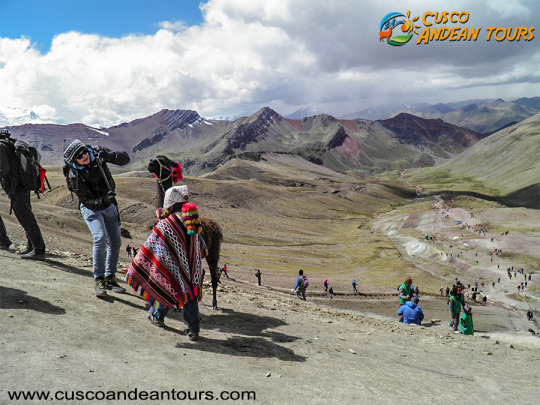
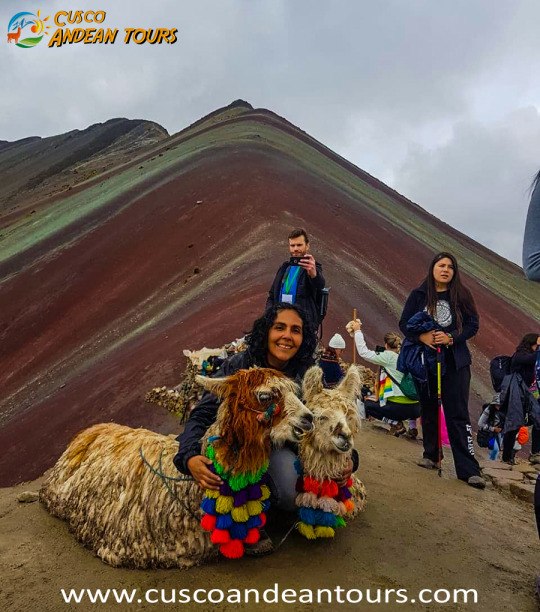
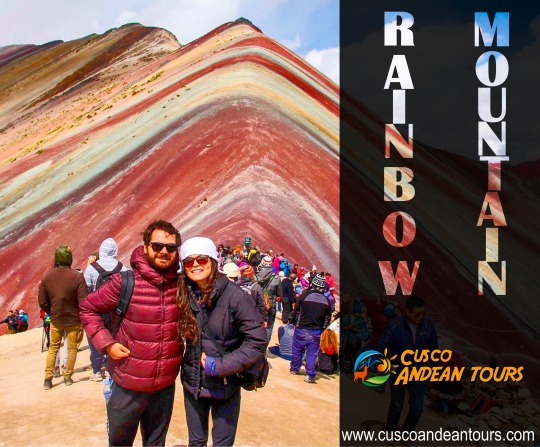
After breakfast we hike gradually uphill for 2 hours until we reach the famous Rainbow Mountain (5,020 m / 16,469 ft). Your guide will walk you to the best spots to get the perfect pictures of these incredible mountains and the other surrounding mountains. Your guide will explain what makes these mountains so unique: they are composed of various minerals, which make different colors of stone striations. Not only is this one of the most stunning places in Peru and South America, these type of mountains are seen in only one other country in the world, China. After taking photos and enjoying the view, we will continue on the trek until we reach Quesiuno Village. This is a 2 ½ hour downhill hike. We will have lunch there. Our private van will be waiting to pick us up in this village after lunch. We will then drive 3 ½ hours back to Cusco. After one of the most rewarding experiences of your life, we will drop you off at your Cusco hotel. Approximate arrival time is 6 PM. RAINBOW MOUNTAIN INFORMATION
For a little over a year, the public was enabled a new path in the Cusco region in Peru, which has gained a lot of popularity quickly.
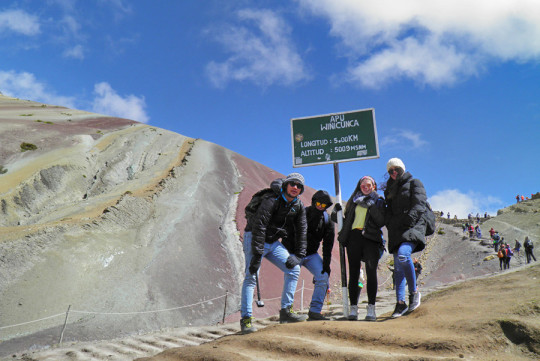
More precisely, in the vicinity of Ausangate Mountain, the fifth highest mountain in Peru, and one of the most important Apus (god) for the Incas. But for now, we will leave Ausangate aside, and focus on this new path, the path to Vinicuna Mountain ... better known as the Rainbow Mountain. Yes, that famous mountain whose photos are circulating on all social networks causing a great fascination. And how could it be otherwise, and to be able to tell you as it should, up to there I went Before, let me clarify that the Rainbow Mountain is not the same as the Hill of the 7 Colors, which is located in Argentina. Due to its similarity, many travelers have renamed it from Rainbow Mountain to Hill or Mountain of the 7 colors. That in itself, its original name has been lost, and almost no one names her as Vinicunca. Some locals even call it "Cerro Colorado."
What is it?
Rainbow Mountain, is a beautiful mountain of the Peruvian Andes whose characteristic is the amount of colors on its surface due to minerals and different types of rock.
Its beauty is on the surface, therefore, it is not allowed to walk on it, for a conservation issue.
To appreciate it in all its splendor, you climb the mountain that faces the Rainbow Mountain.
From where, in addition to seeing the Vinicunca, you can also see breathtaking views of the Ausangate snow, and the entire valley to its surroundings.
INFORMATION OF RAINBOW MOUNTAIN TREK
Guardian of the Cusco region, Ausangate is the fifth highest mountain in Peru with its 6,384 meters high. For centuries it has received many names, the best known being ‘The Roof of the Inca Capital’ and ‘Vinicunca’, which means ‘Cerro de Colores’.
Located in the district of Pitumarca (in the province of Canchis –region of Cusco-, in the south of the country), Ausangate is considered the most important mountain in the Andean worldview. And although it is also one of the most beautiful is one of the least known abroad, always overshadowed by that impressive ‘Wonder of the World’ called Machu Picchu. AUSANGATE TREK PACKAGES: Ausangate Trek 5 Days Ausangate Circuit 7 Days
A walk through these parts constitutes a very special experience, combining the fact of being at such levels with the enjoyment of an outdoor activity and the contemplation of a visual wonder.
How to get? Ausangate is the fifth highest mountain in Peru, its maximum altitude is 6,372 meters above sea level. It is located about 100 kilometers southeast of the city of Cusco. You leave the city in a vehicle, the estimated travel time is 3 hours, when you arrive in Chilca, the 3-hour walk begins towards the mountain of colors (you walk about 4 km ½ approx.). It can be done in a private car or by hiring a tour.
The road to Ausangate is one of the most amazing experiences you can have, enjoy the scenery, be accompanied by birds and native animals during the road is only part of all that this great opportunity offers, you can find yourself, where you will receive the protection and wisdom of what was once sacred to our culture.
About 100 kilometers southeast of Cusco, Peru, there is a rainbow mountain.
It is the mountain of the Seven Colors, also known as Vinicunca or Rainbow.
The pilgrimage in the Peruvian Andes in search of the Snow Star The mountain is located in the Vilcanota Range at 5,200 meters above sea level, in the Pitumarca district.
Its slopes and summits are dyed by stripes of intense shades of fuchsia, turquoise, lavender and gold.
The visual show offered by Vinicunca has attracted visitors since the beginning of 2016, according to Haydee Pacheco, a tourism official at the Municipality of Pitumarca.
In just over two years, travelers who take pictures with the summit went from a few tens to about 1,000 a day, say Peruvian media, despite the cold and altitude of the place. Thanks to its popularity, also driven by social networks, the hill became a common destination in the rankings of tourist attractions in the world.
For example, in August 2017, it appeared on the list of 100 places to visit before dying recommended by travel experts on the Business Insider website.
The tourist boom is quite recent, but the history of the mountain and its colors began millions of years ago.
Minerals The rainbow aspect of Vinicunca is due to "a complex geological history of marine, lake and river sediments," according to a report by the Office of Cultural Landscape of the Decentralized Directorate of Culture of Cusco.
10 rock formations of unsurpassed beauty These sediments, transported by the water that previously covered the area, date between the tertiary and quaternary periods, that is, from about 65 to two million years ago. Over time, the sediments were forming layers (with different grain sizes) that today look like the stripes that attract tourists so much.
The movement of tectonic plates in the area raised these sediments until they became mountains.
5 tourist destinations threatened by excess visitors (and two are in Latin America) Then they acquired their striking colors because of the oxidation of their minerals, exerted by the humidity of the area, and their erosion, explains César Muñoz, a member of the Geological Society of Peru (SGP),
Muñoz and the study of the Office of Cultural Landscape detail the composition of each strip according to its color.
Pink or fuchsia: mixture of red clay, fangolites (mud) and sand. Off-white: sandstone (quartz sand) and limestone. Purple or lavender: marl (mixture of clay and calcium carbonate) and silicates. Red: argillites and clays. Green: clays rich in magnesium ferro (mixture of iron and magnesium) and copper oxide. Yellowish, mustard or golden brown: limonites, calcareous sandstones rich in sulphide minerals (combined with sulfur).
The Mountain of the 7 Colors, is one of the most beautiful attractions that exists in the Inca Trail near the Apu Ausangate, it is said to be a place that offers a new opportunity for everyone who visits it, this belief has its beginning in the saying "If you want to see the Rainbow you have to face the storm" which teaches us that there is always a prize after the effort. The legends that are told 'round of the colors that form this Mountain are really amazing, these stories will continue with us from generation to generation since they are part of our culture and identity. This fantastic place is part of the tourist attractions of the City of Cusco, a trip through the Mountain of Colors or Vinicunca which has an exceptional beauty that seems to have taken all the colors of nature. An extraordinary landscape, a pleasure for the eyes. This beautiful also houses an impressive flora and fauna. So apart from seeing the Rainbow you will appreciate this fantastic nature.
You will appreciate the wonderful views of Ausangate, one of the highest mountains in Peru and the colorful South Valley of Cusco with its extensive lagoons, Andean villages, rivers and streams.
Each person looks for a Rainbow after a somewhat complicated journey, and more if you find it in the Land of the Incas a place full of secrets not yet discovered.
A visit to the 7 Colors Mountain is a wonderful experience that you can live with friends or family.
Machu Picchu,This stunning site situated on a mountain ridge above the Sacred Valley is the best-preserved relic of Inca civilisation and South America’s most popular attraction with an estimated 3,000 people visiting on a typical day.