Mostrando entradas con la etiqueta sacred valley. Mostrar todas las entradas

jueves, 19 de marzo de 2020

INFORMATION OF TOURS IN CUSCO - SACRED VALLEY - MARAS AND MORAY

INFORMATION OF CUSCO


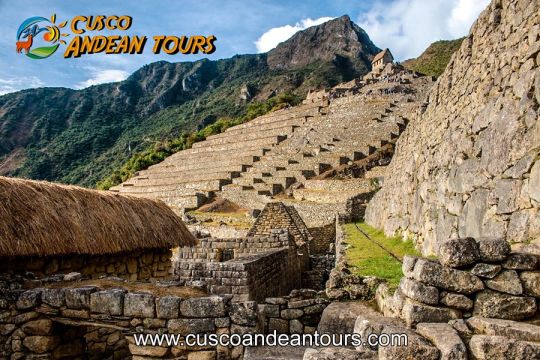
Cusco (Qosqo in Quechua), means navel of the world, and is one of the largest regions of Peru. Its geographical location has allowed it to develop agriculturally, standing out in the cultivation of corn, quinoa, barley, potatoes, tea and coffee. Today Tourism is its main source of income, due to the great archaeological wealth left by the Tahuantinsuyo empire and the passage of the Spanish. It is without a doubt, the city that preserves the most beautiful and important archaeological monuments of Peru and America, among them Macchu Pichu, being in this way the first tourist destination in our country, an important tourist destination for those who come to appreciate the impressive Inca architecture; stone work carried out with originality and perfection. In its surroundings there are many Inca and Colonial archaeological remains such as the Macchu Picchu archaeological site, located 130 km northeast of the city of Cusco, 600 m approx. on the Urubamba river. Inside this Inca citadel a total of 150 houses is calculated; one-room houses, highlighting the solar clock (or Intihuatana), an astronomical observatory that was built in a strategic place in the citadel, from where the Incas could observe the movements of the sun. cusco tours
Among its main archaeological monuments we can mention the fortress of SacsayHuamán, Ollantaytambo, Písac, Kenko, Acllahuasi, the archaeological site of Tambomachay, among other sites of archaeological and tourist importance. Important architectural remains of the colonial style are still preserved from the Spanish past, among them the Cathedral Basilica, the temple and the convent of La Merced, the church of the company of Jesus, the pulpit of San Blas, the churches of Santa Catalina , Santa Clara and San Cristóbal, Santo Domingo, and museums and paintings of the Cusqueña School.

The Sacred Valley for the Incas
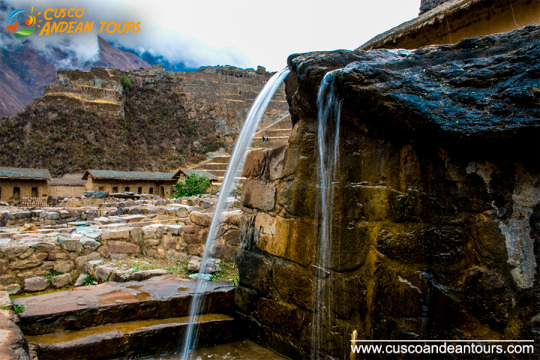


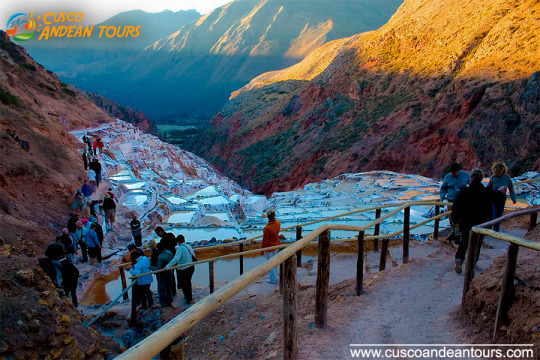
With the river feeding the valley, its fertile lands were one of the main centers of food production during the time of the Incas; some places, like Moray, were even used as agricultural laboratories, to experiment with plant species brought from all over the empire. The Incas cultivated potatoes, white corn, coca, fruits and vegetables, on terraces like those seen in many valley towns specially designed for this purpose. Today the valley produces lucuma, peach, avocado, and one of the best corn kernels in the world.
Sacred Valley Tour
But it was more than just an important agricultural center; the Urubamba river valley, "Willcamayu" for the Incas, was one of the most important elements in the religious cosmology of the Incas. They believed that the flow of the Urubamba was closely linked to the constellations and mountains, they also believed that it was the counterpart of the Milky Way on earth.

Where is the Sacred Valley of the Incas located?

The Urubamba river valley or "Sacred Valley of the Incas" is located 15 km northeast of the city of Cusco, reached by a paved road. A drive to one of the nearest towns will take you around 40 minutes. From there you can move to the other towns in the valley.

What is the climate like in the valley?

The Sacred Valley of the Incas is located 2,800 meters above sea level, 600 meters below Cusco, and enjoys one of the best climates in this region, daytime temperatures vary between 19 ° and 24 ° C. This privileged climate made the Incas take it as their main center of agricultural production, experimentation and research. Today travelers use the valley to acclimatize, before starting their tours of Cusco and Machu Picchu, and without a doubt one of the best ways to avoid altitude sickness.

What to see in the Sacred Valley of the Incas?

Known to the Incas as Willcamayu, the beautiful valley stretches from the town of Pisac to Ollantaytambo, along the Urubamba River. The ancient Inca settlements in these cities are presented as checkpoints, before entering the "Inca trail" that leads to the sacred city of the Incas, Machu Picchu; they are simply amazing, and one of the best previews of what you will see in wonder.

MARAS AND MORAY INFORMATION


What does Moray mean?

The word Moray would have different origins. In the Quechua language (language of the Incas) it means: a territory occupied since ancient times.
Although the origin of the name of Moray is not known for sure, it is presumed that it had to do with the corn harvest called 'Aymoray', or with the month of May named in the same way by the Incas (sowing month in the calendar inca).
Moray is also presumed to come from the name of the dehydrated potato known as the 'moraya' (white chuño). Cusco tours

History

Before the Incas, this part of the Sacred Valley of the Incas was inhabited by the ‘Maras’ and ‘Ayamarcas’ ethnic groups, who occupied a large part of the current territory of the Sacred Valley of the Incas.
After the Inca conquest, the construction of large buildings and platforms began in the territory of the Sacred Valley. Thus, the Moray platforms were built, which were used by the Incas as an important agricultural control center. There the production of the coca leaf was carried out, a plant considered sacred to the Incas.
Investigations do not clearly indicate whether during the colony (from 1532) the Moray platforms were worked. The truth is that it was not until 1932 that the Shirppe Johnson’s expedition flew over the place, discovering the existence of the platforms, then covered by thick vegetation.
During the 20th century, various investigations were carried out on Moray. Perhaps the most valuable of all was made by anthropologist John Earls who established that it was an experimental agricultural center.

How's the weather?

The climate in Moray is dry and temperate. The temperature varies from 21ºC. (69ºF). during the day until 1ºC. (33ºF). at night.
From October to April the rainy season elapses where river precipitation is frequent. From May to September the dry season occurs where rains are not so frequent.
April, May and June are believed to be the best time to visit Moray.

What am I going to see in Moray?

Beautiful landscapes - The set of platforms that make up Moray are visually beautiful to human eyes and, of course, in front of a camera lens. Many people come there to take their picture postcard and post it on their social networks.
Circular platforms - The circular platforms of Moray were a very important place for Inca agriculture. It is believed that it was a center of experimental studies that the Incas used to plant products that, under other conditions, could not be cultivated.
Adventure sports - There are tours to the Moray platforms that include adventure by bicycle or even ATV. These services can be obtained at any tourism agency located in the Historic Center of Cusco.

martes, 28 de enero de 2020

History of the main square of the city of Cusco

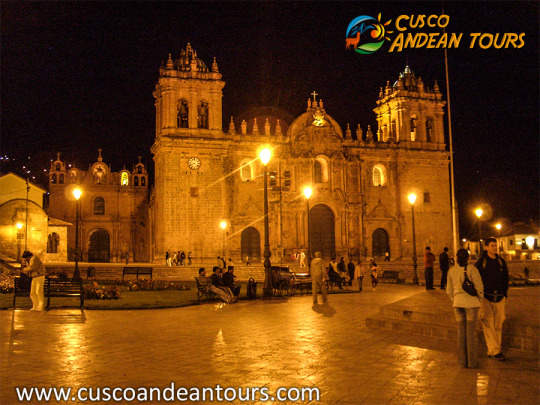
The place where the main square of Cusco is located, was in ancient times a swampy area, which during the time of the Incas was dried and transformed into an administrative, cultural and religious center of the Tahuantinsuyo Empire, after the conquest was occupied by the Spaniards, who surrounded it with temples and residences that were built on buildings and foundations of ancient Inca palaces and constructions; Tupac Amaru II was executed in the main square of the city of Cusco in 1781. It is currently the core of Cusco, and is surrounded by jewelers, travel agencies, tourist restaurants, and the same temples of the period of the conquest, merging the Andean and Hispanic architecture.


Controversy by the name of the main aquare of Cusco
The true Quechua name with which it was called the current main aquare of Cusco, at the time of the Incas, is still unknown. Authors such as María Rostworowski claim that she was called Aucaypata, place of the warrior; Other authors such as Víctor Angles say it was Huacaypata, the place of crying, and others such as the American George Squier (in 1863) say it was called Huacapata, a sacred place.
Víctor Angles, a student of the Inca culture, explains that the square was formed by two sectors: Huacaypata and Cusipata (all coincide in the name of the latter). Both denominations would have a symbolic meaning since the first means place of crying the second means place of rejoicing (at present, that place is still called Plaza Rejoicing). According to Angles, this was due to meditation ceremonies performed by the Inca nobility in the square. These rituals ended in tears. It is currently known as Huacaypata.

Historical review

The place where the main aquare of Cusco is located, was a swampy area dried during the time of the Inca empire, using sand brought from the coasts of the Empire; the drying is initiated by the Inca Sinchi Roca, and was concluded by the Inca Pachacutec. To talk about the main square of
Cusco
is to talk about a place full of history, which was initially a swamp, which over the years, became one of the main tourist attractions of the city of Cusco.
This square was the administrative, cultural and religious nucleus of the capital of Tahuantinsuyo, one of the largest empires in America and the World. With the arrival of the Spaniards, the main aquare was surrounded by temples and mansions, built on the structures of Inca palaces and buildings that existed there.
In this place, José Gabriel Condorcanqui Noguera (Túpac Amaru II) was also executed on May 18, 1781; Eminent character in Peruvian history, who revealed himself against the Spanish invasion. In the current main aquare of Cusco, you can find travel agencies, jewelers, tourist restaurants and temples dating from the colonial era.

The main aquare today

Currently, the main aquare is located in the historic center of Cusco, and is surrounded by tourist shops. The colonial temples built around it remain as such, some of them also function as museums.
The buildings mostly retain some Inca walls fused with the Hispanic architecture of the colony. The importance of the area makes it one of the most expensive in the city. In some cases, renting a store can cost up to $ 1,500 per month. A few years ago, fast-food restaurants like the American company McDonald’s and others like Bembos, KFC and Starbucks opened in the place.
The main square is still the place where many of Cusco's folk festivals are celebrated, such as Santuranticuy, Semana Santa, Corpus Christi, and other more modern ones, such as national holidays, Cusco parties, New Year, etc. It also holds free concerts, some parades of institutions and allegories, as well as political rallies.

viernes, 17 de enero de 2020

THE HISTORY THAT WRAPS TO THE PEOPLE OF PISAC: RUINS THAT KEEP SECRETS

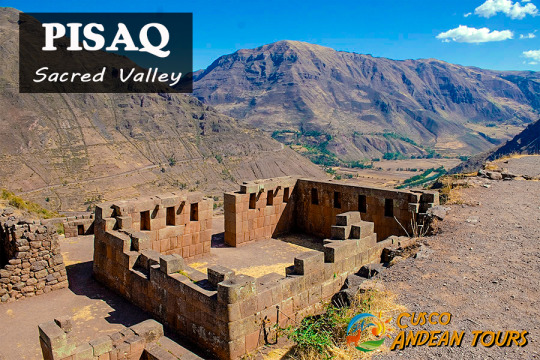
Pisac is a town that is located 30 km from Cusco, where we can find the ruins of the Sacred Valley that are part of one of the most important sites in terms of archeology. Its bases are based on a solid history, built with each piece rich in culture by the Inca communities.


A town with a lot of tradition, an Andean town built on indigenous remains from the time of Viceroy Francisco de Toledo, where you can perceive the culture in its people, traditions such as Quechua masses, cultural festivals, sculptures and archaeological buildings that make part of its charm and even the way crops are carried out with the application of astronomy, a science used in the past by its inhabitants.
Pisac that comes from the word Quechua pisaq or p'isaqaq, which means partridge, the same form that has the area for which it is very characteristic, in addition this term has a special importance, because it refers to spirituality, with the mystical , with the spiritual values ​​that the human being must develop.
This place is very distinctive in the country for its ancient stories that give it a unique value that enhances every part of its ornate houses, in which every detail is appreciated. This iconic town attracts millions of tourists every year for its attractive and cozy space, where we can find from restaurants with typical food, hotels, places where you can buy handicrafts made by the population to the square of Pisac, where there are a variety of things We can buy to take a nice memory. sacred Valley
The legends that have passed through the years are of astonishment and of great importance for those who visit the place, since they do not go unnoticed and always pay attention to emotions and senses.
One of his best-known stories is that of a peculiar statue that tells an Inca legend, in which the town chief named Huayllapuma had a daughter, called Inquill, whom he had to marry the man he could build, in just one night, the bridge over the river Vilacmayo (a bridge of great importance for the defense of the place). Despite the hard task, Asto Rímac (a handsome prince) decided to accept the challenge, and ask for the princess's hand. The authorities of the place arranged everything so that Asto Rímac began the work, while the princess had to climb a hill without turning; because, otherwise, she and her fiance would turn into stone. Almost at dawn, the prince had finished with the work, but Inquill, unable to bear more, turned around and was turned into stone until today.
What makes this place unique and special are its legends, which tell much more than a culture, it is a way of life that has been impregnated in people, in their homes, even in the way they perform different activities.

miércoles, 30 de octubre de 2019

ALL TOURS IN CUSCO TO MACHU PICCHU

CITY TOUR CUSCO

The tour starts at the impressive COLONIAL CATHEDRAL in Cusco that contains over 400 paintings from the Cusquenian School, several altars.
Qoricancha:
Qoricancha is the inkas's main temple , this is a nice place to start learning about inka culture, inkas call this place (golden place), Santo Domingo conventis next to qoricancha, Here is a perfect example of the fusion of Inca and Christian culture.
Sacsayhuaman Archaeological Site:
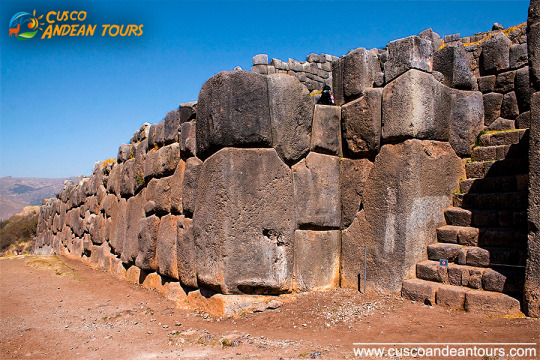
After your tour in the city, we will take the bus and drive to the impresive Inca Sacsayhuaman, where you will be amazed by the rocks used for construction, some of them weigh more than 300 tons and beautiful view of cusco city,
Qenqo Archaeological Site:
The tour continues with the discovery of the underground temple of Qenqo, (labyrinth) with impressive rock carvings and tunnels carved into the solid rock. This religious temple is dedicated to the worship of mother earth and mystical gods..
Puka Pucara Archaeological Site:
After a few minutes ride we will see a small fortress of Puka Pucara (red fortress) used as military control entrance gate to Cusco (inka's capital) .
Tambomachay Archaeological Site:
Walking for few minutes we will arrive at Tambomachay (water temple), temple dedicated to worship the water, fertility and eternal youth.after this amazing tour ,We return to Cusco city at the end of the day around 6:00 pm to 7:00 pm.

SACRED VALLEY

We will go to Pisac where you can see impressive agricultural terraces all over the place. After we will go back to the town of Pisac, where there is a peculiar market that deserves to be visited. At the market you will have free time to walk around and do some shopping. Afterwards we will go to the Urubamba where we have Our Lunch.
After We will go along the Urubamba River towards the town of Ollantaytambo. In there. we will visit the archeological site of Ollantaytambo, an important Inca construction built during the Inca's heydays. This is an extraordinary Inca place where besides the ruins you may also see an amazing rock formation representing the Inca god Wiracocha. On the way to Cusco we’ll visit the picturesque town of Chinchero where we will see the remains of the royal house of Tupac Inca Yupanqui, the beautiful colonial temple with interesting frescoes on the front gate (this place was built on the foundations of an Inca construction). We can also admire the well-preserved Inca walls in the main square of the town.
Finally, we return to the city of Cusco, arriving at around 18:30 h.

Machu Picchu


We will pick up you in the early morning from your hotel and then transfered to the train station in Ollantaytambo, you will take the train to Aguas Calientes, enjoy the train, the landscapes. Then we will arrive to Aguas Calientes, where a representative from our agency will welcome you and then will escort you to the local bus station to catch the bus that goes up to Machu Picchu.
Bus ride to Machu Picchu lasts approx. 30 minutes and it follows a steep winding path, offering spectacular views of the surrounding mountains. Upon our arrival, we will get into the archaeological zone of Machu Picchu and our guide will show us the most important sectors of this great Inka City, such as the great Intiwatana, The Sun Temple, the urban sector, the agricultural sector among others. Machu Picchu was long thought to be legendary.
The guided tour in Machu Picchu will last about 2 hours, and afterwards you will have free time to explore the ruins on your own. MACHU PICCHU TOUR
If you want to climb Huayna Picchu, a very popular climb with spectacular views, we recommend you to book preferably three months beforehand. (There is daily limit of 400 persons per day allowed to climb, so pre-book if you don’t want to miss out. Cost: $25) The round trip walking to the peak of Huayna Picchu is about an hour and a half. It is definitely worth it for the stunning views from the top! As an alternative to the Huayna Picchu climb you can choose to visit Machu Picchu mountain which gives the ancient Inka townsite its name. This is a new option that lets you see Machu Picchu archeological site from the highest peak. It is less crowded so you don’t have to book early. Cost: $25)
After visit this wonder. Depend of your time train tickets, you will take the bus down to Aguas Calientes, where you will have time for lunch and also to explore this colorful town that utterly filled with souvenirs shops, restaurants, bars, internet cafes etc.
In the night, you will take the train from Aguas Calientes to Ollantaytambo. According the time in your train tickets, return to Ollantaytambo, in Ollantaytambo the transfer is going to pick up you at the bus to return to Cusco.