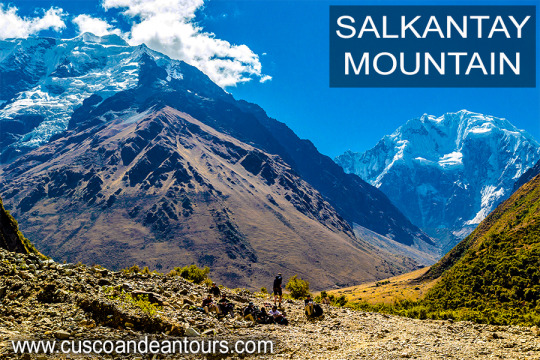
The Salkantay or Salcantay (6,271 m.a.s.l.) is a snowy mountain belonging to the Vilcabamba mountain range. It is the second highest mountain in Cusco after Ausangate (6,384 m.a.s.l.) Its name means wild mountain. Due to its imposing and isolated appearance, it was highly appreciated by the Incas. They put the name ‘Apu’ which means ‘lord’ or ‘sacred’. This snowy mountain was considered one of the most powerful in the region. They worshiped it to the point that they built Machu Picchu in view of its summit. According to the Andean worldview, mountains provided life and decided planting, harvesting and even natural disasters. Because of this, respect and offerings should be given to him. Today, the inhabitants of the Andes continue to consider the mountains as spirits of importance. In Cusco, Salkantay is held in as much esteem as the Incas did. SALKANTAY TREK ROUTE TO MACHU PICCHU INFORMATION
General information
Name: Salkantay Trek.
Kilometers: 72 kilometers approximately.
Climate: minimum of less than 0 ° C in the ‘Abra Salcantay’.
Maximum height: 4,572 m.a.s.l. in the ‘Abra Salcantay’.
Minimum height: 1,800 m.a.s.l. in the town of Santa Teresa.
Difficulty: challenging.
How to do it ?: with a tour or on your own.
When to do it ?: in the dry season (April to October).
Places it covers: Mollepata, Soraypampa, ‘Abra Salkantay’, Chaullay, Santa Teresa, Aguas Calientes and Machu Picchu.
Physical conditions: it is recommended to be in good physical condition.
Recommendations:
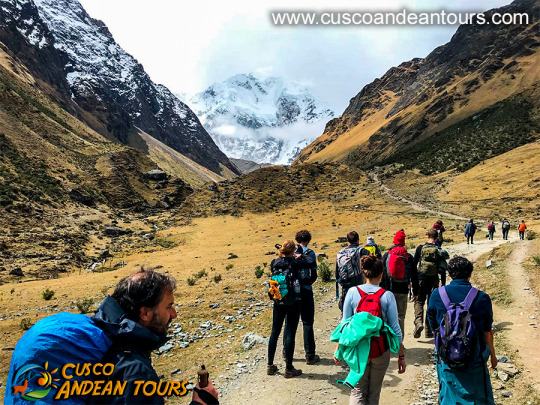
The Salkantay trek is the main hiking alternative to the Inca Trail. More and more tourists are encouraged to arrive at Machu Picchu through this 5-day and 4-night trek through amazing landscapes such as the snowy Salcantay. To fully enjoy this adventure, take into account the following recommendations:
It is possible to do this trek on your own or with a tour. Due to the difficulty of the adventure, it is recommended to do it with a tourism agency. Otherwise, you must have experience in mountaineering.
Perhaps the main drawback to this adventure is the "soroche" or altitude sickness. It is advisable to do a previous acclimatization in the city of Cusco.
Most tourism agencies include the main implements such as tents, food and guide. In case of doing it independently, it is recommended to take everything you need.
The cold at the foot of the snowy Salkantay is perhaps another of the main difficulties. It is recommended to wear thermal clothing.
The rainy season (from October to March) is characterized by the highest probability of river precipitation. It is not a good climate for trekking.
In case you do it on your own, do not forget to book the Machu Picchu Ticket in advance. It is the only way to know the Wonder of the World
Also known as Salkantay, Peru's snowy peak located in the department of Cuzco, it is one of the main elevations of the Vilcabamba Range, an extension of the Eastern Cordillera, a mountainous branch of the Peruvian Andes. It reaches an altitude of 6,271 meters. It has two snowy peaks, known as China Salkantay and female Salkantay, separated by a port that opens to the Santa Ana Valley in the province of Urubamba. Both the mountain pass and the course of the river that is born there are called Salkantay. This river pours its waters into the Urubamba on its left bank. SALKANTAY TREK INFORMATION
The name of this mountain is a contraction that comes from Salga = sullen or wild and Antay produces eyebrows or avalanches. It is usually preceded by the name of Apu, which in Quechua language comes to mean sir, is defined as large mountains that mean something sacred above the valleys. For example, Apu Salkantay in the Vilcabamba mountain range.
For the inhabitants of the Andes, reverence for the apus, sacred mountains, converted into local protectors, did not go unnoticed in time, thus, mountains such as Salkantay, among others that surround it, assume an important role in the Andean worldview. For example, the snow of Waqay Willke (5720 masl), within the traditional symbolism of Andean dual thought, is considered the complement of Salkantay which is one of the most powerful and active deities of the place, it is also appreciated by the inhabitants, the father of all the mountains in the region and even today it is the object of great veneration, so Machupicchu and Choquechurco maintain an intimate visual contact with Salkantay and other snowcaps of the Vilcabamba chain.
The Vilcabamba MOUNTAIN
The sacred and administrative llaqta of Machupicchu is located between important snowfalls of the eastern slope of the Vilcabamba mountain range, «Salkantay, (Humantay Yanantay and Tokorhuay that they surround it) and Waqay Willke »1 whose mountains, object of worship, enable a social cohesion that revolves around its veneration, as these are water providers, vital element, principle of existence in the Andean world, as well as generate fertility in animals, protection of its inhabitants and success in crops.In the cult of the mountains in the area, religious, political and economic factors are involved; important within the process of social development of their communities, the same ones that have been present for centuries, and they are and were very familiar to the Andean inhabitants of all time. The current vision of the inhabitants of the Sacred Mountain (Mollepata, Machupicchu, Santa Teresa, Wayraqmachay, Collpapampa, Totora, Yanama) in force since the time of the Inca society, is shared by Andean peoples, in such a way that the area is known for reverence to the sacred mountains, hardly ignored and that undoubtedly play a vital function over time. SALKANTAY TREK INFORMATION These sacred mountains are located within the delimitation polygon of the Historic Sanctuary of Machipicchu (SHM), declared as such by supreme decree No. 001-81-AA of January 8, 1981, with an area of 32,592 ha. Likewise, in the buffer zone (ZA) of the SHM specified by the head resolution No. 322-2001-INRENA of September 16, 2004, which proposes the extension of the ZA from including continuous immediate hydrographic basins to the SHM area, increasing the air of the ZA of those in force in 71,589 ha to 193,334 ha. Finally, it is also considered within the Vilcabamba-Choquequirao National Archaeological Park, declared by national directive resolution No. 949 / INC, dated October 9, 2002, which resolves: «Approve the Plan for the Delimitation of the National Archaeological Park of Vilcabamba (Choquequirao), Plan No. V-01, dated July 2002, with a area of 522,878.30 hectares and a perimeter of 367.09 kilometers, at a scale of 1: 125,000, located in the provinces of La Convencion, Anta and Abancay, in the departments of Cusco and Apurímac ».
Cusco without a doubt does not cease to surprise us since in it there are the most curious and rare landscapes sometimes we can even say almost interplanetary landscapes such as the mountain of colors place you can know about them here that is the mountain of colors
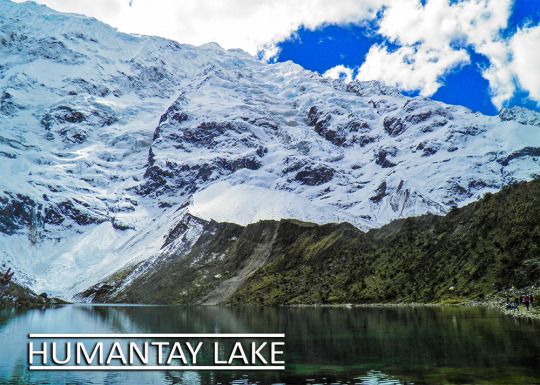
The Humantay lagoon is formed as a thaw product of a large snow that is also part of a mountain range called Vilcabamba mountain range. What makes the Humantay lagoon characteristic is the natural color that it possesses, since it does not have much marine flora in its waters, it has an indescribable color in words, but understandable to the eyes, forming a unique landscape when travelers seek to capture the ideal moment with Its cameras that are so eager to capture landscapes, experiences and moments, all this and more make it an ideal place to visit if you travel to Cusco Peru.
However, the geographical environment of this lagoon is also unique since it serves as the first camp on the Salkantay tour.
HOW TO GET TO LA LAGUNA DE HUMANTAY
Very early in the morning we will embark a 2 and a half hour trip from the city of Cusco to the town of Mollepata, this time is enough to enjoy the Andean landscape and the warm valleys that bring such harmony with them. In this town we can enjoy breakfast, since you will embark again on the bus to travel to the community of Soraypampa.
Soraypampa is the town from which we will depart in the direction of the Humantay lagoon, the only thing that needs to be done is to follow a one-way road, it is possible to say that there is no worry of getting lost since the end of this road is the Humantay lagoon.
The Humantay lagoon witnessed several events made by its own visitors made as hand requests, land payments, ceremonies with Andean masters, coin tossing to conceive a wish and romantic postcards that easily become virilized on social networks thanks to the Unique landscape of this place.
For the return to Cusco we will take the same route not before enjoying a lunch with Andean Novo food as well as the organic products of the area.
Machu Picchu,This stunning site situated on a mountain ridge above the Sacred Valley is the best-preserved relic of Inca civilisation and South America’s most popular attraction with an estimated 3,000 people visiting on a typical day.