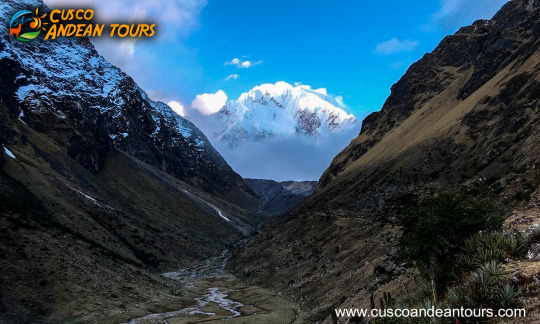
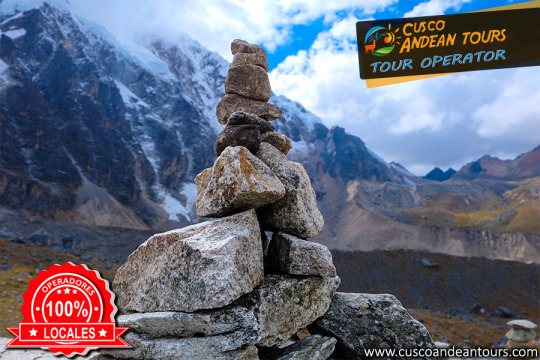
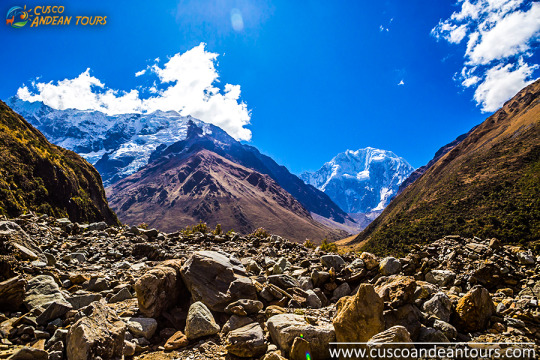
What does Salkantay mean? The Salkantay is a snowy mountain whose name translated from Quechua would mean ‘Wild Mountain’. This summit is known as ‘Apu’ (‘Lord’) for its majesty and elevation.
Where is it located? The pu Apu ’Salkantay is located in the Vilcanota Mountain Range in the Andes of southern Peru. This snow-capped mountain is the second largest in Cusco, after Ausangate (Mountain of the 7 Colors).
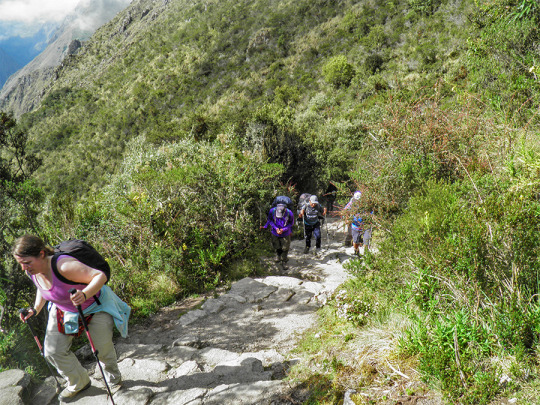
How high is the snowy Salkantay? The snowy Salkantay reaches 6,271 meters above sea level (m.s.n.m.). The trek route that leads to Machu Picchu has its highest point in the ‘Abra Salcantay’, at 4,650 m.a.s.l. From there you can see the peak of the snow-capped mountain.
How's the weather? The snowy in itself presents an extremely cold climate (several degrees Celsius below 0º).
The climate during the Salkantay trek, on the other hand, is varied. The intense sun and the nightly cold in the early days are changed by the tropical environment in the latter.
What is the flora and fauna like? The 5 days and 4 nights of the Salkantay trek cover landscapes with a great variety of flora and fauna. Among the species of flowers and plants, the orchid and the ichu (Andean grass) stand out. Among the species of birds and animals, it is worth mentioning the llama, alpaca, vizcacha, condor, spectacled bear and the cock of the rock (national bird of Peru)
DAY 1: CUSCO - MOLLEPATA - SORAYPAMPA - CHAULLAY
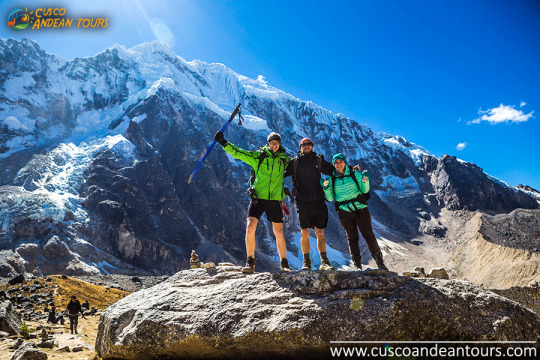
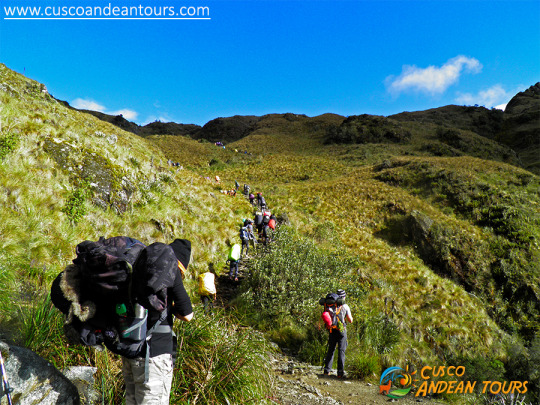
This day we leave Cusco early (about 4am) and drive for approximately 3 ½ hrs to Soraypampa where we will start the hardest day of the whole Salkantay trek 4 days 3 nights. We will be walking 7.5km to the highest point of the trek, enjoying magnificent panoramas of snow-capped mountains on the way. Once we reach the top we will have spectacular views of the sacred mountain, Salkantay. At 6245 metres it is the second highest mountain in the Cusco region. After 2 hours downhill we will have our delicious lunch around 1:00 p.m. in Huayracmachay. Then we continue approximately 3 hours downhill to our camp in Chaullay or Collpapampa (2900 metres) where your tent will be ready and waiting for you with a bowl of hot water for washing up. Then there is time to rest, nap or write. Around 7 p.m. we will have happy hour, dinner. Then we’re off to bed and a well-earned sleep. DAY 2: CHAULLAY - LUCMABAMBA
Around 6.30am, we start with our breakfast before beginning our trek through the high jungle. We cross the Lluskamayo valley and a variety of little brooks to reach La Playa (Sahuayaco) trekking about 6 hours. You will pass through wonderful landscapes and see waterfalls, rivers, beautiful plants and orchids. At La playa (Sahuayaco) we’ll have our lunch and the horses will go back to Mollepata. After lunch and another 30 minutes uphill you will reach our campsite at Lucmabamba. The afternoon is free for you to enjoy our coffee tour or, as an optional extra, take a local van to Santa Teresa to soak in the natural hot spring optional extra. At the end of the day we have our happy hour, dinner and then a briefing for the next day. DAY 3: LUCMABAMBA - AGUAS CALIENTES
We will have our delicious breakfast at 6 am and leave our campsite. After about 5 minutes you will step onto the original Inka Trail, and for the next 3 hours you will follow this historic trail to the summit for your first view of Machu Picchu across the valley. Then we will descend to our lunch spot by the Hydrolectric Station. After lunch we will walk 3 more hours or take a train for 45 minutes to Aguas Calientes where your beautiful hotel and dinner will be waiting for you. DAY 4: AGUAS CALIENTES - MACHU PICCHU!!!
Early morning, after the breakfast at the Hotel, you will go up by walking or you can take the bus to Machu Picchu where you meet with our Tour Guide for a private introductory tour of the Citadel. For the next 2 hours you will learn of the history, the structure and the stories of this important World Wonder. Then you will have free time to take pictures, relax and explore Machu Picchu by yourself. If you have reserved a climb up Huayna Picchu or Machu Picchu Mountain, our Tour Guide show you where you start.
After exploring Machu Picchu, you will walk or take a bus down to Aguas Calientes. There you will collect your luggage at the Hotel and board the train to Ollantaytambo. When you arrive at Ollantaytambo, you will transfer to a van for a ride back to Cusco by van where you will be dropped off at your hotel or hostel.
DAY 1: CUSCO - MOLLEPATA - SORAYPAMPA
We will pick you up from your hotel in Cusco shortly after 4 a.m. to go by private van to Mollepata. This is a spectacular scenic drive through the Anta plains with beautiful and panoramic views across a vast plateau of the majestic Salkantay and other mountains covered with snow. Then marvel at the spectacular winding descent into the Valley of Apurimac River. After 2½ hours we stop in Mollepata to have breakfast and shop for last minute supplies. There will be time for leg-stretching or to use the bathrooms, before continuing to Marcocasa. There we will meet with our support staff. They will load the equipment on horses and mules. Around 8:30 a.m. we will start our trek toward Soraypampa (3900 meters above sea level) if we keep a regular pace we will take 4 hours approximately to reach Soraypampa for lunch at our first campsite. After lunch in the afternoon we have an option to go up to see Umantay Lake a glacial lake below the peak of Salkantay at (4200meters above sea level). This side tour takes 3 hours to hike back and forth from the camp. Alternatively, if we are moving at a slow pace; we will have lunch at halfway between Soraypampa and Marco Casa on our way to Soraypampa. Either way our camp will be at Soraypampa. Sleeping tents will be ready and we will have a warm delicious dinner in the evening. DAY 2: SORAYPAMPA - SALKANTAY PASS - HUAYRAMACHAY – CHAULLAY
In the morning we will wake you up with the coca tea at 5:30 a.m. and we will have a nutritious breakfast around 6 a.m. Today we will start the hardest day of the whole Salkantay trek. We will be walking up to the highest point of the trek. After 7 kilometers uphill through the magnificent landscape of rocky mountains, valleys and flood plain and changing views of Mount Salkantay above us. At the top of the trek we will have spectacular views of the mountains and the imposing snowy peaks of Salkantay (6245) meters above sea level, the second highest mountain of the Cusco region. Then we go 2 hours downhill around 1:00 p.m. to where we will have our delicious Peruvian lunch, in the area called Huayracmachay. Afterward we continue our hike approximately 3 hours downhill to our camp in Chaullay (2900 meters above sea level) or Colcapampa (3000 meters above sea level). The sleeping tents and warm wash water will be ready and waiting for you. Then after a well-earned hot meal we will retire to our tents for a well-deserved sleep. DAY 3: CHAULLAY - COLLPAPAMPA - LA PLAYA - LUCMABAMBA
Around 6.30am, we start trekking through the high jungle crossing the Lluskamayo valley with its rich variety of flora and fauna to reach La Playa (Sahuayaco) after about 6 hours. We will pass through valleys and have wonderful views of waterfalls, tropical fruits and plants. You will taste the famous passion fruit or granadilla. We will have lunch when we arrive at La Playa. After lunch our horses will go back to Mollepata while we go on to Lucmabamba Campsite where we will spend the night. Here you can choose to go on our coffee tour or opt for a bus drive to Santa Teresa to enjoy the natural hotspring it is famous for. (Bus fares and entrance fees to the natural hot spring is not included in this tour), (coffee tour Is included). DAY 4: SANTA TERESA - HIDROELECTRYC - AGUAS CALIENTES
We will have our delicious breakfast at 6 a.m. Then we will walk for about 3 hours up to Llactapata and along the original Inka Trail to Llactapata. From this beautiful archeological site we will be able to see part of Machu Picchu and into the amazing Urubamba valley. Afterwards we have another 3 hours down hill until we arrive to the hydrolectric where we are going to have lunch. Then we will walk for 3 more hours or take a 45 minute train ride to Aguas Calientes to your hotel. After you have settled in we will get together for dinner and a briefing on how to get the most out of your visit to Machu Picchu tomorrow. DAY 5: AGUAS CALIENTES - MACHU PICCHU - OLLANTAYTAMBO - CUSCO
After an early breakfast at the hotel you will walk 1 hour 30 minutes or take bus up to Machu Picchu, so we can be the first ones into Machu Picchu to enjoy the sunrise. You will have a private 2 hour guided tour followed by free time in which you will be able to go on to explore Machu Picchu by yourself. If you have booked the Huayna Picchu in advance climb or the walk up Machu Picchu mountain this is the time for you to set off.
Afterward Machu Picchu you will go back down to Aguas Calientes town to catch the train to Ollantaytambo. There our private van will meet you and take you back to Cusco and drop you off at your hotel or hostel.
Lares is located in the Andes Mountains, in southern Peru. This district of Cusco belongs to the province of Calca. How high is it? Lares is 3,150 meters above sea level (m.s.n.m.). What is the weather like in Lares? The climate in Lares is temperate with cold at night. The average temperature is 11ºC. During the day, the heat can reach 21ºC. At night, temperatures can reach 1ºC. How to get to Lares? Lares is separated from the city of Cusco by 149 kilometers of highway. From this point, it is reached through a car trip that goes through the towns of Pisac and Calca in the Sacred Valley of the Incas. What to see and do in Lares? Lares has several tourist attractions such as:
Lares thermo-medicinal baths. Mantto Falls. The hiking route to Machu Picchu. Lares is famous for being the starting point of the so-called Lares Trek, a route that leads to Machu Picchu on a 4-day, 3-night road.
Is it difficult to do the Lares Trek?
The Lares Trek has a medium difficulty. Compared to the Inca Trail or the Salkantay Trek, this route is less arduous. The only difficulty is altitude sickness, due to trails located in high altitude geographies. When is the best time to do the Lares Trek? The best time to do the Lares Trek is during the dry season (from April to October). In those months, the sky is clearer and there is less chance of rain. Therefore, the roads are in better condition for hiking. How to fight altitude sickness on the Lares Trek? One of the biggest difficulties during the Lares Trek is altitude sickness (also known as 'soroche').
The best way to combat this disease is acclimatizing to the city of Cusco a few days before the trek.
Another option is to drink plenty of water. Coca tea, for example, is a drink based on coca leaf that effectively fights the ailments and symptoms of soroche.
The Incas, as well as the inhabitants of the Andes to this day, chew coca leaves as a remedy for this and other ailments. Is it possible to do the Lares Trek on your own? There is no restriction for a visitor to be encouraged to do the Lares Trek on their own. However, unlike other hikes like the Salkantay Trek or the Choquequirao Trek, the trails are not well signposted, making it difficult to stay on course.
To do the Lares Trek on your own you must understand the route to follow. For this, a good map would be effective. Furthermore, the inhabitants that inhabit this region are mainly Quechua speakers. What to bring to the Lares Trek? The tour services that lead to the Lares Trek include the basic implements such as tents, food and a pack horse. In addition, it is recommended to bring the following:
Sleeping bag.
Trekking poles.
Hat or cap.
Sunscreen.
Warm clothes during the nights.
Light clothing during the day.
Poncho for rains.
Bottle with water
Hiking shoes.
Bath clothes (for Lares thermo-medicinal baths).
Snacks
Photographic camera.
Extra money.
Recommendations during the Lares Trek The Lares Trek is the route that crosses high-altitude landscapes until you reach Machu Picchu. On the route you can see the beautiful landscapes and indigenous peoples with ancestral traditions. For a perfect trip it is recommended:
Acclimatize to the city of Cusco before doing the trek. Thus, the symptoms of altitude sickness will be avoided. It is not necessary to be in optimal physical shape to perform the Lares Trek. However, a little pre-workout before the hike would do. Chewing coca leaf during the tour (as the Incas did hundreds of years ago). Another alternative is to take a pill against soroche before starting the trek. The Lares Trek is a great opportunity to learn about the way of life of the peoples that inhabit the Andes. These people offer their products made from alpaca fiber at lower prices than the stores in Lima, Cusco or other countries.
INCA JUNGLE
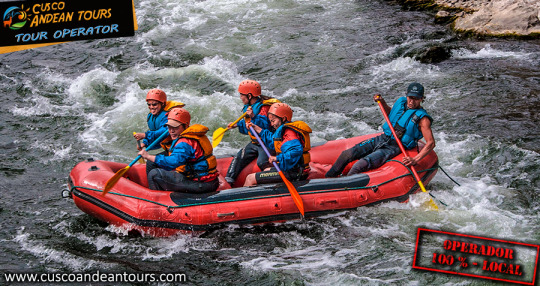
What is the Inca Jungle at Machu Picchu? The Inca Jungle tour is a tour that departs from the City of Cusco and ends in Machu Picchu, after 4 days and 3 nights after performing a series of adventure sports such as: cycling, trekking, canoeing and zip line. The Inca Jungle is one of the most popular tours in Peru. What is the weather like during the Inca Jungle? The climate during the Inca Jungle is varied. The coldest point is in Abra Málaga (average temperature of 9ºC during the day). Then we descend to the tropical climate of the jungle eyebrow. The warmest point is in the town of Santa Teresa (day temperature up to 26ºC). What is the flora and fauna like during the Inca Jungle? The Inca Jungle is characterized by the beautiful landscapes during the tour. Along the way you can see vizcachas, llamas, spectacled bears, cock of the rocks and a wide variety of orchids. In addition, plantations of bananas, mangoes, oranges and more are crossed. Does 4 days seem too long for the Inca Jungle? There is another 3-day service, which accelerates the pace of the walks to reach Machu Picchu earlier. However, the most popular Inca Jungle tour is the one that lasts 4 days. What sports does the Inca Jungle include? The Inca Jungle includes the following adventure sports:
Cycling (included).
Hike (included).
Canoeing (not included).
Zipline (not included).
Who can do the Inca Jungle? The Inca Jungle is available for tourists of all ages. However, the tour is recommended for tourists in good physical shape. Older adults should consult their doctor before the tour. Minors must be accustomed to physical efforts and take the tour in the company of their parents.
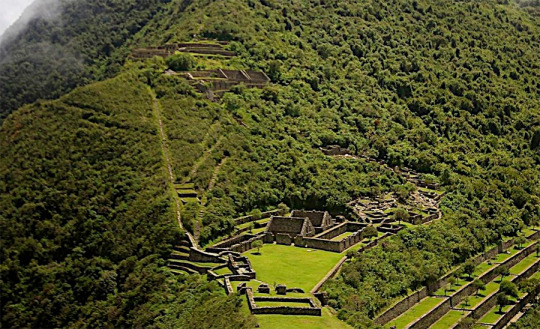
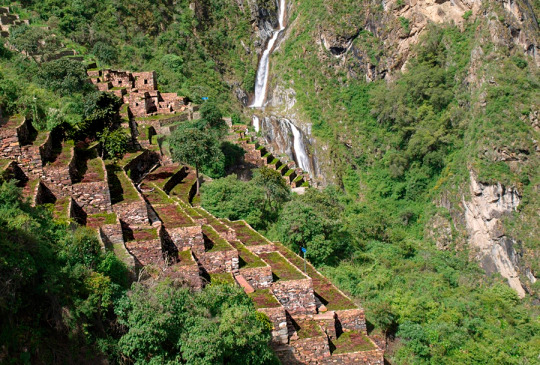
Also known as the sacred sister of Machu Picchu, Choquequirao (which means “Cradle of Gold”) is today the archaeological complex of an ancient, remote and spectacular Inca city, which takes place at the junction of three important rivers and the Salcantay mountain. behind their backs. MORE INFORMATION OF CHOQUEQUIRAO TREK Archeologists estimate that the city has been explored and cleaned between 30% and 40%, estimating that it far exceeds the famous Machu Pichu in size. Chosen by travelers who prefer to avoid the large masses of tourists, or by lovers of hiking and unspoilt nature, this ancient Inca city in southern Peru offers anyone who is encouraged to visit it an unforgettable and unforgettable experience. .
Below you will be able to find the necessary information so that you do not stop adding Choquequirao to the list of places to visit as soon as possible:
How to get to the old city?
To get to Choquequirao it is necessary to take a four-day (preferably guided) walk. In case of doing it on your own, you have to go first to the small town of Cachora.
You can take a bus from Cusco, on a trip that takes about five hours and from this place you can rent mules and a guide, and in this way save a few dollars, which are the ones charged by the tourism agencies that sell the different excursions. The 4-day walk to make the round trip is 3 times more difficult than the famous Inca Trail, and also requires camping or sleeping in one of the towns that serve as stops.
Once there, you must pay the entrance to the park, which costs 60 soles for adults (about $ 18) and 30 soles for minors or students ($ 9). CHOQUEQUIRAO TREK INFORMATION
The Salkantay or Salcantay (6,271 m.a.s.l.) is a snowy mountain belonging to the Vilcabamba mountain range. It is the second highest mountain in Cusco after Ausangate (6,384 m.a.s.l.) Its name means wild mountain. Due to its imposing and isolated appearance, it was highly appreciated by the Incas. They put the name ‘Apu’ which means ‘lord’ or ‘sacred’. This snowy mountain was considered one of the most powerful in the region. They worshiped it to the point that they built Machu Picchu in view of its summit. According to the Andean worldview, mountains provided life and decided planting, harvesting and even natural disasters. Because of this, respect and offerings should be given to him. Today, the inhabitants of the Andes continue to consider the mountains as spirits of importance. In Cusco, Salkantay is held in as much esteem as the Incas did. SALKANTAY TREK ROUTE TO MACHU PICCHU INFORMATION
General information
Name: Salkantay Trek.
Kilometers: 72 kilometers approximately.
Climate: minimum of less than 0 ° C in the ‘Abra Salcantay’.
Maximum height: 4,572 m.a.s.l. in the ‘Abra Salcantay’.
Minimum height: 1,800 m.a.s.l. in the town of Santa Teresa.
Difficulty: challenging.
How to do it ?: with a tour or on your own.
When to do it ?: in the dry season (April to October).
Places it covers: Mollepata, Soraypampa, ‘Abra Salkantay’, Chaullay, Santa Teresa, Aguas Calientes and Machu Picchu.
Physical conditions: it is recommended to be in good physical condition.
Recommendations:
The Salkantay trek is the main hiking alternative to the Inca Trail. More and more tourists are encouraged to arrive at Machu Picchu through this 5-day and 4-night trek through amazing landscapes such as the snowy Salcantay. To fully enjoy this adventure, take into account the following recommendations:
It is possible to do this trek on your own or with a tour. Due to the difficulty of the adventure, it is recommended to do it with a tourism agency. Otherwise, you must have experience in mountaineering.
Perhaps the main drawback to this adventure is the "soroche" or altitude sickness. It is advisable to do a previous acclimatization in the city of Cusco.
Most tourism agencies include the main implements such as tents, food and guide. In case of doing it independently, it is recommended to take everything you need.
The cold at the foot of the snowy Salkantay is perhaps another of the main difficulties. It is recommended to wear thermal clothing.
The rainy season (from October to March) is characterized by the highest probability of river precipitation. It is not a good climate for trekking.
In case you do it on your own, do not forget to book the Machu Picchu Ticket in advance. It is the only way to know the Wonder of the World
The Inca Trail to Machu Picchu has a significant number of Archaeological Sites, distributed along the route.
Llactapata
Qoriwayrachina
Paucarcancha
Warmiwañuska
Runkurakay
Sayaqmarka
Phuyupatamarka
Wiñaywayna
Intipata
Intipunku
Inca bridges on the Inca Trail
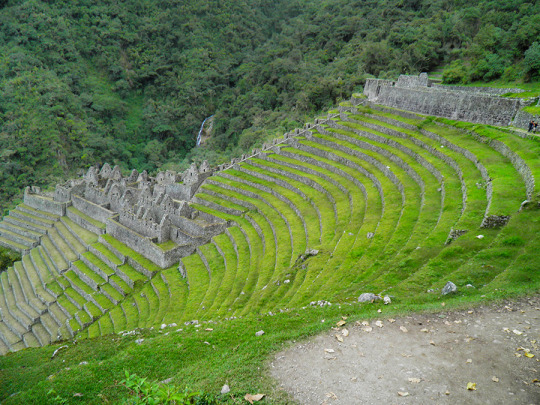
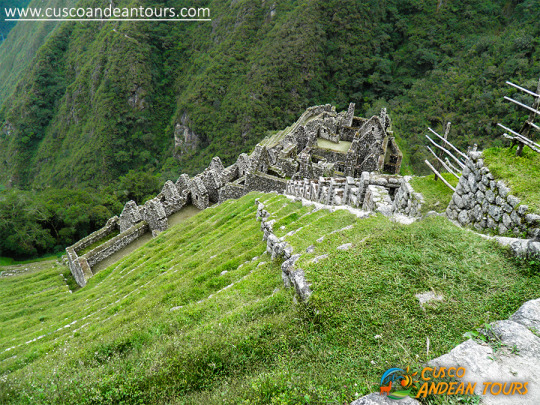
An important site on the route is Wiñaywayna - "Eternamente Joven", it is an archaeological site belonging to the Inca period, built by the Inca Pachacutec, the maximum representative of the Inca Culture, known as the architect of the Inca period. The name corresponds to an orchid that abounds in the place. Wiñaywayna is 2,650 m away. / 8,694 ft. 5 km southeast of the main Llaqta of Machu Picchu. This architectural complex of Wiñaywayna, corresponds to the plan of a small town, are a group of houses grouped together, in a single courtyard, in the manner of the current condominiums. The possible dwelling areas have trapezoidal-style niches and door openings with a single jamb. The monument is surrounded by platforms of different sizes, which responded to the function, either for agriculture or containment to prevent soil erosion. You can notice the structures, the gables for the thatched roofs that were fastened with rings. Likewise, the set of liturgical sources stand out, on a strongly sloped surface, the entire small city is made of granite rock and seen from a high part, clearly, we can notice that it has the same architectural distribution as Machu Picchu. From this place the Inca Trail, is shown almost horizontal, the path gets smoother, they rise up by long stairs that bring us closer to Inti Punku, the entrance door to Machu Picchu. INCA TRAIL TO MACHU PICCHU INFORMATION
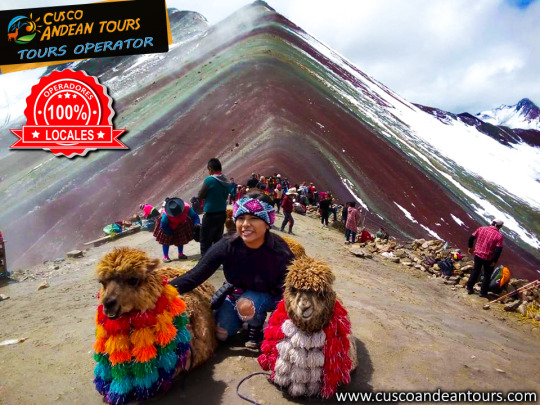
Early in the morning (about 3:30 am,) we will be at your hotel or hostel to pick you up. Please make sure you are ready and waiting in the lobby for our guide or driver who is going to look for you. After youaboard our private transportation, we will drive to Pitumarka where we will have the chance to stop for some picture, relax a little and stretch our legs, there is a small shop where you can buy some snacks or water before start our Rainbow Mountain day hike. After stopping at Pitumarka we will continue until Quesuno. there we will organize everything before starting our Vinicunca hike. Then we will enjoy a delicious local breakfast and start our adventure to the famous Rainbow Mountain. There is 13 km of trekking. Uphill followed by 6 km over flat land that will take us to our goal called Rainbow Mountain or Vinicunca Mountain which is located at 5100 meter about sea level where we will enjoy the spectacular panoramic views across the ancient valleys Ausangate. We will show you a good place to stop and enjoy the flight of the condor and see walk wild Llamas, Alpacas and Vicuñas . After this we will turn back on the same trail, This time it will be easier because most of the trail is easy sailing---downhill! Once we get back to Quesuno, we will have a lunch then we will take our transportation back to Cusco where we will drop you off at you hotel or hostel.
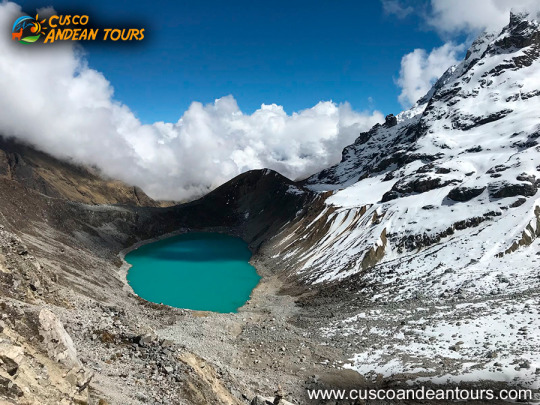
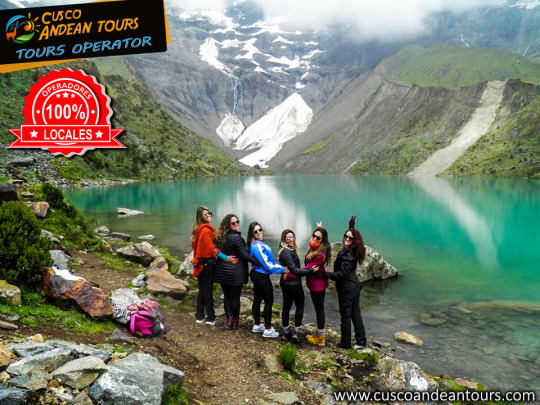
We pick you up from your hotel or hostel between 4:00 to 4:20 in our private transport to go to Mollepata located north of Cusco, we will arrive in 2 hours approximately to this small town. We arrived at Mollepata and enjoyed the delicious breakfast to start our adventure towards Humantay lake. We will continue in our private transport for approximately 1 more hour until Soraypampa which is located at 3900 m.s.n.m. Our guide will give you some recommendations to start the trek to Humantay Lake located at 4200 m.s.n.m. Which is very close to the mountain Salkantay. We start the hike to Humantay Lake for approximately 1 hour and 30 minutes; Enjoying the beautiful views of the snowy mountains Salkantay and Humantay. When we reach Laguna Humantay we will enjoy the beautiful turquoise lagoon. There you will take the best photos. Later you will enjoy a small snack watching the beautiful landscapes, continue the walk back to Soraypampa. In Soraypampa, (optional) people will receive the bike and bicycle equipment and the necessary indications by our guide, so that they begin with the adventure of return until Mollepata. Enjoy the adventure on bikes descending from 4000 m.s.n.m. At 2600 m.s.n.m. For about 2 hours until you reach the town of Mollepata. In the afternoon we will arriving to Mollepata and enjoy a delicious lunch. After lunch we return to Cusco in our private transport. We will arrived in Cusco around 7:00 p.m.; We drop you at your hotel.
Choquequirao is as impressive as Machu Picchu? This ancient Inca city is known as the younger sister of the Wonder of the World. Some tourists who made the 2-day hike to visit it even say that Choquequirao is better. It is true? Learn the truth about this new archaeological site in Cusco, Peru.
MORE INFORMATION OF CHOQUEQUIRAO TO MACHU PICCHU
What is Choquequirao really?
Choquequirao is an Inca urban center with features common to others in Cusco, especially Machu Picchu.
The similarity with Machu Picchu is largely due to the similarity of the geography of the place where the enclosure was built.
According to various investigations, Choquequirao would also be a fortress and a ceremonial center. The truth is that due to its hidden location in a high and distant mountain; It was a strategic point for various purposes.
Over the years, like Machu Picchu, Choquequirao was abandoned and covered by the jungle until its re-discovery.
Unlike Machu Picchu, there is no train or bus to get to Choquequirao. The only way is to do it on foot through 32 kilometers of incredible landscapes.
Day 1: Cusco - Cachora - Playa Rosalina - Santa Rosa
We will pick up you from your Hotel at 5.00 am in our private transport and drive towards Cachora (4 hours approx.) the starting point of the trek where we meet our horsemen and horses. Then we start our hike climbing for 2 hours approx. to Capuliyoc where may we enjoy beautiful views of the surrounding mountains. We continue after Capuliyoc, descending for two more hours to Chiquisca and our delicious lunch made by our chef. After lunch we keep going down the mountain until we reach Playa Rosalina campsite. After crossing the Apurimac River we start the climb to Santa Rosa, zigzagging up a steep slope (2 hours approx.) where those who wish may try Cambray the “typical drink” here, made locally from a sugar cane extract. Day 2: Santa Rosa - Archaeological Site of Choquequirao
We will wake up for breakfast and so we can have an early departure from Santa Rosa. Afterwards, we continue our hike slowly climbing for 2 hours approx to Marampata.
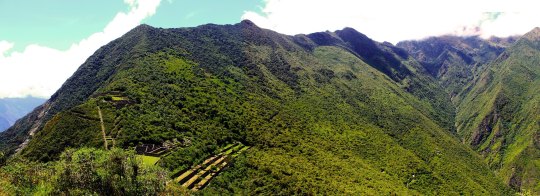
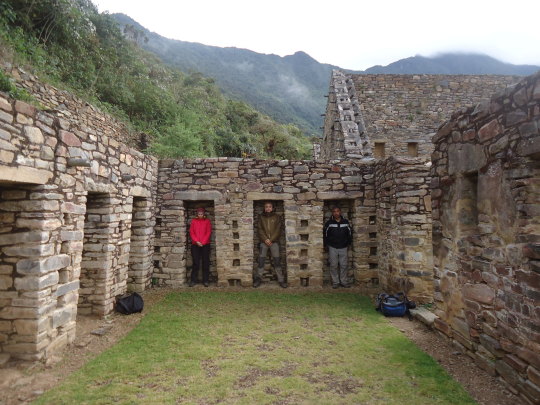
Then we continue to enjoy this day we will dedicate ourselves exclusively to enjoying all the magic of history and splendor of Choquequirao, we will enjoy a complete guided tour of the Choquequirao complex, including a visit to the high parts (Hanan), and the lower parts (Urin). There will be time to know explore the site with its 8 sectors, its barns, houses and temples. You will see the three stages of the excavation of this late Inca-town: the excavated buildings and constructions; the ruins currently in the process of excavation and finally the unexplored areas and terraces with the secrets they may hold of this last refuge of the dying Inca empire. And throughout the day we will keep an eye to the sky for a glimpse of the majestic flight of condors. With luck on the high steep slopes of Chocuequirao, they can pass very close to you. We will enjoy our lunch and then we will return to our Maranpata campsite for rest. Day 3: Choquequirao - Playa Rosalina - Chiquisca
This morning we enjoy our delicious breakfast and start our 1 ½ hour walk back towards Maranpata and a descent to Playa Rosalina for lunch and a some relaxation time. After lunch we climb for 2 hours to Chiquisca campsite where dinner will be waiting for us.
In Chiquisca you can have a shower and eat some exotic local fruits from this area. Day 4: Chiquiska - Cachora - Cusco
We leave camp after breakfast to start the two to three hours climb to Abra Capuliyoc. We will leave Chiquisca campsite early because the sun can be very strong after 10 am, so we plan to to arrive at Capuliyoc by then. Then it is an easy two hours more back to Cachora where we have our lunch. In the afternoon, we met our private transport which will be waiting to take us back to Cusco. Estimated arrival time around 5.00pm.
The Salkantay Trek is one of the beautiful routes that cross the immense mountains of the Andes, and to be able to make this trek you will need all the necessary information to make your trip unforgettable.
On this page you will find useful information about different aspects of the trek in Salkantay such as the location, altitude, degree of difficulty of the trek and the main tourist attractions that we can visit throughout the trek.
This information is constantly and responsibly updated because for us your health and safety is the main concern and the main basis of our services, we hope that all this information is useful to you: Nevado Salkantay location: The Salkantay Snow Mountain, (6272 masl) or also called Apu Salkantay is located north of the city of Cusco, it is the highest mountain range on the eastern flank of the Vilcabamba mountain range. The Quechua name of this snowy mountain means "Wild Mountain" because it is a snowy mountain that is difficult to climb to the top. cusco tours information. How to get to Salkantay: To get to the beginning of our walk we will pick you up from your hotel in Cusco with direction to Mollepata. The journey takes approximately 3 hours to 3 hours and 30 minutes.
Description
Salkantay trek express 4 days, is one of the most popular alternative treks after the classic Inca trail to the Inca citadel of Machu Picchu, in this route you will see one of the most important apus of Cusco.
DAY 1: CUSCO - MOLLEPATA - SORAYPAMPA - CHAULLAY
This day we leave Cusco early (about 4am) and drive for approximately 3 ½ hrs to Soraypampa where we will start the hardest day of the whole Salkantay trek 4 days 3 nights. We will be walking 7.5km to the highest point of the trek, enjoying magnificent panoramas of snow-capped mountains on the way. Once we reach the top we will have spectacular views of the sacred mountain, Salkantay. At 6245 metres it is the second highest mountain in the Cusco region. After 2 hours downhill we will have our delicious lunch around 1:00 p.m. in Huayracmachay. Then we continue approximately 3 hours downhill to our camp in Chaullay or Collpapampa (2900 metres) where your tent will be ready and waiting for you with a bowl of hot water for washing up. Then there is time to rest, nap or write. Around 7 p.m. we will have happy hour, dinner. Then we’re off to bed and a well-earned sleep. DAY 2: CHAULLAY - LUCMABAMBA
Around 6.30am, we start with our breakfast before beginning our trek through the high jungle. We cross the Lluskamayo valley and a variety of little brooks to reach La Playa (Sahuayaco) trekking about 6 hours. You will pass through wonderful landscapes and see waterfalls, rivers, beautiful plants and orchids. At La playa (Sahuayaco) we’ll have our lunch and the horses will go back to Mollepata. After lunch and another 30 minutes uphill you will reach our campsite at Lucmabamba. The afternoon is free for you to enjoy our coffee tour or, as an optional extra, take a local van to Santa Teresa to soak in the natural hot spring optional extra. At the end of the day we have our happy hour, dinner and then a briefing for the next day. DAY 3: LUCMABAMBA - AGUAS CALIENTES
We will have our delicious breakfast at 6 am and leave our campsite. After about 5 minutes you will step onto the original Inka Trail, and for the next 3 hours you will follow this historic trail to the summit for your first view of Machu Picchu across the valley. Then we will descend to our lunch spot by the Hydrolectric Station. After lunch we will walk 3 more hours or take a train for 45 minutes to Aguas Calientes where your beautiful hotel and dinner will be waiting for you. DAY 4: AGUAS CALIENTES - MACHU PICCHU!!!
Early morning, after the breakfast at the Hotel, you will go up by walking or you can take the bus to Machu Picchu where you meet with our Tour Guide for a private introductory tour of the Citadel. For the next 2 hours you will learn of the history, the structure and the stories of this important World Wonder. Then you will have free time to take pictures, relax and explore Machu Picchu by yourself. If you have reserved a climb up Huayna Picchu or Machu Picchu Mountain, our Tour Guide show you where you start.
After exploring Machu Picchu, you will walk or take a bus down to Aguas Calientes. There you will collect your luggage at the Hotel and board the train to Ollantaytambo. When you arrive at Ollantaytambo, you will transfer to a van for a ride back to Cusco by van where you will be dropped off at your hotel or hostel.
SALKANTAY TREK TO MACHU PICCHU INFORMATION.
One of the main attractions along the route is the ancient network of settlements built in granite rock by the Incas such as Wiñay Wayna and Phuyupatamarca immersed in an overwhelming natural setting. Hundreds of varieties of orchids, multi-colored birds, and dreamy landscapes provide the ideal setting for a route that the walker should walk at least once.
Description of the Inca Trail to Machu Picchu route
Based on the traditional 4-day / 3-night Inca Trail
The total distance of the road is approximately 39.6 km. And begins at km 82 in the place called Pisqacucho. To start the journey you should cross a bridge, then head to the left side through an eucalyptus orchard and start the day calmly.
Almost immediately you will find the archaeological complexes of Q’ente, Pulpituyoc, Kusichaca and Patallaca. From that last point the path will continue along the left bank of the Kusichaca river in the area with the same name where you will not only see the bridge but also find tombs, aqueducts, terraced paths and a canyon. You will continue until you reach the small town of Wayllabamba and Inca aqueducts. It takes around 4 hours to reach 9 km from this point. One will camp there the first night.
The second day is more difficult, because the walker will have to climb up to 4,200 meters, crossing the Warmiwañusqa pass, the first and the highest. If you suffer from "soroche" (altitude sickness) it is best not to stop or descend quickly to the Pakaymayu river valley, where you can camp. This place is 7 km away and it is approximately 8 hours away.
The third day is the longest but the most interesting. You will be ready to visit the most impressive complexes such as Runkuraqay, the second pass at 3,800 meters above sea level, its complex with yellowed niches that perhaps were a small place to rest, guard posts and places for worship after crossing the second step you descend to Yanacocha (The Black Lagoon) and then climb a path with stone steps until you reach another group of buildings which attract the attention of visitors. This point is called Sayaqmarka a pre-Hispanic complex with narrow streets, buildings erected on different levels; sanctuaries, patios, canals and an exterior protective wall. At the top of the buttresses one can see many buildings which lead one to suppose that it was once a temple and an astronomical observatory, which had a permanent water supply and excellent food stores.
Sayaqmarka is a place full of mystery and charm. The approximate distance to Runkuraqay is 5 km. Which takes 2 hours. This complex extends 3,600 meters above sea level. There is a great trail and tunnel through this complex. We recommend camping near the ruins of Phuyupatamarca or 3 km further on in the Wiñay Wayna visitor center, where one can buy food and drinks or use hygienic services. The ruins of Phuyupatamarca are better preserved than we have seen before now.
On the fourth day, which will start around 5:00 a.m., the walker arrives in Machupicchu around 7:00 a.m. after 8 km of walking through the jungle. Follow the indicated route and drink some water at the Wiñay Wayna Visitor Center. The trail is clearly marked but try to avoid getting too close to the edge of the cliff.
Camping in Inti punku is prohibited. You will leave your equipment at the control gate and enjoy the most important monument in this part of the continent. You will have time to visit Machupicchu until noon. Check the train schedule to return to Cusco.
If you plan to stay in the town of Machupicchu (also called “Aguas Calientes”. The distance from the station to the ruined bridge to Machupicchu is 2 km. This takes about 20 minutes down a narrow path, which runs parallel to the line. iron.
Climate and environment
The climate is relatively mild throughout the year, with heavy rains from November to March, dry and hot weather from April to October, which is a recommended time to visit.
The minimum annual temperature ranges from 8 ° to 11.2 ° C. In the months of June, July and August the temperature can often drop below freezing.
The maximum annual temperature varies from 20.4 ° to 26.6 °. The terrain is quite uneven, with several ravines and streams fed by glaciers that eventually pour into the Urubamba River, which crosses the area forming a deep valley that runs through the granite base of Vilcabamba for more than 40 km through a variety of ecosystems.
Landscape of the area
The surroundings are impressive and the balance struck between nature and Inca architecture is astonishing.
The Vilcabamba mountains have wide and high peaks that reach up to 6,000 meters as well as Salkantay and Humantay among others.
The mix of mountains, jungles and valleys create a fantastic world where sunrise and sunset are shrouded in mystery.
Wildlife that exists in the route
It is abundant and varied. The existence of endangered species such as the spectacled bear (Tremarctos omatus), the Andean Cock of the Rocks (Rupicola peruviana), the dwarf deer (Pudu mephistopheles), was one of the reasons for the Peruvian government to decide to declare it a Conservation Unit.
The park includes species such as the cougar, the Andean fox, the river otter, Taruka (Huemul deer), wild cat, ferret, etc. There are birds in Machupicchu such as the Mountain Caracara, hummingbirds, torrent duck, parrots, wild turkey and several small birds with colorful plumages.
There are also reptiles such as the jergón and the coral micrurus snake (lethal for its poison), lizards, toads and numerous fauna of the jungle and the Andes that inhabit the sanctuary. This abundant wildlife makes the Machupicchu sanctuary ideal for tourists and researchers who want to watch or study animals.
Flora to the area
The long natural areas are filled with a variety of forest species, which vary according to habitat. The forest vegetation is represented by trees such as: cedar, romerillo or intimpa, laurel, etc. There are also species such as Ocotea, Pedocarpus, Guarea, Weinmania, Clusia, Cedropia, Cinchena, Eritrina or Pisonay, and oak among others. Decorative plants have made the sanctuary famous. Experts have identified more than 90 species of orchids and various species of begonias and the puya cactus. Most of the area is covered by grasses, shrubs, tree plants. The variety of conditions have created an ideal environment for the growth of diverse plants that goes from the thick jungle like the forest clouds to the highest parts of the mountains.
INFORMATION OF INCA TRAIL TO MACHU PICCHU
DAY 1: CUSCO / CITY TOUR
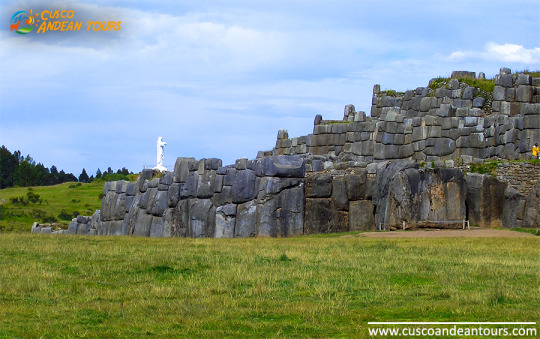
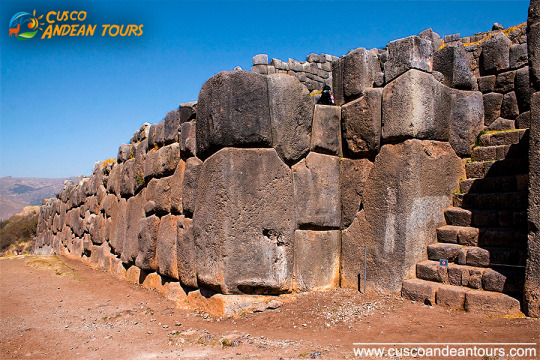
Reception at the airport, transfer to the hotel and you will have a free time available to rest and so avoid altitude sickness. In the afternoon the trip will start with the visit of the Temple Koricancha , The Main Square or Plaza de Armas, The Cathedral and continue to visit the Inca sites: The Fortress Sacsayhuaman the latter side is strategically built on a hill overlooking Cusco and is famous for its enormous carved stones, some of them standing over 9m/30ft tall and weighing over 350 tons, set together whit astounding precision to form the outer walls. Most important Mystical center from Inkas time Qenqo, the military control center Puca pucara and the water temple of Tambomachay. Return to the hotel and free night.
DAY 2: TOUR OF MARAS AND MORAY
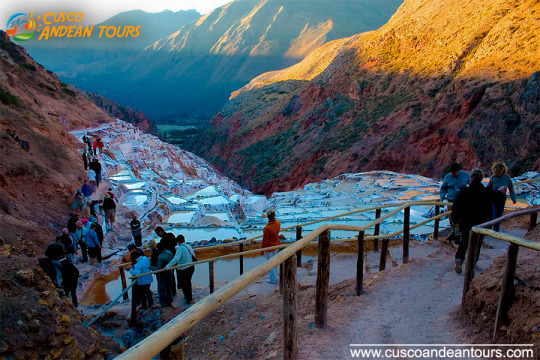
09:00 – 14:00 Tour of Maras (salt mines) and Moray (terraces). Night at hotel in Cusco.
DAY 3: CUSCO/ SACRED VALLEY OF THE INCAS
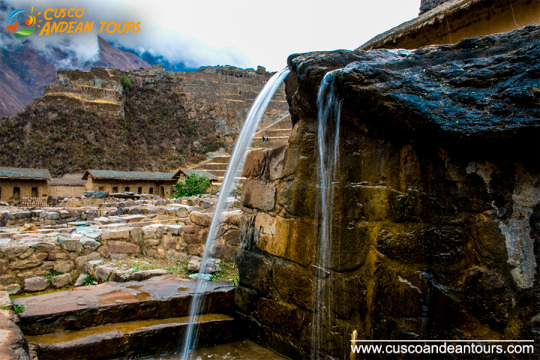
This day we take a trip to the Sacred Valley of the Incas: visit the Pisac Incas built, the colorful Andean market and the church. Then we pass places like Lamay and Calca on the way to arrive in Urubamba town where we stop for lunch. After lunch visit to Ollantaytambo town, where we can see its typical streets, the impressive archaeological constructions and agricultural terracing, not to mention the splendid views over the sacred valley. Finally, visit the picturesque Andean village of Chinchero where the built of the royal hacienda Of Tupac Inca Yupanqui lie. You can admire the well preserved Inca wall in the main square, and visit the beautiful colonial temple. Built on Inca foundations with interesting paintings. Overnight in Cusco
DAY 4: CUSCO / MACHUPICCHU
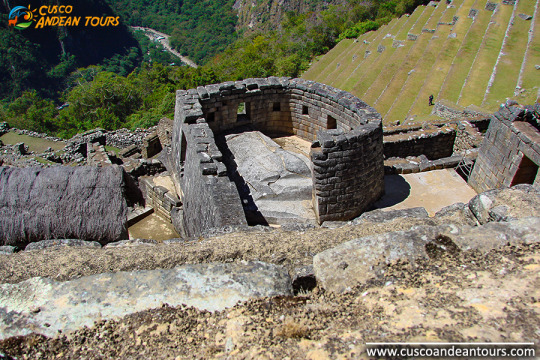
Pick up at the hotel to take the train for a full day tour of the Magical citadel of Machu Picchu, it is 112 Km. from Cusco .During the journey we see the Urubamba canyon, Urubamba River and the show capped peaks of the Veronica Mountain. Arriving in Aguas Calientes we go to Machu Picchu where we visit this wonderful Inca Sanctuary also known as “The lost City of the Incas “one of the best known examples of surviving Inca. After the visit, we come back to Aguas Calientes to take the train back to Cusco.
DAY 5: DEPARTURE FROM CUSCO
We will pick you up from your hotel in Cusco and take you to the airport.
DAY 1: CUSCO / CITY TOUR
Reception at the airport, transfer to the hotel and you will have a free time available to rest and so avoid altitude sickness. In the afternoon the trip will start with the visit of the Temple Koricancha , The Main Square or Plaza de Armas, The Cathedral and continue to visit the Inca sites: The Fortress Sacsayhuaman the latter side is strategically built on a hill overlooking Cusco and is famous for its enormous carved stones, some of them standing over 9m/30ft tall and weighing over 350 tons, set together whit astounding precision to form the outer walls. Most important Mystical center from Inkas time Qenqo, the military control center Puca pucara and the water temple of Tambomachay. Return to the hotel and free night.
DAY 2: CUSCO/ SACRED VALLEY OF THE INCAS
This day we take a trip to the Sacred Valley of the Incas: visit the Pisac Incas built, the colorful Andean market and the church. Then we pass places like Lamay and Calca on the way to arrive in Urubamba town where we stop for lunch. After lunch visit to Ollantaytambo town, where we can see its typical streets, the impressive archaeological constructions and agricultural terracing, not to mention the splendid views over the sacred valley. Finally, visit the picturesque Andean village of Chinchero where the built of the royal hacienda Of Tupac Inca Yupanqui lie. You can admire the well preserved Inca wall in the main square, and visit the beautiful colonial temple. Built on Inca foundations with interesting paintings. Overnight in Cusco
DAY 3: CUSCO / MACHUPICCHU
Pick up at the hotel to take the train for a full day tour of the Magical citadel of Machu Picchu, it is 112 Km. from Cusco .During the journey we see the Urubamba canyon, Urubamba River and the show capped peaks of the Veronica Mountain. Arriving in Aguas Calientes we go to Machu Picchu where we visit this wonderful Inca Sanctuary also known as “The lost City of the Incas “one of the best known examples of surviving Inca. After the visit, we come back to Aguas Calientes to take the train back to Cusco.
DAY 4: DEPARTURE FROM CUSCO
We will pick you up from your hotel in Cusco and take you to the airport.
DAY 1: CITY TOUR CUSCO
We'll be waiting for you at the airport in Cusco on your arrival date , take you to the hotel where you will rest for an hour , you'll have a cup of coca tea and we will pick you up from your Hotel in the afternoon (from 13:30 hrs to 18:30 hrs) to start with the tour around Cusco and outskirts. Tour around Cusco and outskirts: We pick you up from your Hotel to start visiting the following attractives , with aprofessional guide: - The Koricancha Palace andConvent of Santo Domingo Religious center known as "The Temple of the Sun" where you will admire the impressive engineering used in its construction. The Cathedral:Colonial religious monument of extraordinary artistic value. Sacsayhuaman: Located 3 km from the city of Cusco,impressive stone fortress monumental and magnificent architecture, famous for its enormous carved stones,some of which are at9 m/ 30 feettall and weigh of 350 tons. Here is where the Inty Raymi or Fiesta del Sol in June take place every year. Qenqo: Ceremonial and ritual center, amphitheater where sacrifices were made. Puca-Pucara: An old tambo (resting place), monitoring placethroughout the Inka Empire Routes. Tambomachay: At 7 Km. From the city of Cusco,ceremonial center of worship of water , traditionally known as the place of water.Excursiontime: around 5 hours. Frequency : everyday in the afternoons.
DAY 2: MACHU PICCHU TOUR
From 05:45 hrs to 06:00 hrs., we pick you up from your Hotel inCusco (3400 m.a.s.l.) and drive you to the Train Station, located in Poroy, then we get aboard the train and the trip from Cusco starts heading toAguas Calientes (2000 mosl).Our Guide Will be waiting there , he will lead us to the bus station,rising by a zigzag pathfor 30 minutes to the incredible Machu Picchu, known as the lost city of the Incas.Once we get to Machu-Picchu, We'll pass throught the control, where we'll hand in our entrance tickets and where our guided tour will start, visitingthe main square, the Circular tower, the sacred solar clock, the royal rooms, the temple of the three windows and the cementeries, it lasts around two hours. Afterwards you'll be givenenoughtime to have a walk around the citadel and have your meals ,at any restaurant in Aguas Calientes or if you wish atSantuary Lodge (this is not included). In the afternoon, betwen 15:30 hrs and 17:00 hrs we'll return on train to Cusco, we'll be waiting for you at the train station and then we'll take you back to your hotel.
DAY 3: FAREWELL:
We'll be at your hotel at least two hours before your flightleaves to take you to the airport Where you should check your plane ticket and pay the airport tax, we'll see you to the departure launge.
Cusco (Qosqo in Quechua), means navel of the world, and is one of the largest regions of Peru. Its geographical location has allowed it to develop agriculturally, standing out in the cultivation of corn, quinoa, barley, potatoes, tea and coffee. Today Tourism is its main source of income, due to the great archaeological wealth left by the Tahuantinsuyo empire and the passage of the Spanish. It is without a doubt, the city that preserves the most beautiful and important archaeological monuments of Peru and America, among them Macchu Pichu, being in this way the first tourist destination in our country, an important tourist destination for those who come to appreciate the impressive Inca architecture; stone work carried out with originality and perfection. In its surroundings there are many Inca and Colonial archaeological remains such as the Macchu Picchu archaeological site, located 130 km northeast of the city of Cusco, 600 m approx. on the Urubamba river. Inside this Inca citadel a total of 150 houses is calculated; one-room houses, highlighting the solar clock (or Intihuatana), an astronomical observatory that was built in a strategic place in the citadel, from where the Incas could observe the movements of the sun. cusco tours
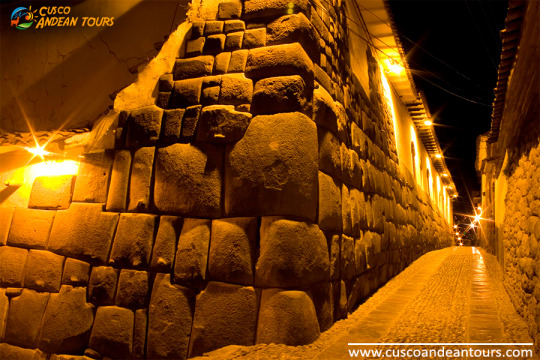
Among its main archaeological monuments we can mention the fortress of SacsayHuamán, Ollantaytambo, Písac, Kenko, Acllahuasi, the archaeological site of Tambomachay, among other sites of archaeological and tourist importance. Important architectural remains of the colonial style are still preserved from the Spanish past, among them the Cathedral Basilica, the temple and the convent of La Merced, the church of the company of Jesus, the pulpit of San Blas, the churches of Santa Catalina , Santa Clara and San Cristóbal, Santo Domingo, and museums and paintings of the Cusqueña School.
The Sacred Valley for the Incas
With the river feeding the valley, its fertile lands were one of the main centers of food production during the time of the Incas; some places, like Moray, were even used as agricultural laboratories, to experiment with plant species brought from all over the empire. The Incas cultivated potatoes, white corn, coca, fruits and vegetables, on terraces like those seen in many valley towns specially designed for this purpose. Today the valley produces lucuma, peach, avocado, and one of the best corn kernels in the world. Sacred Valley Tour
But it was more than just an important agricultural center; the Urubamba river valley, "Willcamayu" for the Incas, was one of the most important elements in the religious cosmology of the Incas. They believed that the flow of the Urubamba was closely linked to the constellations and mountains, they also believed that it was the counterpart of the Milky Way on earth.
Where is the Sacred Valley of the Incas located?
The Urubamba river valley or "Sacred Valley of the Incas" is located 15 km northeast of the city of Cusco, reached by a paved road. A drive to one of the nearest towns will take you around 40 minutes. From there you can move to the other towns in the valley.
What is the climate like in the valley?
The Sacred Valley of the Incas is located 2,800 meters above sea level, 600 meters below Cusco, and enjoys one of the best climates in this region, daytime temperatures vary between 19 ° and 24 ° C. This privileged climate made the Incas take it as their main center of agricultural production, experimentation and research. Today travelers use the valley to acclimatize, before starting their tours of Cusco and Machu Picchu, and without a doubt one of the best ways to avoid altitude sickness.
What to see in the Sacred Valley of the Incas?
Known to the Incas as Willcamayu, the beautiful valley stretches from the town of Pisac to Ollantaytambo, along the Urubamba River. The ancient Inca settlements in these cities are presented as checkpoints, before entering the "Inca trail" that leads to the sacred city of the Incas, Machu Picchu; they are simply amazing, and one of the best previews of what you will see in wonder.
MARAS AND MORAY INFORMATION
What does Moray mean?
The word Moray would have different origins. In the Quechua language (language of the Incas) it means: a territory occupied since ancient times.
Although the origin of the name of Moray is not known for sure, it is presumed that it had to do with the corn harvest called 'Aymoray', or with the month of May named in the same way by the Incas (sowing month in the calendar inca).
Moray is also presumed to come from the name of the dehydrated potato known as the 'moraya' (white chuño). Cusco tours
History
Before the Incas, this part of the Sacred Valley of the Incas was inhabited by the ‘Maras’ and ‘Ayamarcas’ ethnic groups, who occupied a large part of the current territory of the Sacred Valley of the Incas.
After the Inca conquest, the construction of large buildings and platforms began in the territory of the Sacred Valley. Thus, the Moray platforms were built, which were used by the Incas as an important agricultural control center. There the production of the coca leaf was carried out, a plant considered sacred to the Incas.
Investigations do not clearly indicate whether during the colony (from 1532) the Moray platforms were worked. The truth is that it was not until 1932 that the Shirppe Johnson’s expedition flew over the place, discovering the existence of the platforms, then covered by thick vegetation.
During the 20th century, various investigations were carried out on Moray. Perhaps the most valuable of all was made by anthropologist John Earls who established that it was an experimental agricultural center.
How's the weather?
The climate in Moray is dry and temperate. The temperature varies from 21ºC. (69ºF). during the day until 1ºC. (33ºF). at night.
From October to April the rainy season elapses where river precipitation is frequent. From May to September the dry season occurs where rains are not so frequent.
April, May and June are believed to be the best time to visit Moray.
What am I going to see in Moray?
Beautiful landscapes - The set of platforms that make up Moray are visually beautiful to human eyes and, of course, in front of a camera lens. Many people come there to take their picture postcard and post it on their social networks.
Circular platforms - The circular platforms of Moray were a very important place for Inca agriculture. It is believed that it was a center of experimental studies that the Incas used to plant products that, under other conditions, could not be cultivated.
Adventure sports - There are tours to the Moray platforms that include adventure by bicycle or even ATV. These services can be obtained at any tourism agency located in the Historic Center of Cusco.
Machu Picchu,This stunning site situated on a mountain ridge above the Sacred Valley is the best-preserved relic of Inca civilisation and South America’s most popular attraction with an estimated 3,000 people visiting on a typical day.