Mostrando entradas con la etiqueta incajungle. Mostrar todas las entradas

lunes, 27 de abril de 2020

ALTERNATIVE TREK TO MACHU PICCHU - LARES TREK AND INCA JUNGLE

LARES TREK

Lares: where is it located? How high is it?

Where is Lares located?
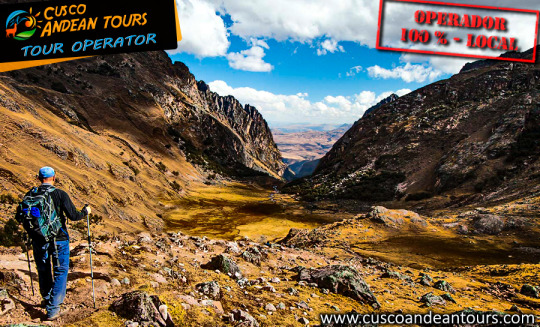

Lares is located in the Andes Mountains, in southern Peru. This district of Cusco belongs to the province of Calca.
How high is it?
Lares is 3,150 meters above sea level (m.s.n.m.).
What is the weather like in Lares?
The climate in Lares is temperate with cold at night. The average temperature is 11ºC. During the day, the heat can reach 21ºC. At night, temperatures can reach 1ºC.
How to get to Lares?
Lares is separated from the city of Cusco by 149 kilometers of highway. From this point, it is reached through a car trip that goes through the towns of Pisac and Calca in the Sacred Valley of the Incas.
What to see and do in Lares?
Lares has several tourist attractions such as:
Lares thermo-medicinal baths.
Mantto Falls.
The hiking route to Machu Picchu.
Lares is famous for being the starting point of the so-called Lares Trek, a route that leads to Machu Picchu on a 4-day, 3-night road.

More about the Lares Trek

Is it difficult to do the Lares Trek?
The Lares Trek has a medium difficulty. Compared to the Inca Trail or the Salkantay Trek, this route is less arduous. The only difficulty is altitude sickness, due to trails located in high altitude geographies.
When is the best time to do the Lares Trek?
The best time to do the Lares Trek is during the dry season (from April to October). In those months, the sky is clearer and there is less chance of rain. Therefore, the roads are in better condition for hiking.
How to fight altitude sickness on the Lares Trek?
One of the biggest difficulties during the Lares Trek is altitude sickness (also known as 'soroche').
The best way to combat this disease is acclimatizing to the city of Cusco a few days before the trek.
Another option is to drink plenty of water. Coca tea, for example, is a drink based on coca leaf that effectively fights the ailments and symptoms of soroche.
The Incas, as well as the inhabitants of the Andes to this day, chew coca leaves as a remedy for this and other ailments.
Is it possible to do the Lares Trek on your own?
There is no restriction for a visitor to be encouraged to do the Lares Trek on their own. However, unlike other hikes like the Salkantay Trek or the Choquequirao Trek, the trails are not well signposted, making it difficult to stay on course.
To do the Lares Trek on your own you must understand the route to follow. For this, a good map would be effective. Furthermore, the inhabitants that inhabit this region are mainly Quechua speakers.
What to bring to the Lares Trek?
The tour services that lead to the Lares Trek include the basic implements such as tents, food and a pack horse.
In addition, it is recommended to bring the following:
  1. Sleeping bag.
  2. Trekking poles.
  3. Hat or cap.
  4. Sunscreen.
  5. Warm clothes during the nights.
  6. Light clothing during the day.
  7. Poncho for rains.
  8. Bottle with water
  9. Hiking shoes.
  10. Bath clothes (for Lares thermo-medicinal baths).
  11. Snacks
  12. Photographic camera.
  13. Extra money.

Recommendations during the Lares Trek
The Lares Trek is the route that crosses high-altitude landscapes until you reach Machu Picchu. On the route you can see the beautiful landscapes and indigenous peoples with ancestral traditions.
For a perfect trip it is recommended:
Acclimatize to the city of Cusco before doing the trek. Thus, the symptoms of altitude sickness will be avoided.
It is not necessary to be in optimal physical shape to perform the Lares Trek. However, a little pre-workout before the hike would do.
Chewing coca leaf during the tour (as the Incas did hundreds of years ago). Another alternative is to take a pill against soroche before starting the trek.
The Lares Trek is a great opportunity to learn about the way of life of the peoples that inhabit the Andes.
These people offer their products made from alpaca fiber at lower prices than the stores in Lima, Cusco or other countries.

INCA JUNGLE

What is the Inca Jungle at Machu Picchu?
The Inca Jungle tour is a tour that departs from the City of Cusco and ends in Machu Picchu, after 4 days and 3 nights after performing a series of adventure sports such as: cycling, trekking, canoeing and zip line.
The Inca Jungle is one of the most popular tours in Peru.
What is the weather like during the Inca Jungle?
The climate during the Inca Jungle is varied.
The coldest point is in Abra Málaga (average temperature of 9ºC during the day). Then we descend to the tropical climate of the jungle eyebrow.
The warmest point is in the town of Santa Teresa (day temperature up to 26ºC).
What is the flora and fauna like during the Inca Jungle?
The Inca Jungle is characterized by the beautiful landscapes during the tour.
Along the way you can see vizcachas, llamas, spectacled bears, cock of the rocks and a wide variety of orchids.
In addition, plantations of bananas, mangoes, oranges and more are crossed.
Does 4 days seem too long for the Inca Jungle? There is another 3-day service, which accelerates the pace of the walks to reach Machu Picchu earlier. However, the most popular Inca Jungle tour is the one that lasts 4 days.
What sports does the Inca Jungle include?
The Inca Jungle includes the following adventure sports:
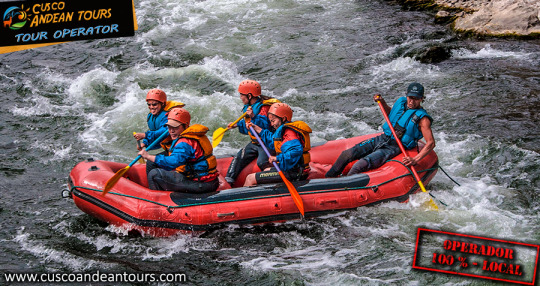

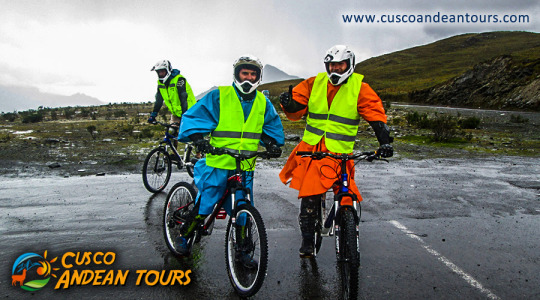
  1. Cycling (included).
  2. Hike (included).
  3. Canoeing (not included).
  4. Zipline (not included).
Who can do the Inca Jungle?
The Inca Jungle is available for tourists of all ages.
However, the tour is recommended for tourists in good physical shape.
Older adults should consult their doctor before the tour.
Minors must be accustomed to physical efforts and take the tour in the company of their parents.

jueves, 7 de marzo de 2019

INCA JUNGLE TO MACHU PICCHU

INCA JUNGLE PHOTO


DAY 1: CUSCO TO SANTA MARIA
We will go to pick you up from your respective hostel. After collecting all the group we will leave Cusco and drive an hour and a half across the spectacular Chinchero plateau and through the Sacred Valley to Ollantaytambo. We will stop at a small local restaurant where you can refresh yourself, get a quick meal or snack, and buy anything you may have forgotten to buy in Cusco. After this we have go back in the bus and drive another hour and a half to Abra Malaga at 4,350 m.a.s.l. There we will provide you all equipment you will need (bike, gloves, elbow pads, knee pads, and helmet), followed by a briefing by our experienced tour guide. Then we mount up for a fun ride all way down hill to Santa Maria at 1,430 m.a.s.l. On the way you will see a lot different landscapes, panoramic views and different micro-climates.We will arrive approximate 4-3 hours, in time for our lunch!
We have a free afternoon to rest or explore the village. As an optional highlight you can choose to join the river rafting tour (100 soles). This will take you on quillabamba river for approximately 2hrs or 25 km and includes class 2 and class 3 rapids.
In the evening you have dinner and sleep in Santa Maria.
DAY 2: SANTA MARIA TO SANTA TERESA
We start with a delicious breakfast and then we prepare for the trekking in the high forest. For that we need some insect repellent and sun cream, and a lot good energies to discover the flora and fauna waiting for us in this expedition. We will pass local plantations on the way to reach the authentic original Inka Trail at the highest point. On the Trail as you view spectacular landscapes and views, you will be trekking into the Inca history. Be warned this is not for people who suffer from vertigo (ask to your guide for especial help or advice to rich 20 minutes of altitude walk)
After leaving the Inka trail we have another one hour and a half to walk in the forest until arrived to Cocalmayo village where we will enjoy our delicious lunch with a local family. Then we have some nap time before trekking on again to arrive in 3 hours at the Cocalmayo Hot Springs. There you can decide with your guide how long you want splash and soak before dinner and sleep in Santa Teresa.
DAY 3: SANTA TERESA TO AGUAS CALIENTES
We will start at around 6 am. After a great breakfast we will get ready to continue walking to Hidroelectrica and then to Aguas Calientes. There is an option in Santa Teresa to do zip line, all participants will be divided into 2 groups - one who booked zip line and the other who did not. Those of you who reserved zip line will be transported to the place where will be organized this activity for about 3 hours approximately . this group will be taken by bus to the area known as the Hidroelectrica. The rest of the group will continue the trek for approx. 3 hrs. more through the valley until reaching the hydroelectric, where the entire group will get together again. Here all of you will have a lunch. After a short break we will continue walking along the train way and enjoying beautiful landscapes. This part will take approx. 3 hrs. We will arrive to the town of Aguas Calientes, around 4 pm. Here, in the hotel with hot water, wi-fi, you will spend the last third night. In the evening we will meet ll together in the restaurant, where will be waiting for you delicious dinner. You will have a briefing with the guide about the fourth day and Machu Picchu.
DAY 4 - MACHU PICCHU / HUAYNA PICCHU TO CUSCO
We will wake up, at 4:00 am, in order to start trekking up the mountain to Machu Picchu in time to catch the sunrise at the top. It will take approximately 1hour and 20 minutes or by the bus up 30 minutes ($.12 USD). Also you have the option to buy your bus ticket one night before if you don’t want this at the last minute. When we first arrive, our guide will take us on a 2 hour tour around the ruins, enlightening us about the ancient City that was once so vibrantly alive, and enriching us with the Inca history. There is much information that our guide can teach us, about all that we have learned about the site archeological site so far.
After the guided portion of the tour, you will have some free time to explore the ruins by your self. If you want to climb Huayna Picchu, a very popular climb with spectacular views, we recommend you to book preferably three months beforehand. (There is daily limit of 400 persons per day allowed to climb, so pre-book if you don’t want to miss out. Cost: $25) The round trip walking to the peak of Huayna Picchu is about an hour and a half. It is definitely worth it for the stunning views from the top! As an alternative to the Huayna Picchu climb you can choose to visit Machu Picchu mountain which gives the ancient Inca townsite its name. This is a new option that lets you see Machu Picchu archeological site from the highest peak. It is less crowded so you don’t have to book early. Cost: $20)
You will need to descend to Aguas Calientes in time to catch the train back to Cusco and Ollantaytambo. You also have the option of staying an extra night in Aguas Calientes, which would allow you more time to explore this remarkable little town with its many markets and restaurants, and you would be able to spend more time in Machu Picchu.
Train from machupicchu to ollantaytambo is about 1 hour 45 minutes, then you need to go out of train station to get bus, after one hour and a half you will be drop in Cusco.