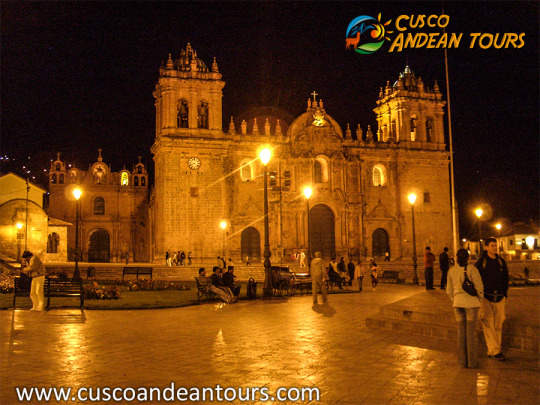
The place where the main square of Cusco is located, was in ancient times a swampy area, which during the time of the Incas was dried and transformed into an administrative, cultural and religious center of the Tahuantinsuyo Empire, after the conquest was occupied by the Spaniards, who surrounded it with temples and residences that were built on buildings and foundations of ancient Inca palaces and constructions; Tupac Amaru II was executed in the main square of the city of Cusco in 1781. It is currently the core of Cusco, and is surrounded by jewelers, travel agencies, tourist restaurants, and the same temples of the period of the conquest, merging the Andean and Hispanic architecture.
Controversy by the name of the main aquare of Cusco The true Quechua name with which it was called the current
main aquare
of Cusco, at the time of the Incas, is still unknown. Authors such as María Rostworowski claim that she was called Aucaypata, place of the warrior; Other authors such as Víctor Angles say it was Huacaypata, the place of crying, and others such as the American George Squier (in 1863) say it was called Huacapata, a sacred place.
Víctor Angles, a student of the Inca culture, explains that the square was formed by two sectors: Huacaypata and Cusipata (all coincide in the name of the latter). Both denominations would have a symbolic meaning since the first means place of crying the second means place of rejoicing (at present, that place is still called Plaza Rejoicing). According to Angles, this was due to meditation ceremonies performed by the Inca nobility in the square. These rituals ended in tears. It is currently known as Huacaypata.
Historical review
The place where the
main aquare
of Cusco is located, was a swampy area dried during the time of the Inca empire, using sand brought from the coasts of the Empire; the drying is initiated by the Inca Sinchi Roca, and was concluded by the Inca Pachacutec. To talk about the main square of Cusco
is to talk about a place full of history, which was initially a swamp, which over the years, became one of the main tourist attractions of the city of Cusco.
This square was the administrative, cultural and religious nucleus of the capital of Tahuantinsuyo, one of the largest empires in America and the World. With the arrival of the Spaniards, the
main aquare
was surrounded by temples and mansions, built on the structures of Inca palaces and buildings that existed there.
In this place, José Gabriel Condorcanqui Noguera (Túpac Amaru II) was also executed on May 18, 1781; Eminent character in Peruvian history, who revealed himself against the Spanish invasion. In the current
main aquare
of Cusco, you can find travel agencies, jewelers, tourist restaurants and temples dating from the colonial era.
The
main aquare
today
Currently, the
main aquare
is located in the historic center of Cusco, and is surrounded by tourist shops. The colonial temples built around it remain as such, some of them also function as museums.
The buildings mostly retain some Inca walls fused with the Hispanic architecture of the colony. The importance of the area makes it one of the most expensive in the city. In some cases, renting a store can cost up to $ 1,500 per month. A few years ago, fast-food restaurants like the American company McDonald’s and others like Bembos, KFC and Starbucks opened in the place.
The main square is still the place where many of Cusco's folk festivals are celebrated, such as Santuranticuy, Semana Santa, Corpus Christi, and other more modern ones, such as national holidays, Cusco parties, New Year, etc. It also holds free concerts, some parades of institutions and allegories, as well as political rallies.
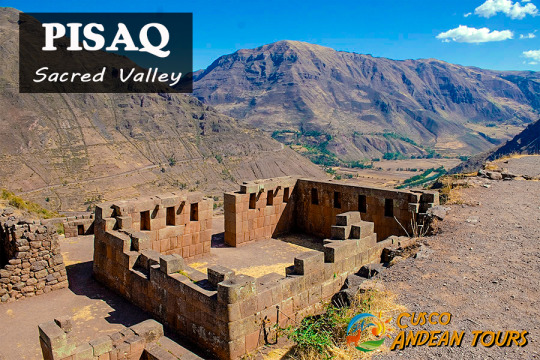
Pisac is a town that is located 30 km from Cusco, where we can find the ruins of the Sacred Valley that are part of one of the most important sites in terms of archeology. Its bases are based on a solid history, built with each piece rich in culture by the Inca communities.
A town with a lot of tradition, an Andean town built on indigenous remains from the time of Viceroy Francisco de Toledo, where you can perceive the culture in its people, traditions such as Quechua masses, cultural festivals, sculptures and archaeological buildings that make part of its charm and even the way crops are carried out with the application of astronomy, a science used in the past by its inhabitants. Pisac that comes from the word Quechua pisaq or p'isaqaq, which means partridge, the same form that has the area for which it is very characteristic, in addition this term has a special importance, because it refers to spirituality, with the mystical , with the spiritual values that the human being must develop.
This place is very distinctive in the country for its ancient stories that give it a unique value that enhances every part of its ornate houses, in which every detail is appreciated. This iconic town attracts millions of tourists every year for its attractive and cozy space, where we can find from restaurants with typical food, hotels, places where you can buy handicrafts made by the population to the square of Pisac, where there are a variety of things We can buy to take a nice memory. sacred Valley
The legends that have passed through the years are of astonishment and of great importance for those who visit the place, since they do not go unnoticed and always pay attention to emotions and senses.
One of his best-known stories is that of a peculiar statue that tells an Inca legend, in which the town chief named Huayllapuma had a daughter, called Inquill, whom he had to marry the man he could build, in just one night, the bridge over the river Vilacmayo (a bridge of great importance for the defense of the place). Despite the hard task, Asto Rímac (a handsome prince) decided to accept the challenge, and ask for the princess's hand. The authorities of the place arranged everything so that Asto Rímac began the work, while the princess had to climb a hill without turning; because, otherwise, she and her fiance would turn into stone. Almost at dawn, the prince had finished with the work, but Inquill, unable to bear more, turned around and was turned into stone until today.
What makes this place unique and special are its legends, which tell much more than a culture, it is a way of life that has been impregnated in people, in their homes, even in the way they perform different activities.
Machu Picchu,This stunning site situated on a mountain ridge above the Sacred Valley is the best-preserved relic of Inca civilisation and South America’s most popular attraction with an estimated 3,000 people visiting on a typical day.