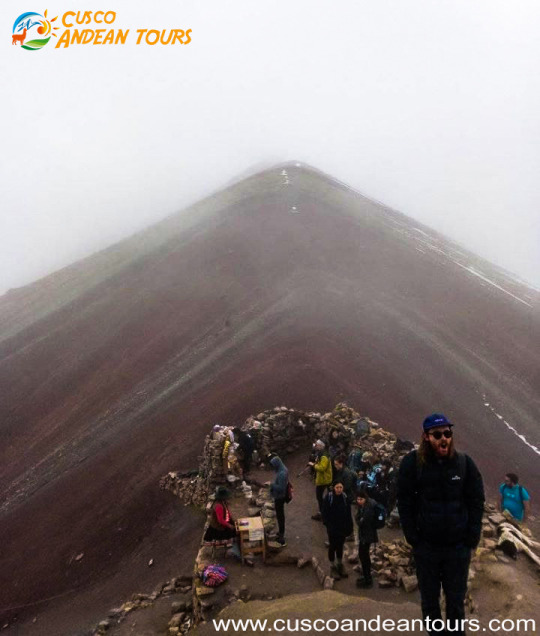
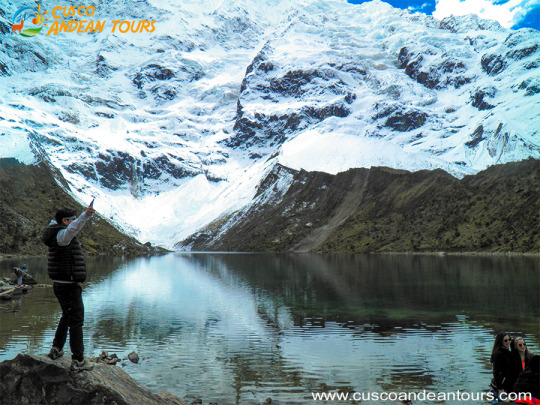
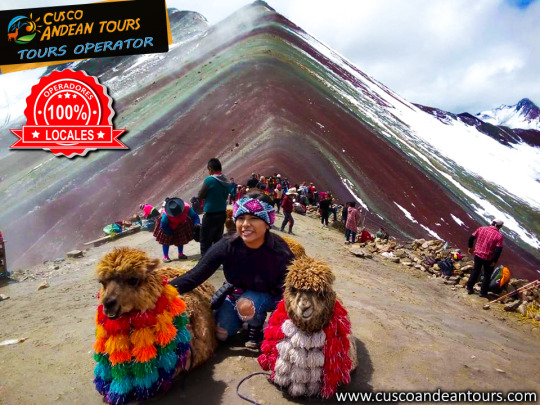
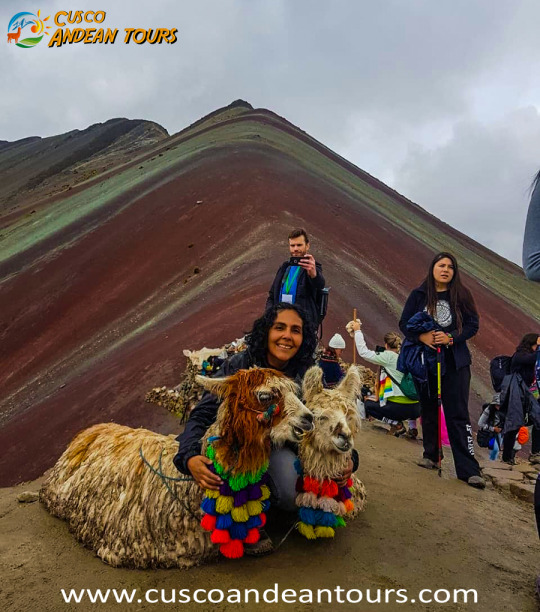
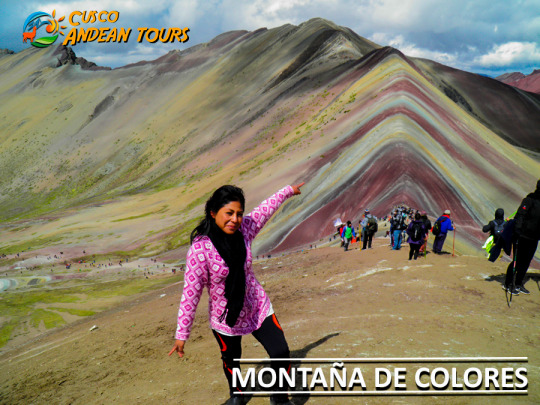
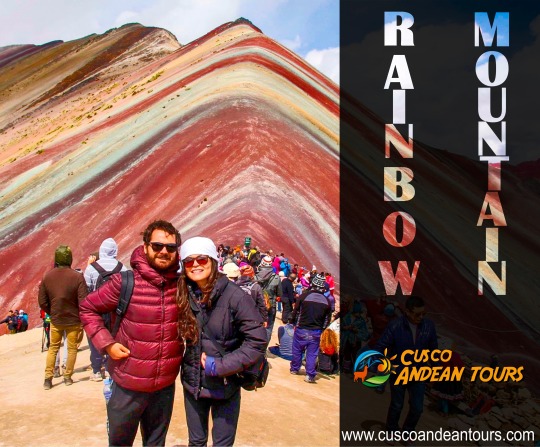
WHAT IS THE HUMANTAY LAGOON? Cusco without a doubt does not cease to surprise us since it contains the most curious and unusual landscapes, sometimes we can even say almost interplanetary landscapes such as the mountain of colors, place that you can know about them here, which is the Rainbow Mountain
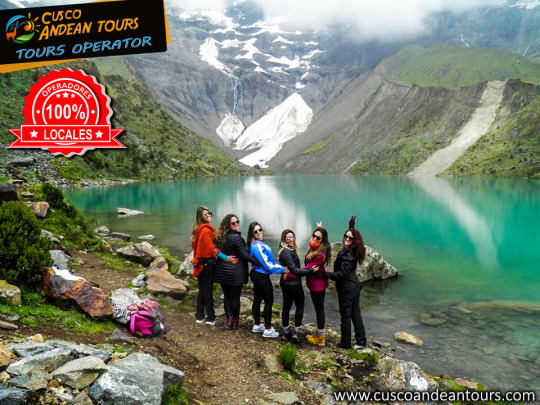
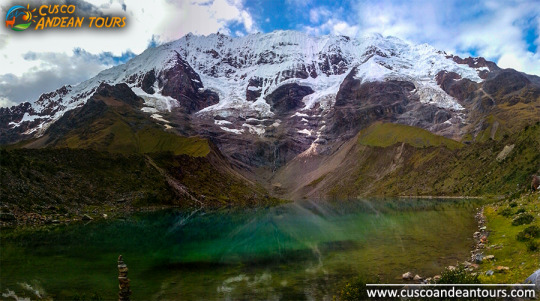
The humantay lagoon is formed as a thaw product of a large snow-capped mountain that in turn is part of a mountain range called the vilcabamba mountain range. What makes the humantay lagoon characteristic is the natural color that it possesses, since it does not have much marine flora in its waters, it has an indescribable color in words, but understandable to the eyes, forming a unique landscape when travelers seek to capture the ideal moment with its cameras that want so much to capture landscapes experiences and moments all this and more make it an ideal place that you must visit if you travel to Cusco Peru. However, the geographical environment of this lagoon is also unique since it serves as the first camp on the Salkantay tour. HOW TO GET TO THE HUMANTAY LAKE
Very early in the morning we will embark on a trip of 2 and a half hours from the city of Cusco to the town of Mollepata, this time is enough to enjoy the Andean landscape and the warm valleys that bring so much harmony with it. In this town we will be able to enjoy breakfast, since you will once again board the bus to travel to the Soraypampa community. Soraypampa is the town from which we will start in the direction of the humantay lagoon, the only thing to do is follow a one-way road, it should be said that there is no concern about getting lost since the end of this road is the Humantay lagoon. The Humantay lagoon witnessed various events carried out by its own visitors, such as requests for hands, payments to the land, ceremonies with Andean teachers, coin tossing to conceive a wish, and romantic postcards that are easily virilized on social networks thanks to the unique landscape of this place. For the return to Cusco we will take the same route there, but not before enjoying a lunch with Novo Andean food as well as the organic products of the area.
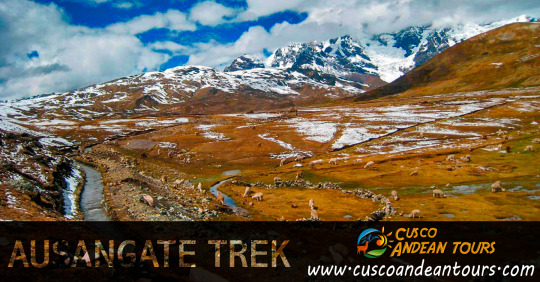
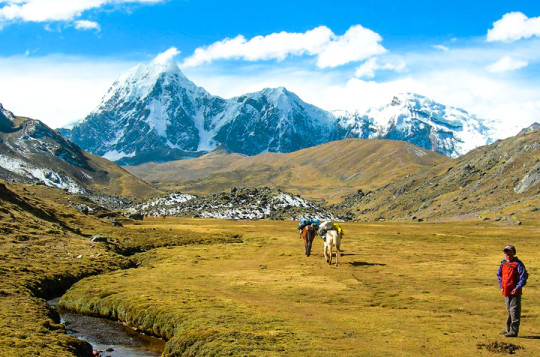
Ausangate Trek 5 days, will take you Ausangate mountain itself is considered a holy mountain by local people and is the deity of Cusco. Since pre-Inca times the mountain has been a place of worship and offerings and this tradition continues today. AUSANGATE TREK ITINERARY:
DAY 1: Cusco - Tinqui - Upis
We depart Cusco early the morning for our three hours ride in private transport to the small village of Tinqui 3800 meters. As Tinqui is located on the new Interoceanic highway. Now we can arrive here much more quickly that in previous years. We pass through beautiful countryside and several traditional villages including Urcos, Cattca and Ocangate. After lunch in Tinqui the first 3 hours on the trail are wonderful prelude to the magnificent scenery of the Vilcanota Cordillera, with great views of Ausangate. We will trek for two more hours until we reach the hot springs at Upis 4400 meters which offer fantastic views of Ausangate at the end of the valley. We will camp here.
DAY 2: Upis - Lake Ausangate Q’ocha
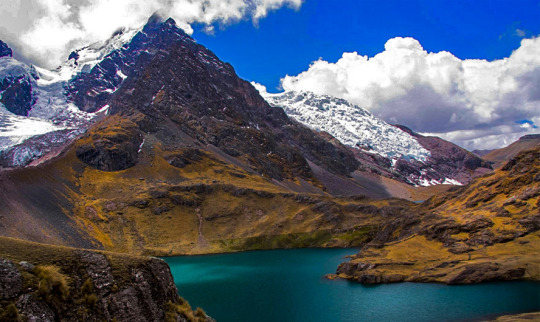
During our morning's trek, we will cross our the Arapa pass 4850 meters. From here, we continue 3 hours and half down the valley, passing the green lake of Puqa Q'ocha until we reach the turquoise Lake Jatun Puqa Q'ocha. We then ascend the second pass of Apuchata 4900 meters with the stunning turquoise blue Laguna Ausangate Q'ocha below. This lake is fed from the melting snow of Ausangate. We will camp here for the second night.
DAY 3: Lake Ausangate Q’ocha - Qampa
From the lake we ascend to the Palomani pass 5,200 meters the highest spot of the trek. From the pass we follow the trail into the valley where we'll rest and have lunch. During the afternoon we can enjoy views of the snowcapped Tres Picos and Puca Punta. We will continue through the broad green valley of Pampa Jutunpata and up the Rio Q'ampa valley. We will spent the third night.
DAY 4: Q’ampa - Pacchanta
After passing through the small community of Q'ampa we will head North west to the last pass of this hike, the Q'ampa pass 5000 meters. We will see several different coloured lakes and lunch beside Q'oma Q'ocha. We hike for several hours before arriving at the small village of Pacchanta. We can soak in the thermal springs for a couple hours, and even have a well-deserved beer! We will set up camp near Pacchanta and you will have the afternoon free to explore this interesting Andean village.
DAY 5: Pacchanta - Cusco
It's 3 hours trek back to Tinqui where we will have time to explore this traditional Andean village before taking our private car back to Cusco, arriving at about 18.00. MORE INFORMATION OF AUSANGATE TREK
What you need to take
Original passport
Insurance card optional.
Hiking water proof boots (with ankle protectors )
Waterproof jacket or rain poncho
Warm jack
Hat and gloves
T-shirts
Comfortable trousers
Rain pants
Sun hat, Bathing suit (for hot springs in santa teresa and Aguas Calientes)
Sun protection cream ( factor 35 recommended ) sun is strong
Insect Repellent 40 % deet ( for mosquitos )
Water bottle
Water purification tablets (Micropur recommended)
Toilet paper
Personal medication
Camera and extra batteries.
Torch with spare batteries (flashlight)
Extra contribution suggested money for tipping porters, cook and guide. and for any emergency.
You can rent in our office:
Walking sticks ($ 20.00 per person) for the entire hike.
Sleeping bag ($ 25.00 per person) for the entire hike.
CHOQUEQUIRAO ROUTE
Description
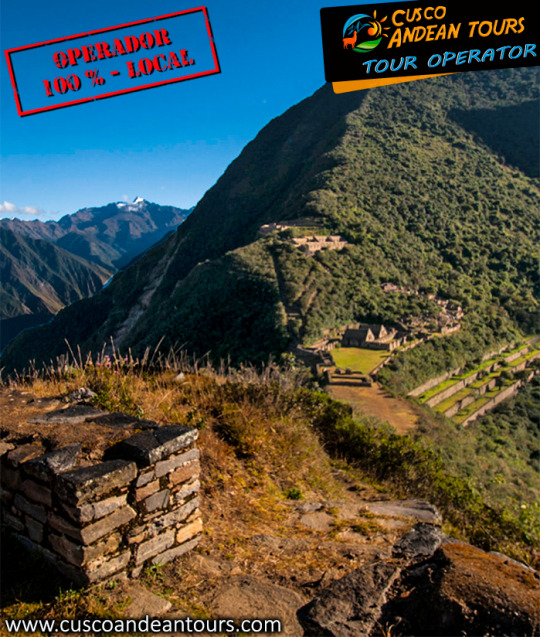
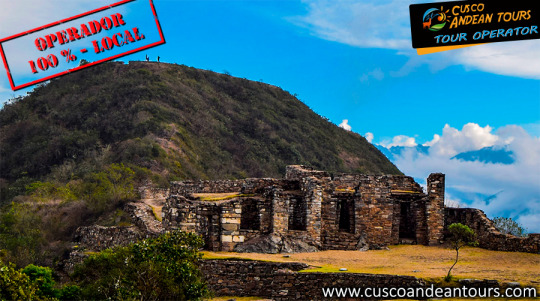
Choquequirao trek classic 4 days, is one of the little crowded routes of Cusco but no less attractive than Machu Picchu, since Choquequirao is considered the Sister Citadel of Machu Picchu.
CHOQUEQUIRAO TREK ITINERARY Day 1: Cusco - Cachora - Playa Rosalina - Santa Rosa
We will pick up you from your Hotel at 5.00 am in our private transport and drive towards Cachora (4 hours approx.) the starting point of the trek where we meet our horsemen and horses. Then we start our hike climbing for 2 hours approx. to Capuliyoc where may we enjoy beautiful views of the surrounding mountains. We continue after Capuliyoc, descending for two more hours to Chiquisca and our delicious lunch made by our chef. After lunch we keep going down the mountain until we reach Playa Rosalina campsite. After crossing the Apurimac River we start the climb to Santa Rosa, zigzagging up a steep slope (2 hours approx.) where those who wish may try Cambray the “typical drink” here, made locally from a sugar cane extract. Day 2: Santa Rosa - Archaeological Site of Choquequirao
We will wake up for breakfast and so we can have an early departure from Santa Rosa. Afterwards, we continue our hike slowly climbing for 2 hours approx to Marampata.
Then we continue to enjoy this day we will dedicate ourselves exclusively to enjoying all the magic of history and splendor of Choquequirao, we will enjoy a complete guided tour of the Choquequirao complex, including a visit to the high parts (Hanan), and the lower parts (Urin). There will be time to know explore the site with its 8 sectors, its barns, houses and temples. You will see the three stages of the excavation of this late Inca-town: the excavated buildings and constructions; the ruins currently in the process of excavation and finally the unexplored areas and terraces with the secrets they may hold of this last refuge of the dying Inca empire. And throughout the day we will keep an eye to the sky for a glimpse of the majestic flight of condors. With luck on the high steep slopes of Chocuequirao, they can pass very close to you. We will enjoy our lunch and then we will return to our Maranpata campsite for rest. Day 3: Choquequirao - Playa Rosalina - Chiquisca
This morning we enjoy our delicious breakfast and start our 1 ½ hour walk back towards Maranpata and a descent to Playa Rosalina for lunch and a some relaxation time. After lunch we climb for 2 hours to Chiquisca campsite where dinner will be waiting for us.
In Chiquisca you can have a shower and eat some exotic local fruits from this area. Day 4: Chiquiska - Cachora - Cusco
We leave camp after breakfast to start the two to three hours climb to Abra Capuliyoc. We will leave Chiquisca campsite early because the sun can be very strong after 10 am, so we plan to to arrive at Capuliyoc by then. Then it is an easy two hours more back to Cachora where we have our lunch. In the afternoon, we met our private transport which will be waiting to take us back to Cusco. Estimated arrival time around 5.00pm. MORE INFORMATION OF CHOQUEQUIRAO TREK What you need to take
Original passport and Student card (ISIC) green card
Insurance card is essential
Hiking water proof boots (with ankle protectors )
Waterproof jacket or rain poncho
Sleeping bag
Warm jack
Hat and gloves
T-shirts
Comfortable trousers
Rain pants
Sun hat, Bathing suit (for hot springs in santa teresa and Aguas Calientes)
Sun protection cream ( factor 35 recommended ) sun is strong
Insect Repellent 40 % deet ( for mosquitos )
Water bottle
Water purification tablets (Micropur recommended)
Toilet paper
Personal medication
Camera and films
Torch with spare batteries (flashlight)
Extra contribution suggested money for tipping porters, cook and guide. and for any emergency (300 soles)
Walking poles ( black diamont or leki brand)
Optional items to take
Short pants
Walking poles (with rubber tips) they can also be hired from us.$15 usd the all trip.
Sleeping bags $20 usd the all trip.
Plaster and bandage.
RAINBOW MOUNTAIN AND AUSANGATE
Description
The Rainbow Mountain (Vinicunca), are stunning and can be seen on the spectacular Ausangate Trek. Ausangate mountain itself is considered a holy mountain by local people and is the deity of Cusco. Since pre-Inca times the mountain has been a place of worship and offerings and this tradition continues today.
RAINBOW MOUNTAIN AND AUSANGATE MOUNTAIN ITINERARY
DAY 1: CUSCO ‐ TINQUI VILLAGE – UPIS HOT SPRINGS
We set off early from Cusco traveling by private van to the small village of Tinqui. We will see the impressive mountain range of Vilcanota and pass through several traditional Andean villages en route and take time to stop to take some photos. When we arrive at Tinqui (our trailhead), we will have a delicious breakfast prepared by our master chef. Then our horsemen will arrange all the group gear and packs on the horses and our trek officially begins. We begin our walk through farming communities and enjoy the breathtaking views of the mountains. We will walk for around 3 hrs and then its time for a lunch stop. After lunch we continue for another 2 hours to reach Upis (4,100 m / 13,448 ft). There we will have the opportunity to soak in the local hot springs before dinner, and camp for the night.
DAY 2: UPIS ‐ ARAPA PASS – PUCACOCHA
After a big breakfast we are ready to leave our camp and get started on our hike for the day. We will climb to the Arapa Pass (4,850 m / 15,908 ft). From this vantage point we will enjoy the contrast between dry desert like hills and breathtaking snow capped views of Mt. Ausangate and Pucacocha. This area also boasts three beautiful lakes with tones of reds, greens, and turquoises (Pucacocha, Hatun Pucacocha, and Qomercocha). Our second campsite is close to Ausangate glacier.
DAY 3: PUCACOCHA – AUSANGATE PASS – MINASNIYUQ PASS – SURINE COCHA
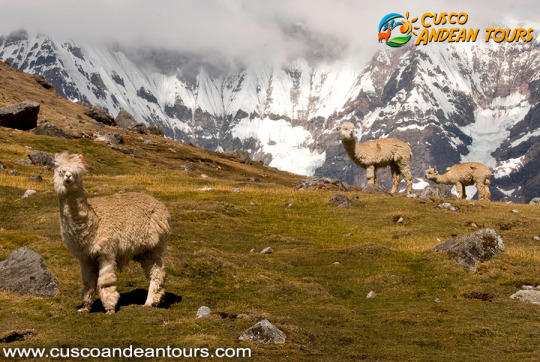
Today, you will be woken up with “room service” (a hot cup of coca tea). This is going to be one of the most beautiful days of the trek. We will see the Rainbow Mountains in the distance. Also, on today´s journey, we will pass through Alccatauri Village. This is where we will see their traditional village life. There are no trees in the area, so there is no wood to make houses or build fires. The residents are extremely enterprising and make their adobe houses out of mud and build fires with nature´s fertilizer, a.k.a. manure. J. The day begins with a 1 ½ hour uphill climb until we reach the Ausangate pass (4,930 m / 16,170 ft). At this pass, we will see red mountains and also have the opportunity to see Vicuñas, chinchillas and alpacas. After we enjoy the pass, we descend for 1 ½ hours until we reach the Alccatauri Village (4,400 m / 14,435 ft). During our time at the village, in return for their generous hospitality, we will give them offerings of coca leaves. This is extremely valuable because this treasurable Peruvian staple can not be grown in this climate. Following this incomparable experience, we will hike a further 30 minutes uphill to our lunch spot at a rustic lodge. After a satisfying lunch, we will begin our voyage uphill to the second pass. After 1 ½ hours, we will follow Llama trail to Minasniyuq Pass. Here we will have our first views of the Rainbow Mountains (5,020 m / 16,469 ft). At this pass, we will make offerings to Pacha Mama (Mother Earth). The remainder of the day´s journey is a 1 hour downhill hike to our camp, Surine Cocha (4,800 m / 15,748 ft). The camp is on the banks of the gorgeous Surine Lake (pictured above).
DAY 4: SURINE COCHA – RAINBOW MOUNTAIN – QUESIUNO VILLAGE – CUSCO
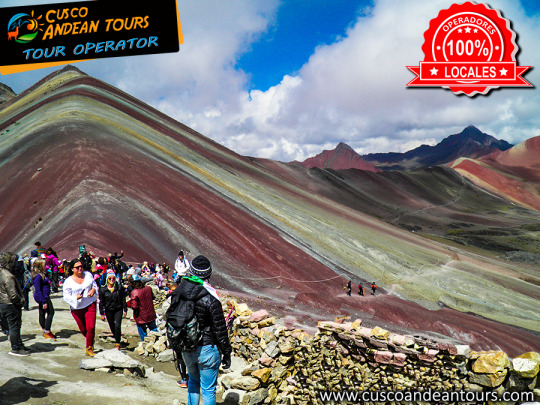
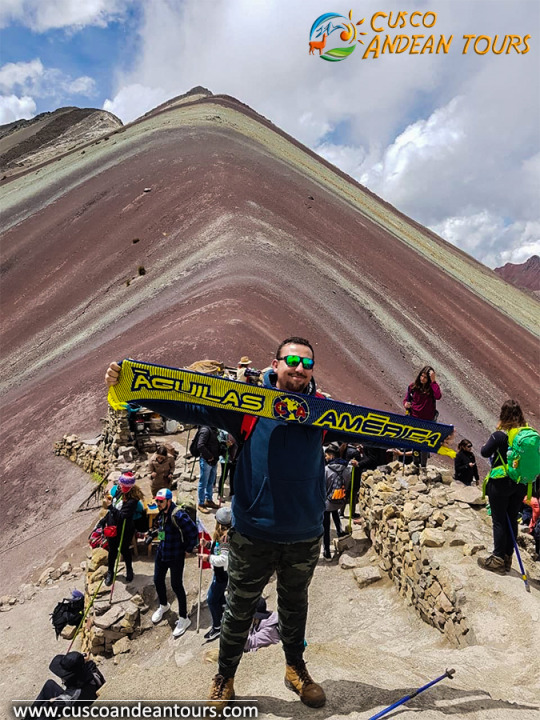
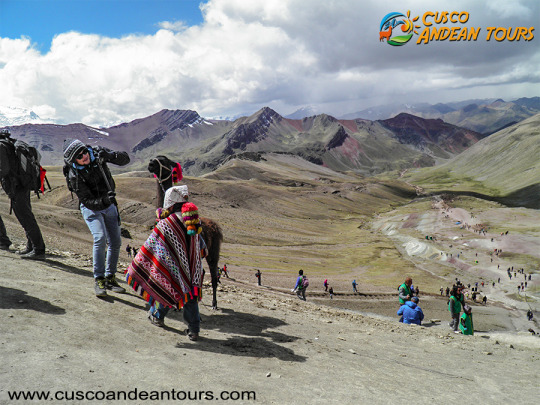
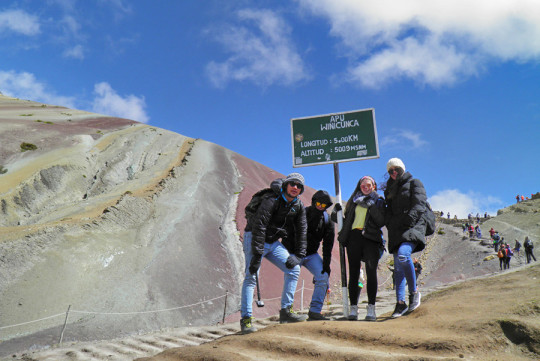
After breakfast we hike gradually uphill for 2 hours until we reach the famous Rainbow Mountain (5,020 m / 16,469 ft). Your guide will walk you to the best spots to get the perfect pictures of these incredible mountains and the other surrounding mountains. Your guide will explain what makes these mountains so unique: they are composed of various minerals, which make different colors of stone striations. Not only is this one of the most stunning places in Peru and South America, these type of mountains are seen in only one other country in the world, China. After taking photos and enjoying the view, we will continue on the trek until we reach Quesiuno Village. This is a 2 ½ hour downhill hike. We will have lunch there. Our private van will be waiting to pick us up in this village after lunch. We will then drive 3 ½ hours back to Cusco. After one of the most rewarding experiences of your life, we will drop you off at your Cusco hotel. Approximate arrival time is 6 PM. What you need to take
A light day pack with a change of clothes for the whole period of the trek - prepare for a vast range of changes in temperature
Rain gear (jacket and pants if available) or rain poncho. Plastic ponchos can be bought for about $1 in Cusco .
Strong footwear, waterproof trekking boots recommended. Extra socks are a must.
Sandals or plastic slip on thongs are also good to give your feet a chance to breath in the evenings if you wish to carry them.
Warm clothes, including jacket, fleeces, gloves, scarf and beanie/touk. Thermal clothing is also recommended, especially for sleeping. * This is a particularly cold trek, you should make sure you have a lot of very warm clothes.
Sleeping bag (we can hire these to you)
Torch/ Flashlight and spare batteries
Camera, batteries (batteries consume more quickly under cold conditions)
Hat or cap to protect you from the sun, rain and cold
Sun block
After-sun cream or hydrating cream for face and body
Toilet paper, pack in & pack out
Snacks: biscuits, energy bars, chocolate, raw fruits, muesli, etc.
Non-disposable canteen (Nalgene type) and water for the first morning.
We advise you to bring water sterilizing tablets in case you collect water from streams.
Your own medical kit with any special medications that you might require, paracetamol, second skin for blisters etc.
Small towel or sarong
Bathers/swimsuit (if you intend on swimming in hot springs )
Cash - sufficient for snacks, tips and souvenirs.
Original passport & ISIC (International Student Identity Card) if you have one.
Binoculars (if you have them)
HUMANTAY LAKE
Description
This tour is an option thinking of people who like hiking and nature and do not have many days, on the route we will appreciate beautiful landscapes, crops of different products such as corn, avocado, squash and others that are produced in this Limatambo valley. The Humantay lagoon is located at 4180 meters above sea level with a turquoise coloration, and the Humantay or Apu Humantay peaks to be connected with nature.
CUSCO – SORAYPAMPA – HUMANTAY LAKE
We pick you up from your hotel or hostel between 4:00 to 4:20 in our private transport to go to Mollepata located north of Cusco, we will arrive in 2 hours approximately to this small town. We arrived at Mollepata and enjoyed the delicious breakfast to start our adventure towards Humantay lake. We will continue in our private transport for approximately 1 more hour until Soraypampa which is located at 3900 m.s.n.m. Our guide will give you some recommendations to start the trek to Humantay Lake located at 4200 m.s.n.m. Which is very close to the mountain Salkantay. We start the hike to Humantay Lake for approximately 1 hour and 30 minutes; Enjoying the beautiful views of the snowy mountains Salkantay and Humantay. When we reach Laguna Humantay we will enjoy the beautiful turquoise lagoon. There you will take the best photos. Later you will enjoy a small snack watching the beautiful landscapes, continue the walk back to Soraypampa. In Soraypampa, (optional) people will receive the bike and bicycle equipment and the necessary indications by our guide, so that they begin with the adventure of return until Mollepata. Enjoy the adventure on bikes descending from 4000 m.s.n.m. At 2600 m.s.n.m. For about 2 hours until you reach the town of Mollepata. In the afternoon we will arriving to Mollepata and enjoy a delicious lunch. After lunch we return to Cusco in our private transport. We will arrived in Cusco around 7:00 p.m.; We drop you at your hotel. What you need to take
A backpack with a change of clothes for the whole period of the trek Rain gear (jacket and pants if available) or rain poncho (plastic ponchos can be purchased in Cusco).
Sandals or jogging shoes for a higher comfort while at camp.
Warm clothes, including jacket, fleeces. Thermal clothing is also recommended, especially for sleeping.
A down jacket is especially recommended for this trek since it runs at high altitude and temperatures may easily drop below freezing in the evening and at nights.
Flashlight/headlamp and batteries.
Camera and batteries (batteries consume more quickly under cold conditions)
Hat or cap to protect you from the sun, rain and cold.
Sun block
After-sun cream or hydrating cream for face and body.
Handkerchiefs.
Toilet paper.
Snacks: biscuits, energy bars, chocolate, raw fruits, muesli, etc. Please note that we do provide a daily morning snack and our meal service is very complete and well supplied. This recommendation applies for all clients being used to a specific snack, as it may happen that it is not included in our selection
Early in the morning (about 3:30 am,) we will be at your hotel or hostel to pick you up. Please make sure you are ready and waiting in the lobby for our guide or driver who is going to look for you. After youaboard our private transportation, we will drive to Pitumarka where we will have the chance to stop for some picture, relax a little and stretch our legs, there is a small shop where you can buy some snacks or water before start our Rainbow Mountain day hike. After stopping at Pitumarka we will continue until Quesuno. there we will organize everything before starting our Vinicunca hike. Then we will enjoy a delicious local breakfast and start our adventure to the famous Rainbow Mountain. There is 13 km of trekking. Uphill followed by 6 km over flat land that will take us to our goal called Rainbow Mountain or Vinicunca Mountain which is located at 5100 meter about sea level where we will enjoy the spectacular panoramic views across the ancient valleys Ausangate. We will show you a good place to stop and enjoy the flight of the condor and see walk wild Llamas, Alpacas and Vicuñas . After this we will turn back on the same trail, This time it will be easier because most of the trail is easy sailing---downhill! Once we get back to Quesuno, we will have a lunch then we will take our transportation back to Cusco where we will drop you off at you hotel or hostel.
We pick you up from your hotel or hostel between 4:00 to 4:20 in our private transport to go to Mollepata located north of Cusco, we will arrive in 2 hours approximately to this small town. We arrived at Mollepata and enjoyed the delicious breakfast to start our adventure towards Humantay lake. We will continue in our private transport for approximately 1 more hour until Soraypampa which is located at 3900 m.s.n.m. Our guide will give you some recommendations to start the trek to Humantay Lake located at 4200 m.s.n.m. Which is very close to the mountain Salkantay. We start the hike to Humantay Lake for approximately 1 hour and 30 minutes; Enjoying the beautiful views of the snowy mountains Salkantay and Humantay. When we reach Laguna Humantay we will enjoy the beautiful turquoise lagoon. There you will take the best photos. Later you will enjoy a small snack watching the beautiful landscapes, continue the walk back to Soraypampa. In Soraypampa, (optional) people will receive the bike and bicycle equipment and the necessary indications by our guide, so that they begin with the adventure of return until Mollepata. Enjoy the adventure on bikes descending from 4000 m.s.n.m. At 2600 m.s.n.m. For about 2 hours until you reach the town of Mollepata. In the afternoon we will arriving to Mollepata and enjoy a delicious lunch. After lunch we return to Cusco in our private transport. We will arrived in Cusco around 7:00 p.m.; We drop you at your hotel.
In Peru an adventure destination is Cusco, which guards the route to the Apu
Salkantay, an attraction that moves with the beauty of the landscape and keeps years of history in archaeological zones.
As part of the route to the Salkantay mountain, you can access hiking or mountain biking, as well as other camping activities. With a mystical air, the lagoon is visited by shamans and tourists from around the world to leave offerings to the Pachamama, deity who represents mother earth in the Inca culture. Through the laying of stones, an offering is offered to the Pachamama thanking her for having successfully reached the lagoon, as well as asking her to accompany us on our journey. HUMANTAY LAKE TREK INFORMATION.
The Humantay Lagoon is a place that impacts with its immensity, footprints and colors in the landscape, which makes it one of the must-see tourist destinations in the bowels of Peru.
Humantay Lake is a tour of natural beauty in the Salkantay region in Cusco. The lagoon is believed to preserve the sacred waters of the Apu Humantay that irrigate the fields in the area. The Humantay lagoon is highly respected by the inhabitants of the region due to its location and its great importance due to its importance for the subsistence economy of the locals.
The full-day tour of Lake Humantay is ideal for lovers of nature and ecotourism. During the tour we will be able to observe the exotic flora and fauna and appreciate the impressive snow-capped peaks of Humantay and Salkantay. The tour begins and ends in the city of Cusco
INFORMATION OF THE HIKING TO THE COLOR MOUNTAIN
Rainbow Mountain trek - This picturesque summit used to be an attractive 4-day drive to snowy Ausangate. Over the years, this mountain gained popularity on its own. Today, the most widespread way to visit this summit is through a tour. There are 1-day and 2-day services. Most include transportation, food, entrance fees and professional guide. In the city of Cuzco there are many tourism agencies offering these services.
Traveling on your own? - It is also possible to visit the ‘Cerro Colorado’ on your own. For this, the visitor must take a bus to Sicuani from the city of Cuzco (2 hours and 40 minutes away). Once there, a bus is taken to the town of Quesiuno. Then a walk begins (you can also hire a horse transport) to the Rainbow Mountain. The price of the entrance ticket is 10 soles.
Difficulty of the mountain - The 3 or 4 hour walk (depending on the tourist's physical condition) is not dangerous and requires moderate-high physical effort. There are considerable sections of slopes up and down. However, one of the biggest difficulties is cold weather and icy wind. The altitude of the area can cause altitude sickness or soroche. A previous acclimatization of 1 or 2 days in the city of Cusco is recommended.
Recommendations - Spend a day or two acclimatizing in the city of Cusco. Take warm clothes to do the walk. If you do not consider yourself in good physical condition for the trek, rent a horse to one of the inhabitants of the place. On that day, don't forget a hat or cap, sunscreen, jacket, pants, ideal shoes for trekking and a rain poncho
DAY 1: CUSCO - OCONGATE - TINKI COMMUNITY
We leave the city of Cusco in a private transport, in the direction of Tinki (3800m/12464ft). On the way we stop in Urcos, where we may visit a beautiful lake with the same name. We then go on to Cattca, where we can appreciate the region’s spectacular views and finally pass through Ocongate, capital of the district with the same name and only half an hour away from our destination. After an approximated of 6-hour drive, we arrive at Tinki, Tinki will be our first campsite and start the trek the next morning.
DAY 2: TINKI - PACCHANTA - QOMERQOCHA LAGOON
After breakfast, we will spend some time visiting the Tinki public school and will have the chance to meet the children of the neighboring communities that study at this place. Then We then leave Tinki and start a 2,5h walk towards Pacchanta (4100m/13448ft), where we stop for lunch. Pacchanta is a rural community that boasts some well-known hot springs where we can enjoy a nice dip, offering awesome views of Ausangate Mountain. In the afternoon we follow our trek through a slight climb up the Pacchanta valley, having the chance to spot llamas and alpacas, until we reach the beautiful Qomercocha lagoon where we set our camp and have dinner. Our campsite will be set in a spectacular spot with amazing views of Ausangate. RAINBOW MOUNTAIN AND AUSANGATE ROUTE INFORMATION
DAY 3: QOMERQOCHA LAGOON TO YANAMAYO
We leave Qomercocha lagoon around at 7.00 am and continue on towards the first mountain pass of our trek, the Abra Q´ampa at 5000m/16400ft, which we will reach after about 4h. then We will descend towards the Ticllaqocha Lagoons, a beautiful group of little turquoise lagoons next to which we have lunch. In the afternoon we continue our hike for an additional 2-3h until we reach Yanamayo where we set our camp in an impressive valley overlooked by the impressive Tres Picos.
DAY 4: YANAMAYO TO CONDORPASO
We leave camp and start a gradual climb up toward Yanaqocha or “Black Lagoon” its name being due to the dark color of its waters. We will go over Yanaqocha mountain pass (5050m/16564ft) to then discover a surprisingly beautiful valley with an explosion of colored mountains, three spectacular lagoons and the presence of llamas and alpacas, which we will cross to head towards our next mountain pass (5100m/16728ft). From this point, an additional hour of hike leads us to Condor pass, our next campsite, located very close to the mountain pass of the same name which will be our challenge for the next day. AUSANGATE TREK CLASSIC INFORMATION
DAY 5: CONDOR PASS TO SOURCE OF SIBINACOCHA LAGOON
After breakfast, we continue on a gradual climb up the valley that takes us to the mountain pass Abra del Condor (5200m/17056ft) after an approximated two hour walk. We have spectacular views of the Vilcanota mountain range and the Sibinacocha Lagoon, our next milestone, where can see wild vicuñas. Immediately. we continue our hike for 3 hours, crossing another mountain pass on the way and then descending into the valley of the Sibinacocha Lagoon’s source. We will camp next to the lagoon and very close from its source. The lagoon boasts a wide bio-diversity, where we can see Andean Coots, “Huallatas” or Andean Geese as well as Andean Ducks from our camp.
DAY 6: SOURCE OF SIBINACOCHA LAGOON TO CCASCANA
Today, we depart early to walk along the shores of the Sibinacocha Lagoon for 3h until we reach the Yayamari community, (5500m/18040ft). We then continue accross a pampa where we will most probably see hundreds of llamas, alpacas and hopefully vicuñas, to then follow towards the Abra Ccascana at 5000m/16400ft, which will lead us to the lagoon of the same name, in where we will set our last camp and we may have the chance to spot ¨Huallatas¨ or Andean geese and maybe even flamingos.
DAY 7: CCASCARA TO PHINAYA VILLAGE AND BACK TO CUSCO
After our breakfast, we leave Ccascara to walk for 3 and 30 minutes towards Phinaya. This is a small Andean community with a beautiful little church, where we will have lunch. In the afternoon, we meet our private transport that will drive us back to Cusco, where we expect to arrive after nightfall.
MORE INFORMATION OF AUSANGATE AND SIBINACOCHA
Depending on the route you choose, the distance between Cusco and the Mountain of Colors will vary as follows:
Through the Cusipata route:
Cusco - Phulawasipata: 102 km (paved road and float trail).
Phulawasipata - Mountain of Colors (road): 3 km.
Through the Pitumarca route:
Cusco - Pampachiri: 139 km (paved road and float trail).
Pampachiri - Mountain of Colors (road): 4.8 km.
Difficulty of the hike to the Rainbow Mountain
The 7-color mountain hike has a medium-moderate difficulty.
Most of the route is slightly steep with few steep slopes that do not pose any difficulty. However, it is not the road that hinders the ascent. But the fact of finding you at more than 5,000 meters that can sometimes affect the normal breathing of some visitors. Well, the higher the amount of oxygen is less.
Therefore, it is recommended that you are in good health and are in good physical condition. And if possible, your excursion to Vinicunca should be done after having acclimatized to the climate of Cuzco.
Best time to go to the Rainbow Mountain
Your visit to the hill of seven colors does not have to become an Odyssey. Otherwise, your visit to this natural wonder should be one of the best experiences of your life. Therefore, we recommend choosing the months of the dry season (May to November) that are characterized by frigid nights, sunny days and clear skies.
And for your safety, we do not recommend the rainy season months (December - March). Well, it is these months, you are more likely to encounter cloudy skies, rainy days, even storms and showers.
In some years, even in the dry season, snow falls on Vinicunca. Therefore, to avoid any setback. Before traveling, don't forget to make a weather consultation about how the weather will be in Vinicunca.
Appreciate the capricious natural colors of the mountain of colors that resemble the colors of the rainbow.
Observe the incredible natural landscapes that surround the hill of colors, such as the snowy peaks of the Ausangate snowy mountain.
Take walks around Vinicunca to other nearby natural attractions such as the Red Valley.
Participate in cultural interaction activities with the inhabitants of the area, who are dedicated to the grazing of South American camelids.
Enjoy an excellent and incredible day, breathing fresh air, walking more than 5000 meters above sea level, connecting with mother nature and reflecting on the fragile natural balance.
What to take to the Rainbow Mountain?
Since you are leaving the city towards the heart of the mountains of the Peruvian Andes. Ideally, take with you:
Identification document.
Cash for your personal expenses and to pay the entrance fee to Vinicunca (10 soles, foreign tourist; and 5 soles, national tourist).
Sun block, sunglasses, wide-brimmed raincoat and raincoats (in the rainy season).
Coat, gloves, windbreakers, trekking pants and trekking shoes.
Camera with extra battery.
Water, snacks and some fruits.
Personal medications, if required or under medication.
If you require it, you can also consider the option of renting horses. The cost of the horse is 50 soles (one way) and 80 soles (round trip).
Tips and Recommendations
To enjoy a comfortable and safe trip, consider these tips:
Travel between the dry season, between the months of April to November.
Try to be in good health and be in good physical condition.
Bring your trekking equipment: wide-brimmed hat, small backpack, trekking shoes, warm clothes, sunscreen, trekking poles, rain poncho, water and food.
Buy water and food in the city of Cusco or in Cusipata or Pitumarca, the only places where you will find a store.
Do not travel with children under 12 years.
Finally, before hiking to Vinicunca, do not forget to acclimatize to the climate of the Cusco region. In this way you will avoid altitude sickness (soroche).
DAY 1: CUSCO - OCONGATE - TINKI COMMUNITY
We leave the city of Cusco in a private transport, in the direction of Tinki (3800m/12464ft). On the way we stop in Urcos, where we may visit a beautiful lake with the same name. We then go on to Cattca, where we can appreciate the region’s spectacular views and finally pass through Ocongate, capital of the district with the same name and only half an hour away from our destination. After an approximated of 6-hour drive, we arrive at Tinki, Tinki will be our first campsite and start the trek the next morning.
DAY 2: TINKI - PACCHANTA - QOMERQOCHA LAGOON
After breakfast, we will spend some time visiting the Tinki public school and will have the chance to meet the children of the neighboring communities that study at this place. Then We then leave Tinki and start a 2,5h walk towards Pacchanta (4100m/13448ft), where we stop for lunch. Pacchanta is a rural community that boasts some well-known hot springs where we can enjoy a nice dip, offering awesome views of Ausangate Mountain. In the afternoon we follow our trek through a slight climb up the Pacchanta valley, having the chance to spot llamas and alpacas, until we reach the beautiful Qomercocha lagoon where we set our camp and have dinner. Our campsite will be set in a spectacular spot with amazing views of Ausangate.
DAY 3: QOMERQOCHA LAGOON TO YANAMAYO
We leave Qomercocha lagoon around at 7.00 am and continue on towards the first mountain pass of our trek, the Abra Q´ampa at 5000m/16400ft, which we will reach after about 4h. then We will descend towards the Ticllaqocha Lagoons, a beautiful group of little turquoise lagoons next to which we have lunch. In the afternoon we continue our hike for an additional 2-3h until we reach Yanamayo where we set our camp in an impressive valley overlooked by the impressive Tres Picos.
DAY 4: YANAMAYO TO CONDORPASO
We leave camp and start a gradual climb up toward Yanaqocha or “Black Lagoon” its name being due to the dark color of its waters. We will go over Yanaqocha mountain pass (5050m/16564ft) to then discover a surprisingly beautiful valley with an explosion of colored mountains, three spectacular lagoons and the presence of llamas and alpacas, which we will cross to head towards our next mountain pass (5100m/16728ft). From this point, an additional hour of hike leads us to Condor pass, our next campsite, located very close to the mountain pass of the same name which will be our challenge for the next day.
DAY 5: CONDOR PASS TO SOURCE OF SIBINACOCHA LAGOON
After breakfast, we continue on a gradual climb up the valley that takes us to the mountain pass Abra del Condor (5200m/17056ft) after an approximated two hour walk. We have spectacular views of the Vilcanota mountain range and the Sibinacocha Lagoon, our next milestone, where can see wild vicuñas. Immediately. we continue our hike for 3 hours, crossing another mountain pass on the way and then descending into the valley of the Sibinacocha Lagoon’s source. We will camp next to the lagoon and very close from its source. The lagoon boasts a wide bio-diversity, where we can see Andean Coots, “Huallatas” or Andean Geese as well as Andean Ducks from our camp.
DAY 6: SOURCE OF SIBINACOCHA LAGOON TO CCASCANA
Today, we depart early to walk along the shores of the Sibinacocha Lagoon for 3h until we reach the Yayamari community, (5500m/18040ft). We then continue accross a pampa where we will most probably see hundreds of llamas, alpacas and hopefully vicuñas, to then follow towards the Abra Ccascana at 5000m/16400ft, which will lead us to the lagoon of the same name, in where we will set our last camp and we may have the chance to spot ¨Huallatas¨ or Andean geese and maybe even flamingos.
DAY 7: CCASCARA TO PHINAYA VILLAGE AND BACK TO CUSCO
After our breakfast, we leave Ccascara to walk for 3 and 30 minutes towards Phinaya. This is a small Andean community with a beautiful little church, where we will have lunch. In the afternoon, we meet our private transport that will drive us back to Cusco, where we expect to arrive after nightfall. AUSANGATE TREK INFORMATION
Every year, hundreds of climbers visit the mountain region of Peru. However, there are not many who know the existence of Ausangate, one of the Inca divinities of 6410 meters high.
Located in the vicinity of Cusco, the "mountain of the seven colors" is the fifth highest peak in Peru. Its remote existence of the traditional routes means that few tourists approach its walls and glaciers; However, it is worth visiting for its unique beauty.
During the Inca Empire, the Ausangate embodied one of its most important divinities. Distinction that still lasts; since, the inhabitants that live in the surroundings continue considering it as an unattainable and sacred god.
The moderate difficulty of climbing the mountain and the possibility of living a unique outdoor experience, make the visit to Ausangate a relevant option.
How to get?. Ausangate is located about 100 kilometers southeast of the city of Cusco. Leaving the city by car, the estimated travel time is 3 hours. When you arrive in Chilca, you have to continue walking for another 3 hours, approximately, until you reach this formidable Rainbow Mountain.
For tourists who do not own their own vehicle, there is the possibility of hiring a tour from the city of Cusco. MORE INFORMATION OF AUSANGATE TREK
DAY 1: CUSCO ‐ TINQUI VILLAGE – UPIS HOT SPRINGS
We set off early from Cusco traveling by private van to the small village of Tinqui. We will see the impressive mountain range of Vilcanota and pass through several traditional Andean villages en route and take time to stop to take some photos. When we arrive at Tinqui (our trailhead), we will have a delicious breakfast prepared by our master chef. Then our horsemen will arrange all the group gear and packs on the horses and our trek officially begins. We begin our walk through farming communities and enjoy the breathtaking views of the mountains. We will walk for around 3 hrs and then its time for a lunch stop. After lunch we continue for another 2 hours to reach Upis (4,100 m / 13,448 ft). There we will have the opportunity to soak in the local hot springs before dinner, and camp for the night.
DAY 2: UPIS ‐ ARAPA PASS – PUCACOCHA
After a big breakfast we are ready to leave our camp and get started on our hike for the day. We will climb to the Arapa Pass (4,850 m / 15,908 ft). From this vantage point we will enjoy the contrast between dry desert like hills and breathtaking snow capped views of Mt. Ausangate and Pucacocha. This area also boasts three beautiful lakes with tones of reds, greens, and turquoises (Pucacocha, Hatun Pucacocha, and Qomercocha). Our second campsite is close to Ausangate glacier.
DAY 3: PUCACOCHA – AUSANGATE PASS – MINASNIYUQ PASS – SURINE COCHA
Today, you will be woken up with “room service” (a hot cup of coca tea). This is going to be one of the most beautiful days of the trek. We will see the Rainbow Mountains in the distance. Also, on today´s journey, we will pass through Alccatauri Village. This is where we will see their traditional village life. There are no trees in the area, so there is no wood to make houses or build fires. The residents are extremely enterprising and make their adobe houses out of mud and build fires with nature´s fertilizer, a.k.a. manure. J. The day begins with a 1 ½ hour uphill climb until we reach the Ausangate pass (4,930 m / 16,170 ft). At this pass, we will see red mountains and also have the opportunity to see Vicuñas, chinchillas and alpacas. After we enjoy the pass, we descend for 1 ½ hours until we reach the Alccatauri Village (4,400 m / 14,435 ft). During our time at the village, in return for their generous hospitality, we will give them offerings of coca leaves. This is extremely valuable because this treasurable Peruvian staple can not be grown in this climate. Following this incomparable experience, we will hike a further 30 minutes uphill to our lunch spot at a rustic lodge. After a satisfying lunch, we will begin our voyage uphill to the second pass. After 1 ½ hours, we will follow Llama trail to Minasniyuq Pass. Here we will have our first views of the Rainbow Mountains (5,020 m / 16,469 ft). At this pass, we will make offerings to Pacha Mama (Mother Earth). The remainder of the day´s journey is a 1 hour downhill hike to our camp, Surine Cocha (4,800 m / 15,748 ft). The camp is on the banks of the gorgeous Surine Lake (pictured above).
DAY 4: SURINE COCHA – RAINBOW MOUNTAIN – QUESIUNO VILLAGE – CUSCO
After breakfast we hike gradually uphill for 2 hours until we reach the famous Rainbow Mountain (5,020 m / 16,469 ft). Your guide will walk you to the best spots to get the perfect pictures of these incredible mountains and the other surrounding mountains. Your guide will explain what makes these mountains so unique: they are composed of various minerals, which make different colors of stone striations. Not only is this one of the most stunning places in Peru and South America, these type of mountains are seen in only one other country in the world, China. After taking photos and enjoying the view, we will continue on the trek until we reach Quesiuno Village. This is a 2 ½ hour downhill hike. We will have lunch there. Our private van will be waiting to pick us up in this village after lunch. We will then drive 3 ½ hours back to Cusco. After one of the most rewarding experiences of your life, we will drop you off at your Cusco hotel. Approximate arrival time is 6 PM. RAINBOW MOUNTAIN INFORMATION
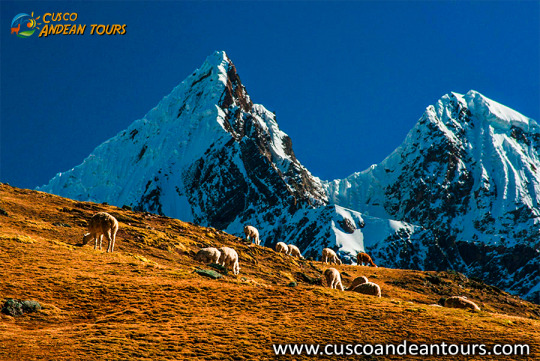
On rainbow mountain hike, you will see quaint villages, beautiful adobe style houses, herds of llamas and alpacas and you will have magnificent views of the Ausangate Glacier (6,385 m / 20,945 ft), the highest mountain in the Cusco region.
Early in the morning (about 3:30 am,) we will be at your hotel or hostel to pick you up. Please make sure you are ready and waiting in the lobby for our guide or driver who is going to look for you. After youaboard our private transportation, we will drive to Pitumarka where we will have the chance to stop for some picture, relax a little and stretch our legs, there is a small shop where you can buy some snacks or water before start our Rainbow Mountain day hike.After stopping at Pitumarka we will continue until Quesuno. there we will organize everything before starting our Vinicunca hike. Then we will enjoy a delicious local breakfast and start our adventure to the famous Rainbow Mountain. There is 13 km of trekking. Uphill followed by 6 km over flat land that will take us to our goal called Rainbow Mountain or Vinicunca Mountain which is located at 5100 meter about sea level where we will enjoy the spectacular panoramic views across the ancient valleys Ausangate. We will show you a good place to stop and enjoy the flight of the condor and see walk wild Llamas, Alpacas and Vicuñas .After this we will turn back on the same trail, This time it will be easier because most of the trail is easy sailing—downhill! Once we get back to Quesuno, we will have a lunch then we will take our transportation back to Cusco where we will drop you off at you hotel or hostel.
Guardian of the Cusco region, Ausangate is the fifth highest mountain in Peru with its 6,384 meters high. For centuries it has received many names, the best known being ‘The Roof of the Inca Capital’ and ‘Vinicunca’, which means ‘Cerro de Colores’.
Located in the district of Pitumarca (in the province of Canchis –region of Cusco-, in the south of the country), Ausangate is considered the most important mountain in the Andean worldview. And although it is also one of the most beautiful is one of the least known abroad, always overshadowed by that impressive ‘Wonder of the World’ called Machu Picchu. AUSANGATE TREK PACKAGES: Ausangate Trek 5 Days Ausangate Circuit 7 Days
A walk through these parts constitutes a very special experience, combining the fact of being at such levels with the enjoyment of an outdoor activity and the contemplation of a visual wonder.
How to get? Ausangate is the fifth highest mountain in Peru, its maximum altitude is 6,372 meters above sea level. It is located about 100 kilometers southeast of the city of Cusco. You leave the city in a vehicle, the estimated travel time is 3 hours, when you arrive in Chilca, the 3-hour walk begins towards the mountain of colors (you walk about 4 km ½ approx.). It can be done in a private car or by hiring a tour.
The road to Ausangate is one of the most amazing experiences you can have, enjoy the scenery, be accompanied by birds and native animals during the road is only part of all that this great opportunity offers, you can find yourself, where you will receive the protection and wisdom of what was once sacred to our culture.
About 100 kilometers southeast of Cusco, Peru, there is a rainbow mountain.
It is the mountain of the Seven Colors, also known as Vinicunca or Rainbow.
The pilgrimage in the Peruvian Andes in search of the Snow Star The mountain is located in the Vilcanota Range at 5,200 meters above sea level, in the Pitumarca district.
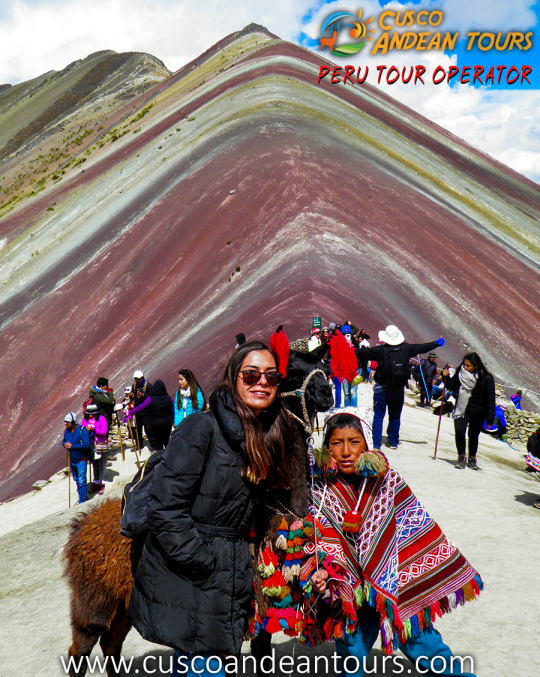
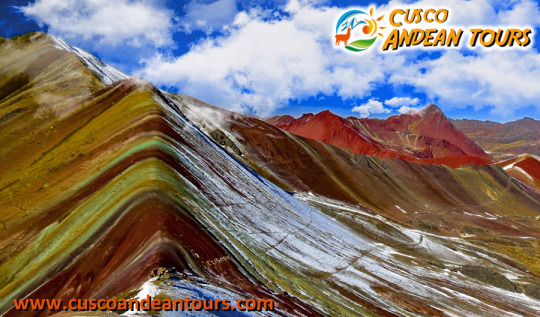
Its slopes and summits are dyed by stripes of intense shades of fuchsia, turquoise, lavender and gold.
The visual show offered by Vinicunca has attracted visitors since the beginning of 2016, according to Haydee Pacheco, a tourism official at the Municipality of Pitumarca.
In just over two years, travelers who take pictures with the summit went from a few tens to about 1,000 a day, say Peruvian media, despite the cold and altitude of the place. Thanks to its popularity, also driven by social networks, the hill became a common destination in the rankings of tourist attractions in the world.
For example, in August 2017, it appeared on the list of 100 places to visit before dying recommended by travel experts on the Business Insider website.
The tourist boom is quite recent, but the history of the mountain and its colors began millions of years ago.
Minerals The rainbow aspect of Vinicunca is due to "a complex geological history of marine, lake and river sediments," according to a report by the Office of Cultural Landscape of the Decentralized Directorate of Culture of Cusco.
10 rock formations of unsurpassed beauty These sediments, transported by the water that previously covered the area, date between the tertiary and quaternary periods, that is, from about 65 to two million years ago. Over time, the sediments were forming layers (with different grain sizes) that today look like the stripes that attract tourists so much.
The movement of tectonic plates in the area raised these sediments until they became mountains.
5 tourist destinations threatened by excess visitors (and two are in Latin America) Then they acquired their striking colors because of the oxidation of their minerals, exerted by the humidity of the area, and their erosion, explains César Muñoz, a member of the Geological Society of Peru (SGP),
Muñoz and the study of the Office of Cultural Landscape detail the composition of each strip according to its color.
Pink or fuchsia: mixture of red clay, fangolites (mud) and sand. Off-white: sandstone (quartz sand) and limestone. Purple or lavender: marl (mixture of clay and calcium carbonate) and silicates. Red: argillites and clays. Green: clays rich in magnesium ferro (mixture of iron and magnesium) and copper oxide. Yellowish, mustard or golden brown: limonites, calcareous sandstones rich in sulphide minerals (combined with sulfur).
Ausangate is a natural attraction that is located in the district of Ocongate, within the province of Quispicanchi, in the department of Cusco. That snow is part of the Cordillera de Vilcanota and, according to an ancient legend, it was the brother of the Salkantay mountain.
The Nevado Ausangate, has a height of 6,384 meters above sea level; and he is considered an apu, or protective deity of the peoples that surround him; as well as the most representative mountain in the region. Its size is such that it can be appreciated even if one is in the Fortress of Sacsayhuaman, not in vain is considered the fifth highest mountain found in Peru.
This beautiful Cusco snow cap, impresses the eye, for its incredible natural formations; Not only are beautiful water mirrors like the Sivinicocha, with turquoise waters, but also stone forests, glaciers and high-plains that seem to make this natural attraction a paradise on earth, especially for those tourists who are interested for adventure sports because, the geographical features of Ausangate make it ideal for sports such as rock climbing, ice climbing, trekking, among other activities.
The Nevado Ausangate appears before our eyes as a mountain challenge; it is known that the first attempts to promote it occurred at the beginning of the fifties of the last century, were two the first attempts to conquer the top of the mighty Apu, it was not until 1953, when a German expedition achieved the goal, climbing the mountain on its southern slope, in posterity, new routes were opened for the conquest of the Apu, however, just in 1983, thirty years after the first ascent, Peruvian feet crowned the top of the majestic snow.
LARES INFORMATION
The Laris formed the Lares culture in what is now the Lares district. It seems that the capital or center of the Lares culture has not been the current capital of the district because there is no vestige of ancient cultures, nor in the conformation urbanistic that is completely Spanish, nor in the walls and foundations of the buildings, it is thought that the center of Lares culture was the population of Choquecancha, already displaced from the citadel of Antawala " In the Colonial period (1535-1824), the entire area of Lares, by de Choquekancha, was not exploited by the Spaniards for being in a completely hilly terrain, they only maintained relations for the trade of some products. In the Republican period (1824 to this day), the region acquires its greatest splendor forming part of the Province of Calca, Department of Cusco, Lares acquires the category of District by virtue of the Law of October 22, 1892, with its capital the current town of Lares. Etymologically, the word "Lares comes from that one of Aymara origin Laris that means maternal uncle and sometimes, all relative on the part of the mother. With the passage of time it is undoubted that for reasons of diction and the law of least effort, staying in Lares. "^ Currently the capital of the district, the town of Lares has no cultural vestige, nor in the urban conformation that in its totality is Spanish, according to the French Paúl Marcoy that in the Valley of Lares due to the intense rains of the station took place in the dawn of the 14 of January of 1958, a landslide of a hill forming a dike or dam of the waters of the Yanatile river, which overflowed originated the devastating alluvium of the Phaqcha region of the Lares Valley, causing dozens of deaths, thousands of victims and numerous material losses. As a result of that tragedy the newspaper "El Comercio" of Lima published an article with the title of "LARES, A FORGOTTEN VALLEY", mentioning in passing the illustrious travelers who arrived to that extensive region, among them Paul Marcoy ".
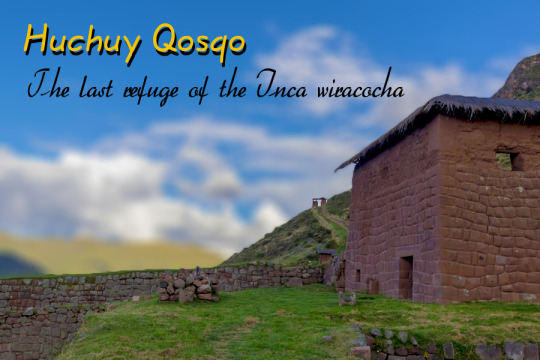
HUCHUY QOSQO
Another alternative is the Inca trail that is going to be the longest, and therefore somewhat strenuous, is less frequented and allows us to enjoy a greater variety of jungle landscapes as it takes you from 3,750 meters above sea level to the 4,400 meters to finish at 3,040 meters, which means crossing the mountains between the town of Chincheros and the "Sacred Valley of the Incas".
For that you have to take from Cusco the private or private buses that go to Urubamba (but take them by the Chincheros road and ask the "collector" of the transport bus to let you get off at the detour to the community of TAUCA (a a few minutes from Chincheros) where you arrive after an hour of travel.
Usually there is a private taxi-group that will take you to TAUCA, but on the way we stop to see the immense PIURAY lagoon up close (it is the water source of the city of Cusco). On the opposite bank shines the tower of the church of UMASBAMBA, one of the oldest in the area. You travel about 15 minutes to Tauca on the outskirts of the town, where the car no longer moved on the steep climb.
From here we start walking at the beginning of the trail, it has no slope and it makes its way into a narrow ravine. There are no curves or crossings of roads so it is impossible to get lost until the road announced its end on the slopes of some very large hills. It was like getting into a dead end. In the hills to my right I could see some muleteers who were going up to the first "abra", they carried the backpacks of the tourists on the back of a beast. Finally I reached the "abra" and found a couple of apachetas. I started the descent by the path that opened to my left while I was looking down a lagoon called ESOCOCHA, 15 minutes later you reach the second "abra" and there I found a sign that indicated the way to the ruins. From there the view was pure honey: an endless puna, behind several peaks perpetually dressed in white and above these a dense tangle of clouds that never ended
Now everything was a descent without truce where you can see some arrows painted in blue that guide you to the ruins. We rested with the muleteers who prepared the lunch for the group of tourists to continue towards HUCHUY QOSQO, began the walk passing through a copse of puyas appeared from nowhere terraces in good condition that were scattered by a ravine. It was magical to feel myself there observing nature.
Finally I came to a small plain where I found a sign with an arrow shape that read: HUCHUY QOSQO. At my feet a magnificent view opened up: in the background lay, scattered on a blanket of greenery, the ruins that I was looking for, and much lower down the houses of the town of Lamay in the middle of the always beautiful Urubamba valley.
Low and on arrival I found the gatekeeper to pay an entrance to HUCHUY QOSQO (3,550 meters) is the most important archaeological center in the Urubamba Valley, after Ollantaytambo and Pisaq (the virtue of being a little outside the classic tourist circuit what makes it more special) at the same time you have that space to go to Pisaq and Ollantaytambo.
Abra Málaga is a route that begins in the town of Ollantaytambo, Cusco and travels along highway 28B Ollantaytambo - Quillabamba, crossing unique Andean ecosystems. This route contains two types of well-defined areas: El Abra (4,297 masl) and the low zone (Carrizales 3,245 masl). The birds you can observe are rare and very sought after.
The predominant ecosystem is the Montano Tropical rainforest or the cloud forest in the Carrizales area, with forests of low trees covered by epiphytic plants and also some areas of bamboo. At Abra Málaga, at an altitude of 4,200 meters, we are in a rainy-Montano Tropical moor, with small Polylepis forests in the basins' births.
History
The avifauna of this area of Peru was studied since 1869 by Sclater and Salvin, Berlepsch and Stolzmann (1906). In 1915 an expedition of the Machu Picchu Geographical Society was conducted, directed by Frank M. Chapman and George K. Cherrie (1-24 July 1916), and by Harry L. Watkins (April 3-25, 1917). From September 1974, June 1976, 1977 and 1978, October 1978 and August 1979, staff from the Museum of Zoology of the Louisiana State University (LSU) visited the valley in order to carry out an inventory and increase knowledge of birds and small mammals. Three main camps were made along the Ollantaytambo-Quillabamba road through Abra Málaga (3900 m), and a fourth was in Kiteni (450 m), after Quillabamba.
The Mountain of the 7 Colors, is one of the most beautiful attractions that exists in the Inca Trail near the Apu Ausangate, it is said to be a place that offers a new opportunity for everyone who visits it, this belief has its beginning in the saying "If you want to see the Rainbow you have to face the storm" which teaches us that there is always a prize after the effort. The legends that are told 'round of the colors that form this Mountain are really amazing, these stories will continue with us from generation to generation since they are part of our culture and identity. This fantastic place is part of the tourist attractions of the City of Cusco, a trip through the Mountain of Colors or Vinicunca which has an exceptional beauty that seems to have taken all the colors of nature. An extraordinary landscape, a pleasure for the eyes. This beautiful also houses an impressive flora and fauna. So apart from seeing the Rainbow you will appreciate this fantastic nature.
You will appreciate the wonderful views of Ausangate, one of the highest mountains in Peru and the colorful South Valley of Cusco with its extensive lagoons, Andean villages, rivers and streams.
Each person looks for a Rainbow after a somewhat complicated journey, and more if you find it in the Land of the Incas a place full of secrets not yet discovered.
A visit to the 7 Colors Mountain is a wonderful experience that you can live with friends or family.
Early in the morning (about 3:30 am,) we will be at your hotel or hostel to pick you up. Please make sure you are ready and waiting in the lobby for our guide or driver who is going to look for you. After youaboard our private transportation, we will drive to Pitumarka where we will have the chance to stop for some picture, relax a little and stretch our legs, there is a small shop where you can buy some snacks or water before start our Rainbow Mountain day hike. After stopping at Pitumarka we will continue until Quesuno. there we will organize everything before starting our Vinicunca hike. Then we will enjoy a delicious local breakfast and start our adventure to the famous Rainbow Mountain. There is 13 km of trekking. Uphill followed by 6 km over flat land that will take us to our goal called Rainbow Mountain or Vinicunca Mountain which is located at 5100 meter about sea level where we will enjoy the spectacular panoramic views across the ancient valleys Ausangate. We will show you a good place to stop and enjoy the flight of the condor and see walk wild Llamas, Alpacas and Vicuñas . After this we will turn back on the same trail, This time it will be easier because most of the trail is easy sailing---downhill! Once we get back to Quesuno, we will have a lunch then we will take our transportation back to Cusco where we will drop you off at you hotel or hostel.
DAY 1: CUSCO - OCONGATE - TINKI COMMUNITY
We leave the city of Cusco in a private transport, in the direction of Tinki (3800m/12464ft). On the way we stop in Urcos, where we may visit a beautiful lake with the same name. We then go on to Cattca, where we can appreciate the region’s spectacular views and finally pass through Ocongate, capital of the district with the same name and only half an hour away from our destination. After an approximated of 6-hour drive, we arrive at Tinki, Tinki will be our first campsite and start the trek the next morning. DAY 2: TINKI - PACCHANTA - QOMERQOCHA LAGOON
After breakfast, we will spend some time visiting the Tinki public school and will have the chance to meet the children of the neighboring communities that study at this place. Then We then leave Tinki and start a 2,5h walk towards Pacchanta (4100m/13448ft), where we stop for lunch. Pacchanta is a rural community that boasts some well-known hot springs where we can enjoy a nice dip, offering awesome views of Ausangate Mountain. In the afternoon we follow our trek through a slight climb up the Pacchanta valley, having the chance to spot llamas and alpacas, until we reach the beautiful Qomercocha lagoon where we set our camp and have dinner. Our campsite will be set in a spectacular spot with amazing views of Ausangate. DAY 3: QOMERQOCHA LAGOON TO YANAMAYO
We leave Qomercocha lagoon around at 7.00 am and continue on towards the first mountain pass of our trek, the Abra Q´ampa at 5000m/16400ft, which we will reach after about 4h. then We will descend towards the Ticllaqocha Lagoons, a beautiful group of little turquoise lagoons next to which we have lunch. In the afternoon we continue our hike for an additional 2-3h until we reach Yanamayo where we set our camp in an impressive valley overlooked by the impressive Tres Picos. DAY 4: YANAMAYO TO CONDORPASO
We leave camp and start a gradual climb up toward Yanaqocha or “Black Lagoon” its name being due to the dark color of its waters. We will go over Yanaqocha mountain pass (5050m/16564ft) to then discover a surprisingly beautiful valley with an explosion of colored mountains, three spectacular lagoons and the presence of llamas and alpacas, which we will cross to head towards our next mountain pass (5100m/16728ft). From this point, an additional hour of hike leads us to Condor pass, our next campsite, located very close to the mountain pass of the same name which will be our challenge for the next day. DAY 5: CONDOR PASS TO SOURCE OF SIBINACOCHA LAGOON
After breakfast, we continue on a gradual climb up the valley that takes us to the mountain pass Abra del Condor (5200m/17056ft) after an approximated two hour walk. We have spectacular views of the Vilcanota mountain range and the Sibinacocha Lagoon, our next milestone, where can see wild vicuñas. Immediately. we continue our hike for 3 hours, crossing another mountain pass on the way and then descending into the valley of the Sibinacocha Lagoon’s source. We will camp next to the lagoon and very close from its source. The lagoon boasts a wide bio-diversity, where we can see Andean Coots, “Huallatas” or Andean Geese as well as Andean Ducks from our camp. DAY 6: SOURCE OF SIBINACOCHA LAGOON TO CCASCANA
Today, we depart early to walk along the shores of the Sibinacocha Lagoon for 3h until we reach the Yayamari community, (5500m/18040ft). We then continue accross a pampa where we will most probably see hundreds of llamas, alpacas and hopefully vicuñas, to then follow towards the Abra Ccascana at 5000m/16400ft, which will lead us to the lagoon of the same name, in where we will set our last camp and we may have the chance to spot ¨Huallatas¨ or Andean geese and maybe even flamingos. DAY 7: CCASCARA TO PHINAYA VILLAGE AND BACK TO CUSCO
After our breakfast, we leave Ccascara to walk for 3 and 30 minutes towards Phinaya. This is a small Andean community with a beautiful little church, where we will have lunch. In the afternoon, we meet our private transport that will drive us back to Cusco, where we expect to arrive after nightfall.
Machu Picchu,This stunning site situated on a mountain ridge above the Sacred Valley is the best-preserved relic of Inca civilisation and South America’s most popular attraction with an estimated 3,000 people visiting on a typical day.