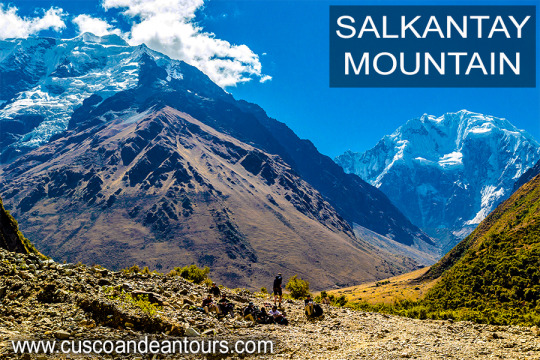
Also known as Salkantay, Peru's snowy peak located in the department of Cuzco, it is one of the main elevations of the Vilcabamba Range, an extension of the Eastern Cordillera, a mountainous branch of the Peruvian Andes. It reaches an altitude of 6,271 meters. It has two snowy peaks, known as China Salkantay and female Salkantay, separated by a port that opens to the Santa Ana Valley in the province of Urubamba. Both the mountain pass and the course of the river that is born there are called Salkantay. This river pours its waters into the Urubamba on its left bank. SALKANTAY TREK INFORMATION
The name of this mountain is a contraction that comes from Salga = sullen or wild and Antay produces eyebrows or avalanches. It is usually preceded by the name of Apu, which in Quechua language comes to mean sir, is defined as large mountains that mean something sacred above the valleys. For example, Apu Salkantay in the Vilcabamba mountain range.
For the inhabitants of the Andes, reverence for the apus, sacred mountains, converted into local protectors, did not go unnoticed in time, thus, mountains such as Salkantay, among others that surround it, assume an important role in the Andean worldview. For example, the snow of Waqay Willke (5720 masl), within the traditional symbolism of Andean dual thought, is considered the complement of Salkantay which is one of the most powerful and active deities of the place, it is also appreciated by the inhabitants, the father of all the mountains in the region and even today it is the object of great veneration, so Machupicchu and Choquechurco maintain an intimate visual contact with Salkantay and other snowcaps of the Vilcabamba chain.
The Vilcabamba MOUNTAIN
The sacred and administrative llaqta of Machupicchu is located between important snowfalls of the eastern slope of the Vilcabamba mountain range, «Salkantay, (Humantay Yanantay and Tokorhuay that they surround it) and Waqay Willke »1 whose mountains, object of worship, enable a social cohesion that revolves around its veneration, as these are water providers, vital element, principle of existence in the Andean world, as well as generate fertility in animals, protection of its inhabitants and success in crops.In the cult of the mountains in the area, religious, political and economic factors are involved; important within the process of social development of their communities, the same ones that have been present for centuries, and they are and were very familiar to the Andean inhabitants of all time. The current vision of the inhabitants of the Sacred Mountain (Mollepata, Machupicchu, Santa Teresa, Wayraqmachay, Collpapampa, Totora, Yanama) in force since the time of the Inca society, is shared by Andean peoples, in such a way that the area is known for reverence to the sacred mountains, hardly ignored and that undoubtedly play a vital function over time. SALKANTAY TREK INFORMATION These sacred mountains are located within the delimitation polygon of the Historic Sanctuary of Machipicchu (SHM), declared as such by supreme decree No. 001-81-AA of January 8, 1981, with an area of 32,592 ha. Likewise, in the buffer zone (ZA) of the SHM specified by the head resolution No. 322-2001-INRENA of September 16, 2004, which proposes the extension of the ZA from including continuous immediate hydrographic basins to the SHM area, increasing the air of the ZA of those in force in 71,589 ha to 193,334 ha. Finally, it is also considered within the Vilcabamba-Choquequirao National Archaeological Park, declared by national directive resolution No. 949 / INC, dated October 9, 2002, which resolves: «Approve the Plan for the Delimitation of the National Archaeological Park of Vilcabamba (Choquequirao), Plan No. V-01, dated July 2002, with a area of 522,878.30 hectares and a perimeter of 367.09 kilometers, at a scale of 1: 125,000, located in the provinces of La Convencion, Anta and Abancay, in the departments of Cusco and Apurímac ».
1.-Before starting the Salkantay Trek you must book the tickets to Machu Picchu, especially if you want to climb some of the mountains
2.- The route is the same as with a tour, depending on the capacity of the hiker it could take more or less days.
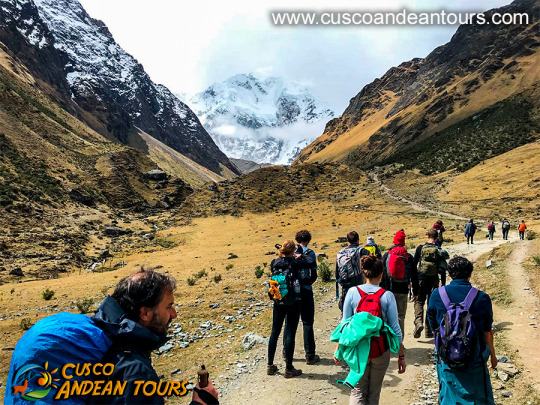
3.- The ascent begins in Mollepata and it is recommended to bring both food and sleeping equipment for only five days, and thus avoid carrying excessive luggage. Among the necessary things you should bring: sleeping bags, shoes, backpack, jacket and trekking pants, hat or hat, water bottle, toiletries, snacks, waterproof jacket, sunscreen, water purifying tablets and cash . If you decide to trek Salkantay to Machu Picchu through a tourist agency (recommended for your safety), they include professional and experienced tour guides, entrance tickets to Machu Picchu, breakfast, lunch and dinner, sleeping tents, necessary transports and horses for carry luggage Before starting the Salkantay trek it is advisable to acclimatize in the city of Cusco one or two days. Due to the height, the ideal is to avoid consuming alcoholic beverages or very fatty foods. Although you do not need to be in excellent physical condition, try to do some exercises before leaving for the Salkantay trek. Wear warm clothes, no matter what season of the year you travel, being the best time from April to October, which is the dry and safest time and although the days are sunnier, the nights are colder. The difference between doing the Salkantay trek with an agency and doing it independently, not only lies in the price if there is also the possibility of suffering an accident, get lost or discouraged in half way. In addition, you will have to carry your luggage in tow, while with the tour the horse service is included for the transfer of luggage. Whatever your decision, enjoy a wonderful Salkantay trek to Machu Picchu, do it in an organized and prudent way, and so you can enjoy an unforgettable trip and you can tell all your friends about your adventures.
Machu Picchu,This stunning site situated on a mountain ridge above the Sacred Valley is the best-preserved relic of Inca civilisation and South America’s most popular attraction with an estimated 3,000 people visiting on a typical day.