The Salkantay Trek is one of the beautiful routes that cross the immense mountains of the Andes, and to be able to make this trek you will need all the necessary information to make your trip unforgettable.
On this page you will find useful information about different aspects of the trek in Salkantay such as the location, altitude, degree of difficulty of the trek and the main tourist attractions that we can visit throughout the trek.
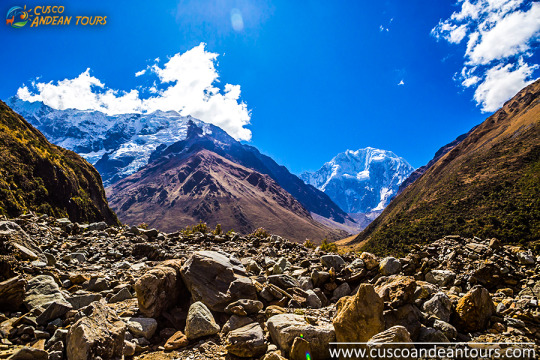
This information is constantly and responsibly updated because for us your health and safety is the main concern and the main basis of our services, we hope that all this information is useful to you: Nevado Salkantay location: The Salkantay Snow Mountain, (6272 masl) or also called Apu Salkantay is located north of the city of Cusco, it is the highest mountain range on the eastern flank of the Vilcabamba mountain range. The Quechua name of this snowy mountain means "Wild Mountain" because it is a snowy mountain that is difficult to climb to the top. cusco tours information. How to get to Salkantay: To get to the beginning of our walk we will pick you up from your hotel in Cusco with direction to Mollepata. The journey takes approximately 3 hours to 3 hours and 30 minutes.
Description
Salkantay trek express 4 days, is one of the most popular alternative treks after the classic Inca trail to the Inca citadel of Machu Picchu, in this route you will see one of the most important apus of Cusco.
DAY 1: CUSCO - MOLLEPATA - SORAYPAMPA - CHAULLAY
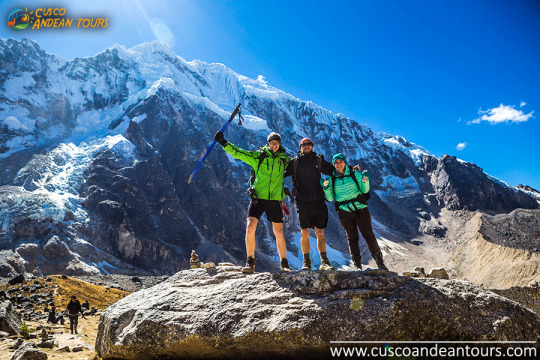
This day we leave Cusco early (about 4am) and drive for approximately 3 ½ hrs to Soraypampa where we will start the hardest day of the whole Salkantay trek 4 days 3 nights. We will be walking 7.5km to the highest point of the trek, enjoying magnificent panoramas of snow-capped mountains on the way. Once we reach the top we will have spectacular views of the sacred mountain, Salkantay. At 6245 metres it is the second highest mountain in the Cusco region. After 2 hours downhill we will have our delicious lunch around 1:00 p.m. in Huayracmachay. Then we continue approximately 3 hours downhill to our camp in Chaullay or Collpapampa (2900 metres) where your tent will be ready and waiting for you with a bowl of hot water for washing up. Then there is time to rest, nap or write. Around 7 p.m. we will have happy hour, dinner. Then we’re off to bed and a well-earned sleep. DAY 2: CHAULLAY - LUCMABAMBA
Around 6.30am, we start with our breakfast before beginning our trek through the high jungle. We cross the Lluskamayo valley and a variety of little brooks to reach La Playa (Sahuayaco) trekking about 6 hours. You will pass through wonderful landscapes and see waterfalls, rivers, beautiful plants and orchids. At La playa (Sahuayaco) we’ll have our lunch and the horses will go back to Mollepata. After lunch and another 30 minutes uphill you will reach our campsite at Lucmabamba. The afternoon is free for you to enjoy our coffee tour or, as an optional extra, take a local van to Santa Teresa to soak in the natural hot spring optional extra. At the end of the day we have our happy hour, dinner and then a briefing for the next day. DAY 3: LUCMABAMBA - AGUAS CALIENTES
We will have our delicious breakfast at 6 am and leave our campsite. After about 5 minutes you will step onto the original Inka Trail, and for the next 3 hours you will follow this historic trail to the summit for your first view of Machu Picchu across the valley. Then we will descend to our lunch spot by the Hydrolectric Station. After lunch we will walk 3 more hours or take a train for 45 minutes to Aguas Calientes where your beautiful hotel and dinner will be waiting for you. DAY 4: AGUAS CALIENTES - MACHU PICCHU!!!
Early morning, after the breakfast at the Hotel, you will go up by walking or you can take the bus to Machu Picchu where you meet with our Tour Guide for a private introductory tour of the Citadel. For the next 2 hours you will learn of the history, the structure and the stories of this important World Wonder. Then you will have free time to take pictures, relax and explore Machu Picchu by yourself. If you have reserved a climb up Huayna Picchu or Machu Picchu Mountain, our Tour Guide show you where you start.
After exploring Machu Picchu, you will walk or take a bus down to Aguas Calientes. There you will collect your luggage at the Hotel and board the train to Ollantaytambo. When you arrive at Ollantaytambo, you will transfer to a van for a ride back to Cusco by van where you will be dropped off at your hotel or hostel.
SALKANTAY TREK TO MACHU PICCHU INFORMATION.
DAY 1: CUSCO / CITY TOUR
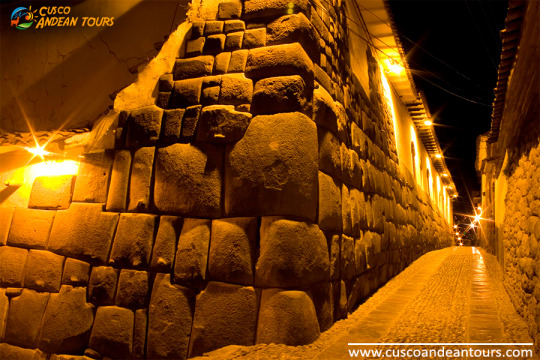
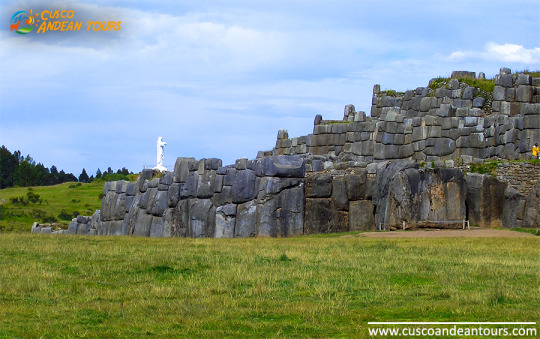
Reception at the airport, transfer to the hotel and you will have a free time available to rest and so avoid altitude sickness. In the afternoon the trip will start with the visit of the Temple Koricancha , The Main Square or Plaza de Armas, The Cathedral and continue to visit the Inca sites: The Fortress Sacsayhuaman the latter side is strategically built on a hill overlooking Cusco and is famous for its enormous carved stones, some of them standing over 9m/30ft tall and weighing over 350 tons, set together whit astounding precision to form the outer walls. Most important Mystical center from Inkas time Qenqo, the military control center Puca pucara and the water temple of Tambomachay. Return to the hotel and free night.
DAY 2: TOUR OF MARAS AND MORAY
09:00 – 14:00 Tour of Maras (salt mines) and Moray (terraces). Night at hotel in Cusco.
DAY 3: CUSCO/ SACRED VALLEY OF THE INCAS
This day we take a trip to the Sacred Valley of the Incas: visit the Pisac Incas built, the colorful Andean market and the church. Then we pass places like Lamay and Calca on the way to arrive in Urubamba town where we stop for lunch. After lunch visit to Ollantaytambo town, where we can see its typical streets, the impressive archaeological constructions and agricultural terracing, not to mention the splendid views over the sacred valley. Finally, visit the picturesque Andean village of Chinchero where the built of the royal hacienda Of Tupac Inca Yupanqui lie. You can admire the well preserved Inca wall in the main square, and visit the beautiful colonial temple. Built on Inca foundations with interesting paintings. Overnight in Cusco
DAY 4: CUSCO / MACHUPICCHU
Pick up at the hotel to take the train for a full day tour of the Magical citadel of Machu Picchu, it is 112 Km. from Cusco .During the journey we see the Urubamba canyon, Urubamba River and the show capped peaks of the Veronica Mountain. Arriving in Aguas Calientes we go to Machu Picchu where we visit this wonderful Inca Sanctuary also known as “The lost City of the Incas “one of the best known examples of surviving Inca. After the visit, we come back to Aguas Calientes to take the train back to Cusco.
DAY 5: DEPARTURE FROM CUSCO
We will pick you up from your hotel in Cusco and take you to the airport.
DAY 1: CUSCO / CITY TOUR
Reception at the airport, transfer to the hotel and you will have a free time available to rest and so avoid altitude sickness. In the afternoon the trip will start with the visit of the Temple Koricancha , The Main Square or Plaza de Armas, The Cathedral and continue to visit the Inca sites: The Fortress Sacsayhuaman the latter side is strategically built on a hill overlooking Cusco and is famous for its enormous carved stones, some of them standing over 9m/30ft tall and weighing over 350 tons, set together whit astounding precision to form the outer walls. Most important Mystical center from Inkas time Qenqo, the military control center Puca pucara and the water temple of Tambomachay. Return to the hotel and free night.
DAY 2: CUSCO/ SACRED VALLEY OF THE INCAS
This day we take a trip to the Sacred Valley of the Incas: visit the Pisac Incas built, the colorful Andean market and the church. Then we pass places like Lamay and Calca on the way to arrive in Urubamba town where we stop for lunch. After lunch visit to Ollantaytambo town, where we can see its typical streets, the impressive archaeological constructions and agricultural terracing, not to mention the splendid views over the sacred valley. Finally, visit the picturesque Andean village of Chinchero where the built of the royal hacienda Of Tupac Inca Yupanqui lie. You can admire the well preserved Inca wall in the main square, and visit the beautiful colonial temple. Built on Inca foundations with interesting paintings. Overnight in Cusco
DAY 3: CUSCO / MACHUPICCHU
Pick up at the hotel to take the train for a full day tour of the Magical citadel of Machu Picchu, it is 112 Km. from Cusco .During the journey we see the Urubamba canyon, Urubamba River and the show capped peaks of the Veronica Mountain. Arriving in Aguas Calientes we go to Machu Picchu where we visit this wonderful Inca Sanctuary also known as “The lost City of the Incas “one of the best known examples of surviving Inca. After the visit, we come back to Aguas Calientes to take the train back to Cusco.
DAY 4: DEPARTURE FROM CUSCO
We will pick you up from your hotel in Cusco and take you to the airport.
DAY 1: CITY TOUR CUSCO
We'll be waiting for you at the airport in Cusco on your arrival date , take you to the hotel where you will rest for an hour , you'll have a cup of coca tea and we will pick you up from your Hotel in the afternoon (from 13:30 hrs to 18:30 hrs) to start with the tour around Cusco and outskirts. Tour around Cusco and outskirts: We pick you up from your Hotel to start visiting the following attractives , with aprofessional guide: - The Koricancha Palace andConvent of Santo Domingo Religious center known as "The Temple of the Sun" where you will admire the impressive engineering used in its construction. The Cathedral:Colonial religious monument of extraordinary artistic value. Sacsayhuaman: Located 3 km from the city of Cusco,impressive stone fortress monumental and magnificent architecture, famous for its enormous carved stones,some of which are at9 m/ 30 feettall and weigh of 350 tons. Here is where the Inty Raymi or Fiesta del Sol in June take place every year. Qenqo: Ceremonial and ritual center, amphitheater where sacrifices were made. Puca-Pucara: An old tambo (resting place), monitoring placethroughout the Inka Empire Routes. Tambomachay: At 7 Km. From the city of Cusco,ceremonial center of worship of water , traditionally known as the place of water.Excursiontime: around 5 hours. Frequency : everyday in the afternoons.
DAY 2: MACHU PICCHU TOUR
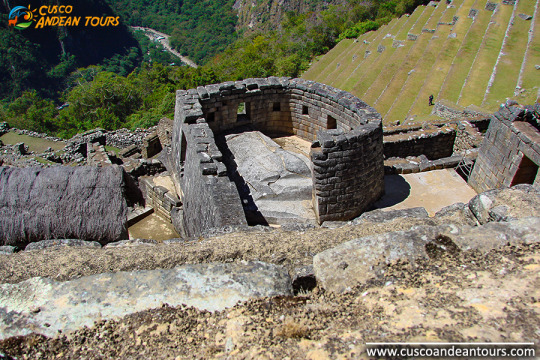
From 05:45 hrs to 06:00 hrs., we pick you up from your Hotel inCusco (3400 m.a.s.l.) and drive you to the Train Station, located in Poroy, then we get aboard the train and the trip from Cusco starts heading toAguas Calientes (2000 mosl).Our Guide Will be waiting there , he will lead us to the bus station,rising by a zigzag pathfor 30 minutes to the incredible Machu Picchu, known as the lost city of the Incas.Once we get to Machu-Picchu, We'll pass throught the control, where we'll hand in our entrance tickets and where our guided tour will start, visitingthe main square, the Circular tower, the sacred solar clock, the royal rooms, the temple of the three windows and the cementeries, it lasts around two hours. Afterwards you'll be givenenoughtime to have a walk around the citadel and have your meals ,at any restaurant in Aguas Calientes or if you wish atSantuary Lodge (this is not included). In the afternoon, betwen 15:30 hrs and 17:00 hrs we'll return on train to Cusco, we'll be waiting for you at the train station and then we'll take you back to your hotel.
DAY 3: FAREWELL:
We'll be at your hotel at least two hours before your flightleaves to take you to the airport Where you should check your plane ticket and pay the airport tax, we'll see you to the departure launge.
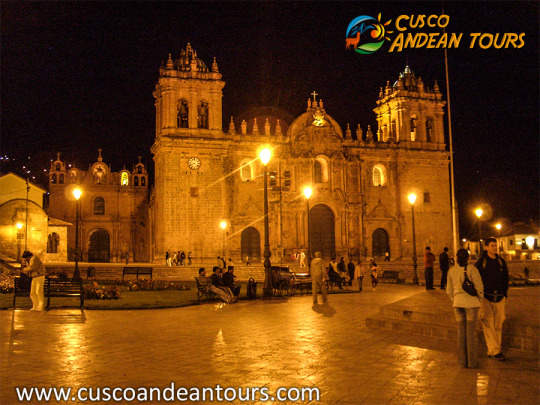
The place where the main square of Cusco is located, was in ancient times a swampy area, which during the time of the Incas was dried and transformed into an administrative, cultural and religious center of the Tahuantinsuyo Empire, after the conquest was occupied by the Spaniards, who surrounded it with temples and residences that were built on buildings and foundations of ancient Inca palaces and constructions; Tupac Amaru II was executed in the main square of the city of Cusco in 1781. It is currently the core of Cusco, and is surrounded by jewelers, travel agencies, tourist restaurants, and the same temples of the period of the conquest, merging the Andean and Hispanic architecture.
Controversy by the name of the main aquare of Cusco The true Quechua name with which it was called the current
main aquare
of Cusco, at the time of the Incas, is still unknown. Authors such as María Rostworowski claim that she was called Aucaypata, place of the warrior; Other authors such as Víctor Angles say it was Huacaypata, the place of crying, and others such as the American George Squier (in 1863) say it was called Huacapata, a sacred place.
Víctor Angles, a student of the Inca culture, explains that the square was formed by two sectors: Huacaypata and Cusipata (all coincide in the name of the latter). Both denominations would have a symbolic meaning since the first means place of crying the second means place of rejoicing (at present, that place is still called Plaza Rejoicing). According to Angles, this was due to meditation ceremonies performed by the Inca nobility in the square. These rituals ended in tears. It is currently known as Huacaypata.
Historical review
The place where the
main aquare
of Cusco is located, was a swampy area dried during the time of the Inca empire, using sand brought from the coasts of the Empire; the drying is initiated by the Inca Sinchi Roca, and was concluded by the Inca Pachacutec. To talk about the main square of Cusco
is to talk about a place full of history, which was initially a swamp, which over the years, became one of the main tourist attractions of the city of Cusco.
This square was the administrative, cultural and religious nucleus of the capital of Tahuantinsuyo, one of the largest empires in America and the World. With the arrival of the Spaniards, the
main aquare
was surrounded by temples and mansions, built on the structures of Inca palaces and buildings that existed there.
In this place, José Gabriel Condorcanqui Noguera (Túpac Amaru II) was also executed on May 18, 1781; Eminent character in Peruvian history, who revealed himself against the Spanish invasion. In the current
main aquare
of Cusco, you can find travel agencies, jewelers, tourist restaurants and temples dating from the colonial era.
The
main aquare
today
Currently, the
main aquare
is located in the historic center of Cusco, and is surrounded by tourist shops. The colonial temples built around it remain as such, some of them also function as museums.
The buildings mostly retain some Inca walls fused with the Hispanic architecture of the colony. The importance of the area makes it one of the most expensive in the city. In some cases, renting a store can cost up to $ 1,500 per month. A few years ago, fast-food restaurants like the American company McDonald’s and others like Bembos, KFC and Starbucks opened in the place.
The main square is still the place where many of Cusco's folk festivals are celebrated, such as Santuranticuy, Semana Santa, Corpus Christi, and other more modern ones, such as national holidays, Cusco parties, New Year, etc. It also holds free concerts, some parades of institutions and allegories, as well as political rallies.
Can I get to Machu Picchu on my own? Many people have the idea that it is impossible to reach Machu Picchu without being part of an organized tour, but this is far from the truth. Something that should be taken into account, is that there is an order in the organization of the trip to Machu Picchu, and must follow if you want to reach Machu Picchu without problems. Well to the point!
Or you can take our service at: Machu Picchu Tour
How to get to Machu Picchu on your own These are the steps you have to follow to get to Machu Picchu on your own; We remind you that you have to follow them in the order in which we show them. Reserve Machu Picchu Tickets The first thing you will have to do “and most importantly” is to reserve the Machu Picchu Tickets; If you find availability, we recommend you book the ticket that includes the Huayna Picchu mountain (Machu Picchu + Huayna Picchu ticket), you will not regret it. Something you can't do is wait to get to Cusco to buy the tickets. In case you did not know, in most cases Machu Picchu tickets must be booked at least 4 weeks in advance, this will give you the necessary time to book train tickets, hotels and even guides, since coming in season High (from May to September), everything will have to be booked well in advance. Reserve Train Tickets Securing train tickets "round trip" is the second step to get to Machu Picchu without the help of a travel agency. The high season causes train tickets to sell out quickly in all available services. So, if you do not want to have the Machu Picchu tickets in your hands and find no way to get to Machu Picchu - it happens more often than you think -, then, just know when you are going to enter Machu Picchu, book the train tickets . Arrive in Aguas Calientes (Machu Picchu Pueblo) If you have done all of the above, you should now know how to get to Aguas Calientes (Machu Picchu town). Getting to Machu Picchu is not difficult, even more so if you can use your smarthphone to know its exact location and how to get to certain places. Once in Cusco, you will have to get up very early and go to Pavitos Street, here you will find minibuses and minivans that will charge you around S / 15 (US $ 4) to take you to the town of Ollantaytambo. "Keep your train departure schedule in mind."
From Ollantaytambo to Machu Picchu it is even easier. When you arrive in Ollantaytambo, you can take a “motorcycle taxi”, it is very fun and the easiest way to get to Ollantaytambo station, this will cost you between S / 2 and S / 5 soles (US $ 0.70 and US $ 1.50 ). If time permits, do not miss the opportunity to tour the ruins of Ollantaytambo; It is one of the best prior to the Inca City of Machu Picchu. Once at Ollantaytambo station, look for your train and board it. The tour of the Sacred Valley of the Incas is one of the most beautiful short train routes in the world, so enjoy it. The train will take you to the city of Aguas Calientes, at the foot of the Machu Picchu Mountain.
Recommendation: you will enjoy Machu Picchu more if you can arrive a day before the day of your visit to the city of Aguas Calientes. Book your hotel You can expect to get to Aguas Calientes to book your hotel. If there is something that abounds in Aguas Calientes, they are hotels; You can find hotels of all prices and categories. If you only have one day in Aguas Calientes and Machu Picchu, you can skip this step.
Very Important: If you are planning to visit Machu Picchu during the high season (from May to September), you will have to book your hotel, in Cusco or Aguas Calientes, after booking train tickets. Getting from Aguas Calientes to Machu Picchu If you arrive a day before your visit to Aguas Calientes, you can take the first bus from Aguas Calientes to Machu Picchu; but if your visit is one day, know that you can buy the bus tickets to Machu Picchu, next to the train station in Aguas Calientes, just before the Ruinas Bridge; These tickets cannot be booked in advance, purchased online, or by third parties. You can only buy your ticket in person and with your passport. If you want to know more about the bus tickets from Aguas Calientes to Machu Picchu, enter here. At the entrance to Machu Picchu Before allowing you to enter Machu Picchu, you will be asked to present the copy of your Machu Picchu ticket along with your original valid Passport, if you do not present these documents you will be prevented from entering Machu Picchu, and everything will have been in vain; so do not forget that your documents must be valid when entering Machu Picchu.
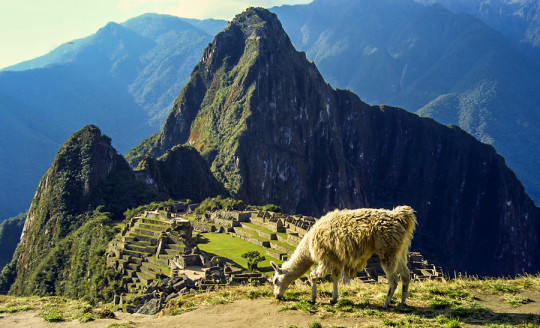
The site is located in the zone of the high forest, and includes part of a mountain mass of great dissection of the high plateau of the Andes, that rises abruptly from the valley of the Urubamba river. The area around the ruins of Machu Picchu is made up of many exposed pinnacles of rock to support the thin soils, although in the area there are also sites with complex soil systems for soil conservation, known as terraces or Inca terraces. . The Urubamba basin is a zone of alluvium, almost continuous, of agricultural land for farming and grazing. Geologically the area is very complex, it is a combination of Cretaceous-Tertiary marine sedimentary rocks and intrusive volcanic material, such as lavas and granites. The sedimentary deposits are Ordovician schists, shales and quartzites. Rivers and streams feed the main system of the Urubamba River Valley, as well as a series of small valleys in the north such as Quillabamba (MAA, 1986).
CLIMATE OF MACHU PICCHU The average annual temperature varies between 16 ° C and the annual rainfall ranges between 1500 mm and 3000 mm at low altitudes. At 2,500 m altitude the average temperature is 10.2 ° C, and the annual rainfall is 2170 mm. The dry weather season lasts from May to September and the wet weather season from October to April.
VEGETATION OF MACHU PICCHU The site has been influenced by man for many centuries, leading to a combination of artificial habitats, páramo grasslands, Polylepis thickets, partially degraded virgin forests and old farmlands that have once again become forests or scrub. At lower altitudes, forests predominate, their extent depends on human interference, especially during the Inca period. The vegetation rises from the subtropical dry forest along the river valleys to the very humid low montane forest. The trees represented in the most dense forest in danger of extinction locally include the mahogany Swietenia macrophylla and species of the following genera: cedar, Podocarpus (the only conifer in Peru), Lauraceae Ocotea, Cunoniaceae Weinmannia, Nectandra and Cecropia. A number of tree ferns are present, including Cyathea sp. and also the palms like Geromoina sp. Guasca and SP Riupala. (MAA, 1981). Junks Phragmites sp., Willows and alders are produced around rivers and streams, grasslands open at the same time, bushes and scattered thickets of Polylepis sp. and bamboo are found near the ruins (Parker et al, 1982). The high altitude subalpine paramo includes many grasses, Festuca sp., Stipa sp. and Puya sp. as p. raimondii (I). The ridges of the mountains are characterized by Gaudua bamboo sp. (Parker et al., 1982).
FAUNA DE MACHU PICCHU The park was established to protect the landscape of the famous archaeological site of Machu Picchu, founded by the Inca culture. It is thought that it was a real Inca residence and perhaps it was the center for collecting coca from the surrounding plantations. The site was finally ruined, it was covered by the invading forest and 'lost by science' until its discovery in 1911. There are also remains of the Inca Trail in the area, and local legends, including that of the spectacled bear. , which is believed to serve as a messenger between spirits of high elevations and those of the jungle (Anon, 1981).
Birds of Machu Picchu - Photo Gallery (5) Picaflores of Machu Picchu - Photo Gallery (8) CULTURAL HERITAGE The park was established to protect the landscape of the famous archaeological site of Machu Picchu, founded by the Inca culture. It is thought that it was a real Inca residence and perhaps it was the center for collecting coca from the surrounding plantations. The site was finally hidden, was covered by the forest and was 'lost by science' until its discovery in 1911. There are also remains of the Inca Trail in the area, and the spectacled bear that is believed to serve as a messenger among the spirits of high elevations and those of the jungle (Anon, 1981).
LOCAL HUMAN POPULATION Much of the park area is settled with many small farming communities and farms, especially on the lower slopes. The original inhabitants were experts in irrigation and built terraces and drainages that extended long distances through irregular terrain. Agriculture (corn and barley) and livestock grazing (llamas, cattle and sheep) are the dominant economic activities and occur in more than 20,000 hectares of the park. The local economy is also supported by tourists who visit the Inca ruins (MAA, 1981, Peyton, 1983). The nearby city of Cusco was the Inca capital and remains an important city with more than 105,000 inhabitants. It is the administrative and commercial center of a considerable part of the Urubamba basin (INRENA, pers., 1995).
Machu Picchu,This stunning site situated on a mountain ridge above the Sacred Valley is the best-preserved relic of Inca civilisation and South America’s most popular attraction with an estimated 3,000 people visiting on a typical day.