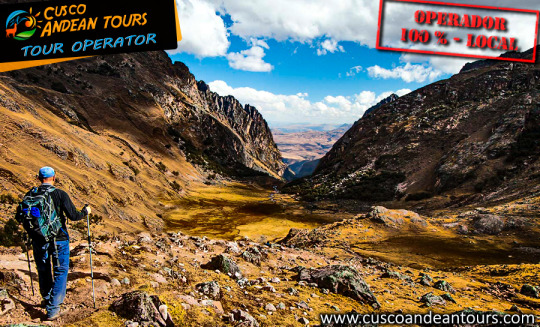
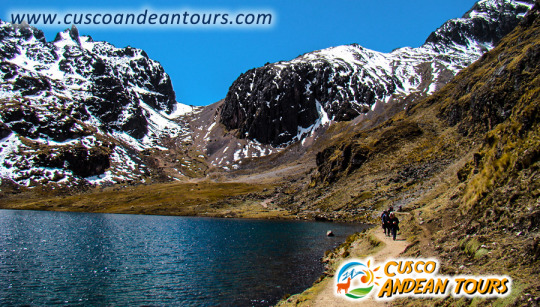
Lares is located in the Andes Mountains, in southern Peru. This district of Cusco belongs to the province of Calca. How high is it? Lares is 3,150 meters above sea level (m.s.n.m.). What is the weather like in Lares? The climate in Lares is temperate with cold at night. The average temperature is 11ºC. During the day, the heat can reach 21ºC. At night, temperatures can reach 1ºC. How to get to Lares? Lares is separated from the city of Cusco by 149 kilometers of highway. From this point, it is reached through a car trip that goes through the towns of Pisac and Calca in the Sacred Valley of the Incas. What to see and do in Lares? Lares has several tourist attractions such as:
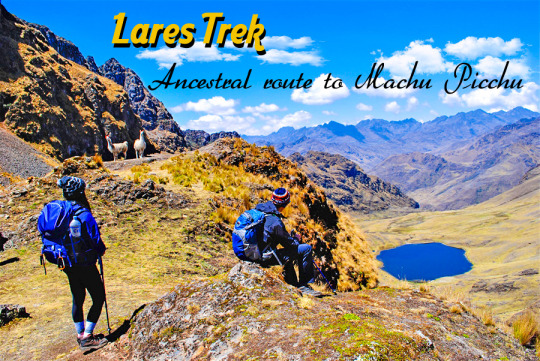
Lares thermo-medicinal baths. Mantto Falls. The hiking route to Machu Picchu. Lares is famous for being the starting point of the so-called Lares Trek, a route that leads to Machu Picchu on a 4-day, 3-night road.
Is it difficult to do the Lares Trek?
The Lares Trek has a medium difficulty. Compared to the Inca Trail or the Salkantay Trek, this route is less arduous. The only difficulty is altitude sickness, due to trails located in high altitude geographies. When is the best time to do the Lares Trek? The best time to do the Lares Trek is during the dry season (from April to October). In those months, the sky is clearer and there is less chance of rain. Therefore, the roads are in better condition for hiking. How to fight altitude sickness on the Lares Trek? One of the biggest difficulties during the Lares Trek is altitude sickness (also known as 'soroche').
The best way to combat this disease is acclimatizing to the city of Cusco a few days before the trek.
Another option is to drink plenty of water. Coca tea, for example, is a drink based on coca leaf that effectively fights the ailments and symptoms of soroche.
The Incas, as well as the inhabitants of the Andes to this day, chew coca leaves as a remedy for this and other ailments. Is it possible to do the Lares Trek on your own? There is no restriction for a visitor to be encouraged to do the Lares Trek on their own. However, unlike other hikes like the Salkantay Trek or the Choquequirao Trek, the trails are not well signposted, making it difficult to stay on course.
To do the Lares Trek on your own you must understand the route to follow. For this, a good map would be effective. Furthermore, the inhabitants that inhabit this region are mainly Quechua speakers. What to bring to the Lares Trek? The tour services that lead to the Lares Trek include the basic implements such as tents, food and a pack horse. In addition, it is recommended to bring the following:
Sleeping bag.
Trekking poles.
Hat or cap.
Sunscreen.
Warm clothes during the nights.
Light clothing during the day.
Poncho for rains.
Bottle with water
Hiking shoes.
Bath clothes (for Lares thermo-medicinal baths).
Snacks
Photographic camera.
Extra money.
Recommendations during the Lares Trek The Lares Trek is the route that crosses high-altitude landscapes until you reach Machu Picchu. On the route you can see the beautiful landscapes and indigenous peoples with ancestral traditions. For a perfect trip it is recommended:
Acclimatize to the city of Cusco before doing the trek. Thus, the symptoms of altitude sickness will be avoided. It is not necessary to be in optimal physical shape to perform the Lares Trek. However, a little pre-workout before the hike would do. Chewing coca leaf during the tour (as the Incas did hundreds of years ago). Another alternative is to take a pill against soroche before starting the trek. The Lares Trek is a great opportunity to learn about the way of life of the peoples that inhabit the Andes. These people offer their products made from alpaca fiber at lower prices than the stores in Lima, Cusco or other countries.
INCA JUNGLE
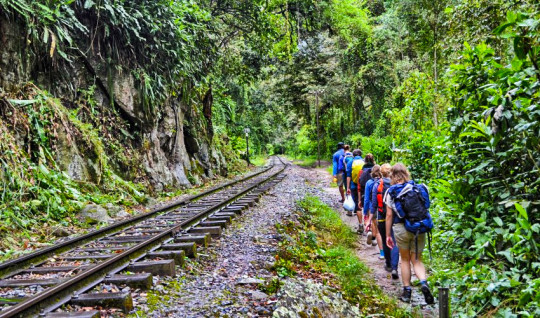
What is the Inca Jungle at Machu Picchu? The Inca Jungle tour is a tour that departs from the City of Cusco and ends in Machu Picchu, after 4 days and 3 nights after performing a series of adventure sports such as: cycling, trekking, canoeing and zip line. The Inca Jungle is one of the most popular tours in Peru. What is the weather like during the Inca Jungle? The climate during the Inca Jungle is varied. The coldest point is in Abra Málaga (average temperature of 9ºC during the day). Then we descend to the tropical climate of the jungle eyebrow. The warmest point is in the town of Santa Teresa (day temperature up to 26ºC). What is the flora and fauna like during the Inca Jungle? The Inca Jungle is characterized by the beautiful landscapes during the tour. Along the way you can see vizcachas, llamas, spectacled bears, cock of the rocks and a wide variety of orchids. In addition, plantations of bananas, mangoes, oranges and more are crossed. Does 4 days seem too long for the Inca Jungle? There is another 3-day service, which accelerates the pace of the walks to reach Machu Picchu earlier. However, the most popular Inca Jungle tour is the one that lasts 4 days. What sports does the Inca Jungle include? The Inca Jungle includes the following adventure sports:
Cycling (included).
Hike (included).
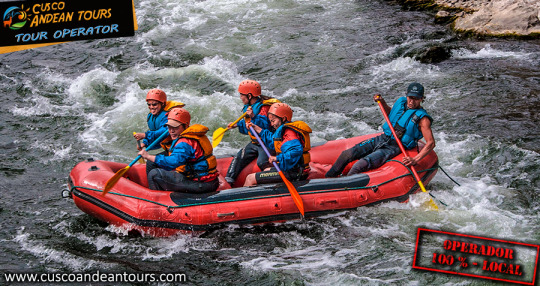
Canoeing (not included).
Zipline (not included).
Who can do the Inca Jungle? The Inca Jungle is available for tourists of all ages. However, the tour is recommended for tourists in good physical shape. Older adults should consult their doctor before the tour. Minors must be accustomed to physical efforts and take the tour in the company of their parents.
Description
Salkantay trek express 5 days, is one of the most popular alternative treks after the classic Inca trail to the Inca citadel of Machu Picchu, in this route you will see one of the most important apus of Cusco. SALKANTAY TREK ITINERARY
DAY 1: CUSCO - MOLLEPATA - SORAYPAMPA
We will pick you up from your hotel in Cusco shortly after 4 a.m. to go by private van to Mollepata. This is a spectacular scenic drive through the Anta plains with beautiful and panoramic views across a vast plateau of the majestic Salkantay and other mountains covered with snow. Then marvel at the spectacular winding descent into the Valley of Apurimac River. After 2½ hours we stop in Mollepata to have breakfast and shop for last minute supplies. There will be time for leg-stretching or to use the bathrooms, before continuing to Marcocasa. There we will meet with our support staff. They will load the equipment on horses and mules. Around 8:30 a.m. we will start our trek toward Soraypampa (3900 meters above sea level) if we keep a regular pace we will take 4 hours approximately to reach Soraypampa for lunch at our first campsite. After lunch in the afternoon we have an option to go up to see Umantay Lake a glacial lake below the peak of Salkantay at (4200meters above sea level). This side tour takes 3 hours to hike back and forth from the camp. Alternatively, if we are moving at a slow pace; we will have lunch at halfway between Soraypampa and Marco Casa on our way to Soraypampa. Either way our camp will be at Soraypampa. Sleeping tents will be ready and we will have a warm delicious dinner in the evening. DAY 2: SORAYPAMPA - SALKANTAY PASS - HUAYRAMACHAY – CHAULLAY
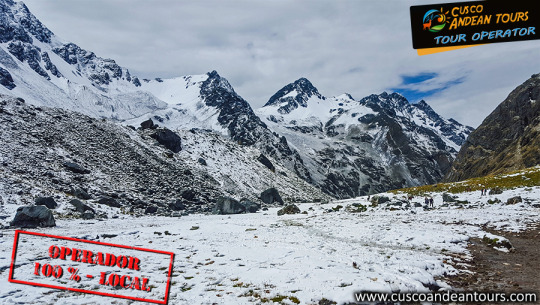
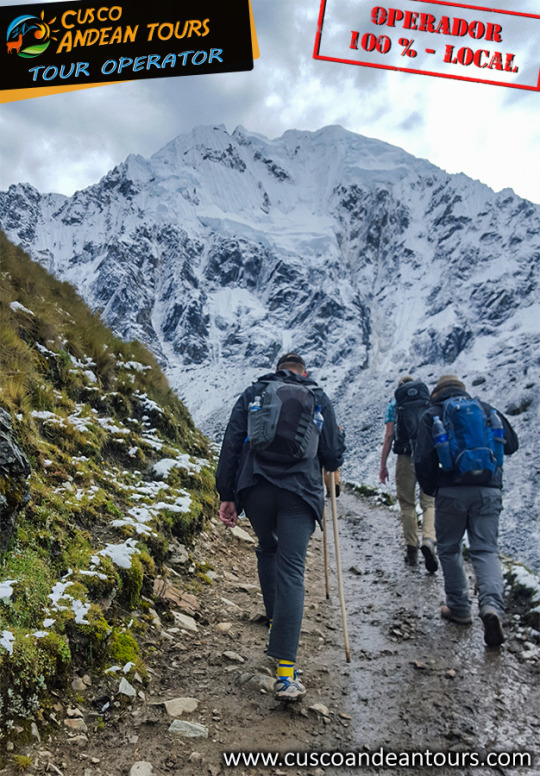
In the morning we will wake you up with the coca tea at 5:30 a.m. and we will have a nutritious breakfast around 6 a.m. Today we will start the hardest day of the whole Salkantay trek. We will be walking up to the highest point of the trek. After 7 kilometers uphill through the magnificent landscape of rocky mountains, valleys and flood plain and changing views of Mount Salkantay above us. At the top of the trek we will have spectacular views of the mountains and the imposing snowy peaks of Salkantay (6245) meters above sea level, the second highest mountain of the Cusco region. Then we go 2 hours downhill around 1:00 p.m. to where we will have our delicious Peruvian lunch, in the area called Huayracmachay. Afterward we continue our hike approximately 3 hours downhill to our camp in Chaullay (2900 meters above sea level) or Colcapampa (3000 meters above sea level). The sleeping tents and warm wash water will be ready and waiting for you. Then after a well-earned hot meal we will retire to our tents for a well-deserved sleep. DAY 3: CHAULLAY - COLLPAPAMPA - LA PLAYA - LUCMABAMBA
Around 6.30am, we start trekking through the high jungle crossing the Lluskamayo valley with its rich variety of flora and fauna to reach La Playa (Sahuayaco) after about 6 hours. We will pass through valleys and have wonderful views of waterfalls, tropical fruits and plants. You will taste the famous passion fruit or granadilla. We will have lunch when we arrive at La Playa. After lunch our horses will go back to Mollepata while we go on to Lucmabamba Campsite where we will spend the night. Here you can choose to go on our coffee tour or opt for a bus drive to Santa Teresa to enjoy the natural hotspring it is famous for. (Bus fares and entrance fees to the natural hot spring is not included in this tour), (coffee tour Is included). DAY 4: SANTA TERESA - HIDROELECTRYC - AGUAS CALIENTES
We will have our delicious breakfast at 6 a.m. Then we will walk for about 3 hours up to Llactapata and along the original Inka Trail to Llactapata. From this beautiful archeological site we will be able to see part of Machu Picchu and into the amazing Urubamba valley. Afterwards we have another 3 hours down hill until we arrive to the hydrolectric where we are going to have lunch. Then we will walk for 3 more hours or take a 45 minute train ride to Aguas Calientes to your hotel. After you have settled in we will get together for dinner and a briefing on how to get the most out of your visit to Machu Picchu tomorrow. DAY 5: AGUAS CALIENTES - MACHU PICCHU - OLLANTAYTAMBO - CUSCO
After an early breakfast at the hotel you will walk 1 hour 30 minutes or take bus up to Machu Picchu, so we can be the first ones into Machu Picchu to enjoy the sunrise. You will have a private 2 hour guided tour followed by free time in which you will be able to go on to explore Machu Picchu by yourself. If you have booked the Huayna Picchu in advance climb or the walk up Machu Picchu mountain this is the time for you to set off.
Afterward Machu Picchu you will go back down to Aguas Calientes town to catch the train to Ollantaytambo. There our private van will meet you and take you back to Cusco and drop you off at your hotel or hostel. MORE INFORMATION OF SALKANTAY TREK What you need to take
Original passport and Student card (ISIC) green card
Insurance card is essential
Hiking water proof boots (with ankle protectors )
Waterproof jacket or rain poncho
Sleeping bag
Warm jack
Hat and gloves
T-shirts
Comfortable trousers
Rain pants
Sun hat, Bathing suit (for hot springs in santa teresa and Aguas Calientes)
Sun protection cream ( factor 35 recommended ) sun is strong
Insect Repellent 40 % deet ( for mosquitos )
Water bottle
Water purification tablets (Micropur recommended)
Toilet paper
Personal medication
Camera and films
Torch with spare batteries (flashlight)
Extra contribution suggested money for tipping porters, cook and guide. and for any emergency (300 soles)
Walking poles ( black diamont or leki brand)
Optional items to take
Short pants
Walking poles (with rubber tips) they can also be hired from us.$15 usd the all trip.
Sleeping bags $20 usd the all trip.
Plaster and bandage.
LARES TREK
Description
Lares Trek Classic is well for the beginner hikers because the distance of the hike is short and is less difficult but there are many activities to do. Visit communities of the Sacred Valley until you reach Machu Picchu.
LARES TREK ITINERARY
DAY 1: CUSCO – LARES – KISHUARANI
We will pick you up from your hotel in Cusco shortly after 5 a.m. to go by private van to Lares. Our staff will organize all the equipment there. While they are preparing our horses, we will have time to enjoy the beautiful hot springs in Lares. After a great meal, we will begin our hike to Kishuarani, our destination for the day. There we will camp and have some time to visit the families who area living in this area. If you have extra energy maybe we can share time with them and see how they work in their farms. Then we will have a delicious warm dinner in the evening. Your tents will be ready to welcome you into a good night’s sleep.
DAY 2: KISHUARANI – PACHACUTEC PASS – CANCHA CANCHA
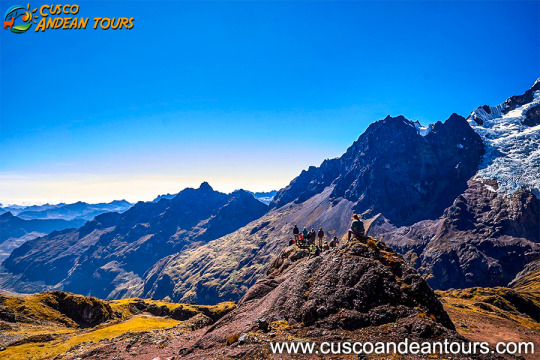
We will start our day with a gentle wake up with coca tea delivered to your tent, after which you’ll have time to organize your belongings. Then we will enjoy a delicious and hearty breakfast, just what we need for the day ahead. On this day we will hike about 17 km or 7 hours. The first challenge of our trek will be the climb over Pachacutec pass at 4700 meters. We will celebrate the climb with a lunch near the top. Afterward we have another easy 2 hours approx. to reach our campsite in Cancha Cancha. There we will meet the local people again and learn more about their way of life. This day if we are blessed with clear skies we will see beautiful landscapes and snow-capped mountains the whole day long, and perhaps some condors flying over our heads. At the end of this beautiful day we will have a nice dinner and happy hour before a well-earned rest.
DAY 3: CANCHA CANCHA – HUARAN – OLLANTAYTAMBO – AGUAS CALIENTES
After some hot chocolate, coffee, bread and pancakes we will start our easy day. After going both up and down for a time, we begin a basically downhill trek until Huaran where we are going to spend some time with people living there. Your guide will explain how these people live and work and keep happiness in their families. If we are lucky we will pass by a typical local bar called a “chicheria”. If it is open we will have a chance to see how they make a local corn beer “chicha” from the local corn. Chicha was a sacred drink in the time of the Incas. Then we will meet our vehicle which will take us from Huaran to Ollantaytambo at the bottom of the valley. Then we will board our train and travel 1:45 hours from Ollantaytambo to Aguas Calientes. Our guide will meet you and you take to your hotel and let you know where to have dinner. He will also give you all the information you will need for your next day in Machu Picchu.
DAY 4: MACHU PICCHU SANCTUARY – OLLANTAYTAMBO – CUSCO
Our tour guides and company recommend going to Machu Picchu early in order to be one of the first ones there. It is magical with fewer people and you can have the chance to enjoy the sunrise. Breakfast will be served in your hotel. Then you’ll be taken to catch one of the buses going to Machu Picchu. There your guide will share with you the knowledge and history about Machu Picchu sanctuary in a w tour for approximately 2 hours. You will have some time to explore on your own before you will have to return to Aguas Calientes to catch your train to Ollantaytambo. Our driver or transfer will be waiting for you there with private transportation to take you back to Cusco and your hotel.
INCA JUNGLE Description
The Inka Jungle tour is a trail that combines adventure sports such as mountain biking, canoeing, zip line and trekking for 4 days to Machu Picchu. The Inka Jungle Trail is the preferred tour by young people from all over the world who arrive in Cusco. in search of adventure and extreme sports.
INCA JUNGLE TRAIL ITINERARY
DAY 1: CUSCO TO SANTA MARIA
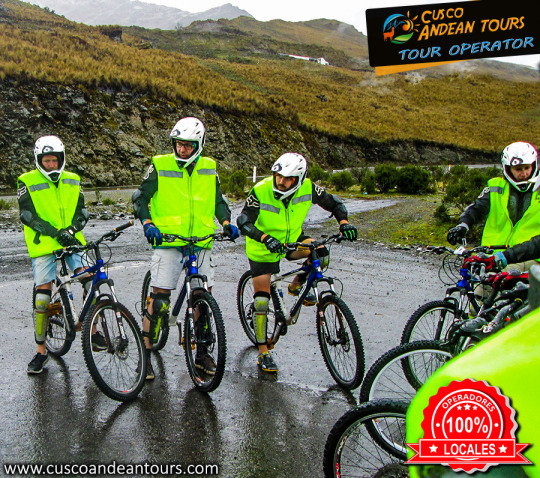
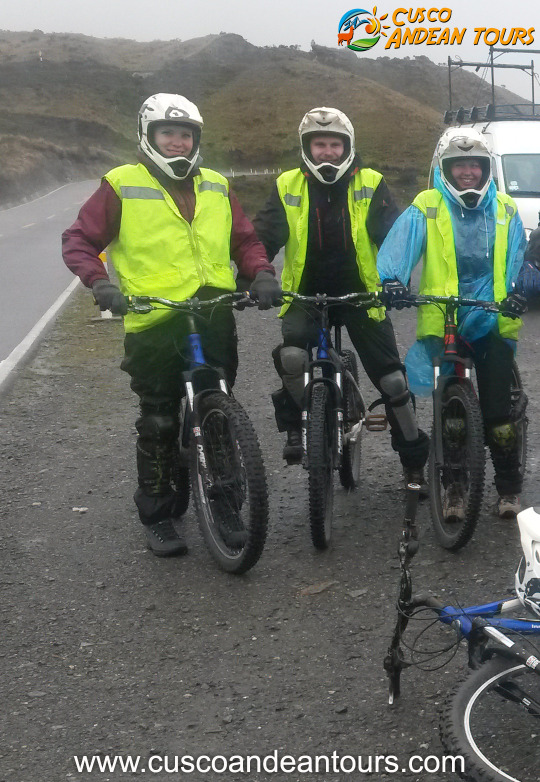
We will go to pick you up from your respective hostel. After collecting all the group we will leave Cusco and drive an hour and a half across the spectacular Chinchero plateau and through the Sacred Valley to Ollantaytambo. We will stop at a small local restaurant where you can refresh yourself, get a quick meal or snack, and buy anything you may have forgotten to buy in Cusco. After this we have go back in the bus and drive another hour and a half to Abra Malaga at 4,350 m.a.s.l. There we will provide you all equipment you will need (bike, gloves, elbow pads, knee pads, and helmet), followed by a briefing by our experienced tour guide. Then we mount up for a fun ride all way down hill to Santa Maria at 1,430 m.a.s.l. On the way you will see a lot different landscapes, panoramic views and different micro-climates.We will arrive approximate 4-3 hours, in time for our lunch! We have a free afternoon to rest or explore the village. As an optional highlight you can choose to join the river rafting tour (100 soles). This will take you on quillabamba river for approximately 2hrs or 25 km and includes class 2 and class 3 rapids. In the evening you have dinner and sleep in Santa Maria.
DAY 2: SANTA MARIA TO SANTA TERESA
We start with a delicious breakfast and then we prepare for the trekking in the high forest. For that we need some insect repellent and sun cream, and a lot good energies to discover the flora and fauna waiting for us in this expedition. We will pass local plantations on the way to reach the authentic original Inka Trail at the highest point. On the Trail as you view spectacular landscapes and views, you will be trekking into the Inca history. Be warned this is not for people who suffer from vertigo (ask to your guide for especial help or advice to rich 20 minutes of altitude walk) After leaving the Inka trail we have another one hour and a half to walk in the forest until arrived to Cocalmayo village where we will enjoy our delicious lunch with a local family. Then we have some nap time before trekking on again to arrive in 3 hours at the Cocalmayo Hot Springs. There you can decide with your guide how long you want splash and soak before dinner and sleep in Santa Teresa.
DAY 3: SANTA TERESA TO AGUAS CALIENTES
We will start at around 6 am. After a great breakfast we will get ready to continue walking to Hidroelectrica and then to Aguas Calientes. There is an option in Santa Teresa to do zip line, all participants will be divided into 2 groups - one who booked zip line and the other who did not. Those of you who reserved zip line will be transported to the place where will be organized this activity for about 3 hours approximately . this group will be taken by bus to the area known as the Hidroelectrica. The rest of the group will continue the trek for approx. 3 hrs. more through the valley until reaching the hydroelectric, where the entire group will get together again. Here all of you will have a lunch. After a short break we will continue walking along the train way and enjoying beautiful landscapes. This part will take approx. 3 hrs. We will arrive to the town of Aguas Calientes, around 4 pm. Here, in the hotel with hot water, wi-fi, you will spend the last third night. In the evening we will meet ll together in the restaurant, where will be waiting for you delicious dinner. You will have a briefing with the guide about the fourth day and Machu Picchu.
DAY 4 - MACHU PICCHU / HUAYNA PICCHU TO CUSCO
We will wake up, at 4:00 am, in order to start trekking up the mountain to Machu Picchu in time to catch the sunrise at the top. It will take approximately 1hour and 20 minutes or by the bus up 30 minutes ($.12 USD). Also you have the option to buy your bus ticket one night before if you don’t want this at the last minute. When we first arrive, our guide will take us on a 2 hour tour around the ruins, enlightening us about the ancient City that was once so vibrantly alive, and enriching us with the Inca history. There is much information that our guide can teach us, about all that we have learned about the site archeological site so far. After the guided portion of the tour, you will have some free time to explore the ruins by your self. If you want to climb Huayna Picchu, a very popular climb with spectacular views, we recommend you to book preferably three months beforehand. (There is daily limit of 400 persons per day allowed to climb, so pre-book if you don’t want to miss out. Cost: $25) The round trip walking to the peak of Huayna Picchu is about an hour and a half. It is definitely worth it for the stunning views from the top! As an alternative to the Huayna Picchu climb you can choose to visit Machu Picchu mountain which gives the ancient Inca townsite its name. This is a new option that lets you see Machu Picchu archeological site from the highest peak. It is less crowded so you don’t have to book early. Cost: $20) You will need to descend to Aguas Calientes in time to catch the train back to Cusco and Ollantaytambo. You also have the option of staying an extra night in Aguas Calientes, which would allow you more time to explore this remarkable little town with its many markets and restaurants, and you would be able to spend more time in Machu Picchu. Train from machupicchu to ollantaytambo is about 1 hour 45 minutes, then you need to go out of train station to get bus, after one hour and a half you will be drop in Cusco.
HUCHUY QOSQO TREK
Description
The route of Huchuy qosqo is very nice, since it is a short route where you can visit the Andean communities, archeological center and scenic beauty until you reach Machu Picchu.
HUCHUY QOSQO TREK ITINERARY
DAY 1: CUSCO – PATABAMBA – HUCHUY QOSQO
We will begin the tour with an early morning pick up from your hotel, at 7:30 am, to drive right over to Patabamba (3800 m.). The day’s hike will start at this point, and will continue through Andean landscapes and over the Pukamarca Pass at 3,800m, we will hike along a path that leads to the Tauca town, where we encounter archaeological remains and wild crops, such as tarwi, and a large quantity of cactus. We continue on to the Pukamarca pass at 4200, where we may enjoy views of the Surrounding area, immense mountains, Veronica, Pitusiray, Chicon and San Juan snow peaks. Continuing the path, we will descend towards the beautiful, remote Andean pueblo, Pukamarca at 4010m, where we stop and have a short break. As get back on the move, we will walk downhill into a mystical ancient path which will lead us to the Leon Punku Ravine. We will be led into a very narrow corridor, between some immense rock walls, where we will discover some Incan remains and various Inca bridges and sets of stairs (some of the best Inca Stairs anywhere). This canyon is absolutely magical and boasts geological formations surrounded by majestic rocks and boulders that direct the river to Huchuy Qosqo at 3600m, where we will soon be arriving. Upon our arrival to the ruins in the evening, we will actually continue on past the ruins and to our accommodations for the night. We will have dinner and sleep in the typical home of a native of the area, just to the side of the Huchuy Qosqo ruins.
DAY 2: WACAWASI – AURACCASA PASS – YANAHUARA
DAY 2: HUCHUY QOSQO- LAMAY-OLLANTAYTAMBO- AGUAS CALIENTES Huchuy Qosqo is an Inca archaeological complex which is perched precariously on the side of a mountain with imposing architecture that includes a large open ceremonial center, from which we enjoy an amazing panoramic view of the Sacred Valley, the Vilcanota River, and the snow capped mountain range of the same name. While in the complex, we will receive a guided tour as we make our way around the ruins after which we continue our way down the mountain, to Lamay at 3000m/ 9840 ft. Lamay is a town dedicated to agriculture and cattle raising. Later in the afternoon, our private transport drives us to Ollantaytambo, where we will board an afternoon train to Aguas Calientes. The train ride to get there is an absolutely gorgeous route, renowned the world round for its’ beauty. Upon our arrival to Aguas Calientes all passengers will be shown their respective hotels.
DAY 3 - MACHU PICCHU
Your climb to Machu Picchu begins before the sun is up. Ascend step by step for approximately an hour up the Inca staircase to the formerly lost stronghold of Machu Picchu. A 2-hour guided tour reveals mysteries and poses questions of how the Incas lived and were able to achieve such marvelous feats of engineering. After the tour you have the option to climb Huayna Picchu or Machu Picchu Mountain for an even more incredible view of the ruins and the surrounding sheer cliffs of the Andes. Take your time exploring the wondrous ruins and get that perfect picture before making your descent back to Aguas Calientes. Your return time to Cusco will depend on which transport option, or return train you select. Huayna Picchu is the mountain located at the northwest end of the ruins and Machu Picchu mountain is located at the southwest end. Huayna Picchu is steeper, but more popular and has some interesting archeological ruins at the top. Machu Picchu mountain is a longer trek, less steep and less crowded and offers great views over Machu Picchu. Check this amazing link out for views from the Huayna Picchu mountain and Machu Picchu mountain (it will open with the Huayna Picchu mountain, click on the right side of the picture and the other views will open). Huayanpicchu cost $10 dollars extra depending of spaces.(we have to book thisd in advanced)
CHOQUEQUIRAO TREK Description
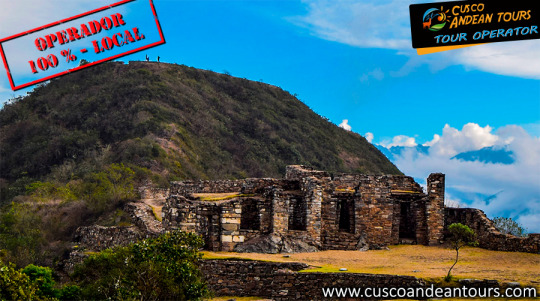
Choquequirao trek To Machu Picchu 8 Days, is one of the little crowded routes of Cusco but no less attractive than Machu Picchu, since Choquequirao is considered the Sister Citadel of Machu Picchu.
CHOQUEQUIRAO TREK ITINERARY Day 1: Cusco - Cachora - Playa Rosalina (Campsite)
Our driver and Guide will pick you up from your hotel at 5:00 a.m. We will drive for 3 hours to Cachora town where we will have our breakfast while our staff will prepare the equipment on mules and horses. From Cachora there is a walk of 4 hours until our lunch spot where we will enjoy a delicious meal and the views of majestic Padrayoc snow covered peaks, at 5482 meters the highest of the area. The hike on this first day is 21km or 8 hours approx. On the way we will see the snow covered peaks of other high mountains in the area and appreciate the beautiful change of the landscape. The first part is quite flat and after lunch we might see condors and different birds from the vantage point of Capuliyoc. The second part is a descent towards the Apurímac Canyon, observing as the vegetation changes with altitude on our way to Playa Rosalina (Campsite at 1550 meters). Day 2: La Playa Rosalina - Maranpata - Choquequirao Archeological Site
Early morning after breakfast, we will start crossing the river Apurimac and then walk uphill through zig zag trail until we arrive at Maranpata (approx. 4 hours) where we will enjoy lunch, our first meal prepared by our chef. After lunch we will continue on to Choquequirao arriving around 2pm. First we will visit this magnificent archaeological site with our guide. Then for the rest of the day we will be able to explore the beautifully preserved Inka buildings and structures and enjoy the spectacular views of the canyon. If we are lucky we may see condors soaring over our heads and in the valley.
By the end of the day we will camp close to Choquequirao (altitude approx. 3050 meters). Day 3: Choquequirao - Pinchinuyoc Archaeological Site - Maizal.
After our day in amazing Choquequirao we continue to Maizal. In this part of the tour we will see another archeological site called Pinchinuyoc which is at 3300 meters. Then we will descend to Rio Blanco is at 1900 meters. In Rio Blanco we can take time to refresh ourselves with the cold water and prepare for a 3 hour climb trekking through a cloud forest to Maizal is at 3000 meters where our campsite awaits us in a most beautiful location. We finish our day with great food and a good night’s sleep. Day 4: Maizal - Minas Victoria- Yanama.
Due to the ecosystem’s constant changes, we will take our time to rest and take pictures. In this section in particular, our passenger will have more time to stop, enjoy and take lot of pictures. We start this morning with a great breakfast, making sure we stock up on our water supplies. After we have been hiking for a couple hours we will pass by the impressive Inka mines we call Minas Victoria. We’ll also appreciate original inka trails and beautiful landscapes. At times we will be able to see some villages where people are living close to our destination. Our camping place will be in the little village called Yanama is at 3530 meters. Day 5: Yanama - Highest Pass Of This Trip- Totora
Early in the morning, we will head toward the highest pass of this trip. We will be climbing to 4670 meters. The views are amazing and in this land of condors we may see some of them flying over our heads. After the pass we will descend, following a river to the hamlet of Totora where will find our campsite. Torora is in an amazing valley covered in lush vegetation and surrounded by majestic snowcapped mountains. Our campsite will be close to one of the few families leaving in Totora. Day 6: Totora – La Playa Sahuayaco (Hot Springs Optional)
Before leaving Totora we will be able to meet some people indigenous to the area who speak their native language of Quechua, the language spoken by the Inkas. Depending on the season we will be able to appreciate them working on their farms with ancestral Inka techniques.
After leaving Totora we will get into the highland jungle of Lluscamayo valley with many orchids, bromeliads and lots of different vegetation. On the way we may see small waterfalls and have a refreshing natural bath. At the end of the valley of Lluscamayo we will arrive at La Playa Sahuayaco. We will camp close to this village so we’ll be able to try coffee, papaya, passion fruit and avocado which are growing in this area. Here you can choose to go on our coffee tour or opt for a bus drive to Santa Teresa to enjoy the natural hotspring (Bus fares and entrance fees to the natural hot spring is not included in this tour), (coffee tour Is included). Day 7: Playa - Llacta Pata - Hidroelectrica - Aguas Calientes.
This day, we will make our final uphill climb to Llacta Pata, where we will have an excellent view of the lost Inca city of Machu Picchu on a nearby ridge. After a good rest, we will go 3 more hours down to the Hydroelectric plant. There we will take the train to Aguas Calientes, where your accommodations are awaiting you with the comforts of showers and clean beds. Then you will enjoy the dinner, and by the end of the day our guide will let you know all the information and last details you’ll need for Machu Picchu tomorrow morning. Day 8: Aguas Calientes - Machu Picchu - Aguas Calientes - Ollantaytambo - Cusco.
From Aguas Calientes we take bus up to Machu Picchu. We start our visit with a 2 hour guided tour that will bring us to the most important locations at the archaeological site. The guide will tell us about the great importance Machu Picchu enjoyed as astronomical and religious center. The rest of the day is free for you. In this time you will be able to go on to explore Machu Picchu by yourself. If you have booked the Huayna Picchu in advance climb or the walk up Machu Picchu mountain this is the time for you to set off. Afterward Machu Picchu you will go back down to Aguas Calientes town to catch the train to Ollantaytambo. There our private van will meet you and take you back to Cusco and drop you off at your hotel or hostel.
INCA JUNGLE INFORMATION:
What is the Inca Jungle at Machu Picchu?
The Inca Jungle tour is a tour that departs from the City of Cusco and ends in Machu Picchu, after 4 days and 3 nights after carrying out a series of adventure sports such as: cycling, trekking, canoeing and zip line.
The Inca Jungle is one of the most popular tours in Peru.
What is the Inca Jungle route?
The Inca Jungle begins in the city of Cusco and ends in Machu Picchu.
During the journey you cross the Sacred Valley of the Incas, then enter the jungle eyebrow of Cusco to finally arrive at the Wonder of the World.
This is the route during the 4 days of the tour:
1st. day: Cusco - Abra Málaga - Santa María Town.
2nd. day: Santa María - Thermal baths - Santa Teresa town.
3rd. day: Santa Teresa - Hydroelectric - Aguas Calientes town.
4th. day: Aguas Calientes - Machu Picchu - Cusco.
What is the height during the Inca Jungle?
The Inca Jungle covers its highest point in the so-called ‘Abra Málaga’ (4,230 masl).
The lowest point is in the town of Aguas Calientes (2,000 m.a.s.l.), also known as Machu Picchu town.
Map of the Inca Jungle Machu Picchu
The Inca Jungle begins in the city of Cusco.
After doing various adventure sports, visit the Inca City of Machu Picchu.
The return to the city of Cusco is by train and bus.
The Lares trek is an alternative path to Machu Picchu of 4 days and 3 nights, which runs through high Andean landscapes inhabited by Quechua peoples. This adventure tour is also known as the Circuito de las Tejedoras because during its journey, you learn the technique of ancestral yarns in native towns.
Lares: where is it located? How high is it?
Where is Lares located?
Lares is located in the Andes Mountains, in southern Peru. This district of Cusco belongs to the province of Calca. How high is it?
Lares is 3,150 meters above sea level (m.s.n.m.). What is the weather like in Lares?
The climate in Lares is temperate with cold at night. The average temperature is 11ºC. During the day, the heat can reach 21ºC. At night, temperatures can reach 1ºC. How to get to Lares?
Lares is separated from the city of Cusco by 149 kilometers of highway. From this point, it is reached through a car trip that goes through the towns of Pisac and Calca in the Sacred Valley of the Incas. What to see and do in Lares?
Lares has several tourist attractions such as:
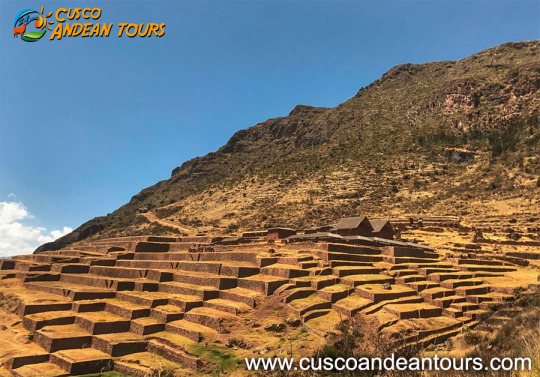
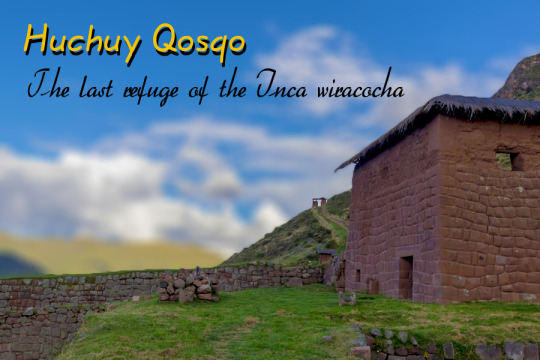
This complex is the most important archaeological center in the Urubamba Valley, after Ollantaytambo and Pisac. The ruins are impressive, although the conservation of the site is inferior to that of Ollantaytambo or Pisac, because they are older. But unlike the aforementioned places Huchuy Qosqo has a peculiar architecture: the buildings have been built on polished stone bases of fine finish, with clay plaster (they are the best preserved parts) and the highest floors are made of adobe.
Useful Information - Starting Altitude - 3800m / 12,467ft.. - Highest Altitude - 4300m / 14,107ft. - Walking Distance - 18km / 11 miles - Meals - 1 breakfast, 1 lunch, 1 dinner - Overall Difficulty - Moderate - STARTING POINT: - Cusco at your hotel
IMPORTANT INFORMATION:
The Hispanic chronicles refer that Huchuy Qosqo (probably a place known in Inca times as Caquia Jaquijahuana) was the favorite work and place of the Inca Wiracocha.
A kallanka of at least 40 to 50 meters long is observed. Also a remarkable building with two stone floors and one upper one of adobe. There are also large terraces, a very large square and a large Inca gate through which passes a very well preserved road that leads from Tambomachay.
Machu Picchu is one of the 7 Wonders of the Modern World , Heritage of Humanity, Historical Sanctuary of Peru and probably the most important archaeological site in Latin America.
Machu Picchu is majestic architecture comprises 140 structures throughout the citadel.
Machu Picchu is was built by the Inca Pachacutec around the year 1460
After being forgotten, it was only in 1911 that the American Hiram Bingham reached Machu Picchu on an expedition and spread the site worldwide.
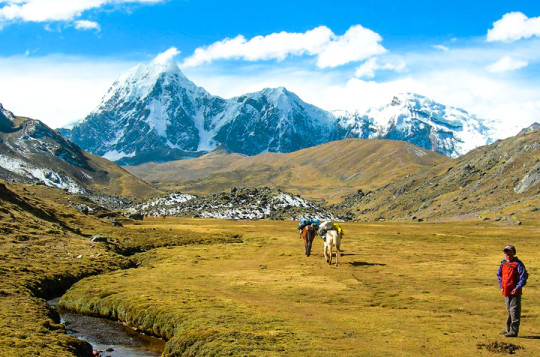
Ausangate is a natural attraction that is located in the district of Ocongate, within the province of Quispicanchi, in the department of Cusco. That snow is part of the Cordillera de Vilcanota and, according to an ancient legend, it was the brother of the Salkantay mountain.
The Nevado Ausangate, has a height of 6,384 meters above sea level; and he is considered an apu, or protective deity of the peoples that surround him; as well as the most representative mountain in the region. Its size is such that it can be appreciated even if one is in the Fortress of Sacsayhuaman, not in vain is considered the fifth highest mountain found in Peru.
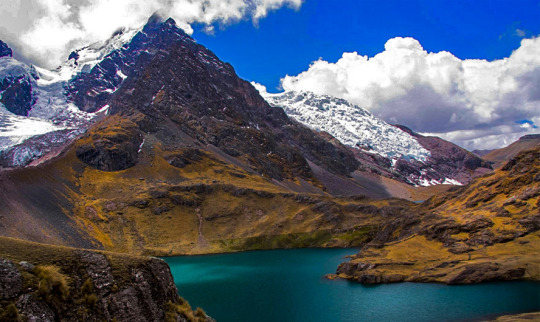
This beautiful Cusco snow cap, impresses the eye, for its incredible natural formations; Not only are beautiful water mirrors like the Sivinicocha, with turquoise waters, but also stone forests, glaciers and high-plains that seem to make this natural attraction a paradise on earth, especially for those tourists who are interested for adventure sports because, the geographical features of Ausangate make it ideal for sports such as rock climbing, ice climbing, trekking, among other activities.
The Nevado Ausangate appears before our eyes as a mountain challenge; it is known that the first attempts to promote it occurred at the beginning of the fifties of the last century, were two the first attempts to conquer the top of the mighty Apu, it was not until 1953, when a German expedition achieved the goal, climbing the mountain on its southern slope, in posterity, new routes were opened for the conquest of the Apu, however, just in 1983, thirty years after the first ascent, Peruvian feet crowned the top of the majestic snow.
LARES INFORMATION
The Laris formed the Lares culture in what is now the Lares district. It seems that the capital or center of the Lares culture has not been the current capital of the district because there is no vestige of ancient cultures, nor in the conformation urbanistic that is completely Spanish, nor in the walls and foundations of the buildings, it is thought that the center of Lares culture was the population of Choquecancha, already displaced from the citadel of Antawala " In the Colonial period (1535-1824), the entire area of Lares, by de Choquekancha, was not exploited by the Spaniards for being in a completely hilly terrain, they only maintained relations for the trade of some products. In the Republican period (1824 to this day), the region acquires its greatest splendor forming part of the Province of Calca, Department of Cusco, Lares acquires the category of District by virtue of the Law of October 22, 1892, with its capital the current town of Lares. Etymologically, the word "Lares comes from that one of Aymara origin Laris that means maternal uncle and sometimes, all relative on the part of the mother. With the passage of time it is undoubted that for reasons of diction and the law of least effort, staying in Lares. "^ Currently the capital of the district, the town of Lares has no cultural vestige, nor in the urban conformation that in its totality is Spanish, according to the French Paúl Marcoy that in the Valley of Lares due to the intense rains of the station took place in the dawn of the 14 of January of 1958, a landslide of a hill forming a dike or dam of the waters of the Yanatile river, which overflowed originated the devastating alluvium of the Phaqcha region of the Lares Valley, causing dozens of deaths, thousands of victims and numerous material losses. As a result of that tragedy the newspaper "El Comercio" of Lima published an article with the title of "LARES, A FORGOTTEN VALLEY", mentioning in passing the illustrious travelers who arrived to that extensive region, among them Paul Marcoy ".
HUCHUY QOSQO
Another alternative is the Inca trail that is going to be the longest, and therefore somewhat strenuous, is less frequented and allows us to enjoy a greater variety of jungle landscapes as it takes you from 3,750 meters above sea level to the 4,400 meters to finish at 3,040 meters, which means crossing the mountains between the town of Chincheros and the "Sacred Valley of the Incas".
For that you have to take from Cusco the private or private buses that go to Urubamba (but take them by the Chincheros road and ask the "collector" of the transport bus to let you get off at the detour to the community of TAUCA (a a few minutes from Chincheros) where you arrive after an hour of travel.
Usually there is a private taxi-group that will take you to TAUCA, but on the way we stop to see the immense PIURAY lagoon up close (it is the water source of the city of Cusco). On the opposite bank shines the tower of the church of UMASBAMBA, one of the oldest in the area. You travel about 15 minutes to Tauca on the outskirts of the town, where the car no longer moved on the steep climb.
From here we start walking at the beginning of the trail, it has no slope and it makes its way into a narrow ravine. There are no curves or crossings of roads so it is impossible to get lost until the road announced its end on the slopes of some very large hills. It was like getting into a dead end. In the hills to my right I could see some muleteers who were going up to the first "abra", they carried the backpacks of the tourists on the back of a beast. Finally I reached the "abra" and found a couple of apachetas. I started the descent by the path that opened to my left while I was looking down a lagoon called ESOCOCHA, 15 minutes later you reach the second "abra" and there I found a sign that indicated the way to the ruins. From there the view was pure honey: an endless puna, behind several peaks perpetually dressed in white and above these a dense tangle of clouds that never ended
Now everything was a descent without truce where you can see some arrows painted in blue that guide you to the ruins. We rested with the muleteers who prepared the lunch for the group of tourists to continue towards HUCHUY QOSQO, began the walk passing through a copse of puyas appeared from nowhere terraces in good condition that were scattered by a ravine. It was magical to feel myself there observing nature.
Finally I came to a small plain where I found a sign with an arrow shape that read: HUCHUY QOSQO. At my feet a magnificent view opened up: in the background lay, scattered on a blanket of greenery, the ruins that I was looking for, and much lower down the houses of the town of Lamay in the middle of the always beautiful Urubamba valley.
Low and on arrival I found the gatekeeper to pay an entrance to HUCHUY QOSQO (3,550 meters) is the most important archaeological center in the Urubamba Valley, after Ollantaytambo and Pisaq (the virtue of being a little outside the classic tourist circuit what makes it more special) at the same time you have that space to go to Pisaq and Ollantaytambo.
Abra Málaga is a route that begins in the town of Ollantaytambo, Cusco and travels along highway 28B Ollantaytambo - Quillabamba, crossing unique Andean ecosystems. This route contains two types of well-defined areas: El Abra (4,297 masl) and the low zone (Carrizales 3,245 masl). The birds you can observe are rare and very sought after.
The predominant ecosystem is the Montano Tropical rainforest or the cloud forest in the Carrizales area, with forests of low trees covered by epiphytic plants and also some areas of bamboo. At Abra Málaga, at an altitude of 4,200 meters, we are in a rainy-Montano Tropical moor, with small Polylepis forests in the basins' births.
History
The avifauna of this area of Peru was studied since 1869 by Sclater and Salvin, Berlepsch and Stolzmann (1906). In 1915 an expedition of the Machu Picchu Geographical Society was conducted, directed by Frank M. Chapman and George K. Cherrie (1-24 July 1916), and by Harry L. Watkins (April 3-25, 1917). From September 1974, June 1976, 1977 and 1978, October 1978 and August 1979, staff from the Museum of Zoology of the Louisiana State University (LSU) visited the valley in order to carry out an inventory and increase knowledge of birds and small mammals. Three main camps were made along the Ollantaytambo-Quillabamba road through Abra Málaga (3900 m), and a fourth was in Kiteni (450 m), after Quillabamba.
DAY 1: CUSCO – LARES – KISHUARANI
We will pick you up from your hotel in Cusco shortly after 5 a.m. to go by private van to Lares. Our staff will organize all the equipment there. While they are preparing our horses, we will have time to enjoy the beautiful hot springs in Lares. After a great meal, we will begin our hike to Kishuarani, our destination for the day. There we will camp and have some time to visit the families who area living in this area. If you have extra energy maybe we can share time with them and see how they work in their farms. Then we will have a delicious warm dinner in the evening. Your tents will be ready to welcome you into a good night’s sleep.
DAY 2: KISHUARANI – PACHACUTEC PASS – CANCHA CANCHA
We will start our day with a gentle wake up with coca tea delivered to your tent, after which you’ll have time to organize your belongings. Then we will enjoy a delicious and hearty breakfast, just what we need for the day ahead. On this day we will hike about 17 km or 7 hours. The first challenge of our trek will be the climb over Pachacutec pass at 4700 meters. We will celebrate the climb with a lunch near the top. Afterward we have another easy 2 hours approx. to reach our campsite in Cancha Cancha. There we will meet the local people again and learn more about their way of life. This day if we are blessed with clear skies we will see beautiful landscapes and snow-capped mountains the whole day long, and perhaps some condors flying over our heads. At the end of this beautiful day we will have a nice dinner and happy hour before a well-earned rest.
DAY 3: CANCHA CANCHA – HUARAN – OLLANTAYTAMBO – AGUAS CALIENTES
After some hot chocolate, coffee, bread and pancakes we will start our easy day. After going both up and down for a time, we begin a basically downhill trek until Huaran where we are going to spend some time with people living there. Your guide will explain how these people live and work and keep happiness in their families. If we are lucky we will pass by a typical local bar called a “chicheria”. If it is open we will have a chance to see how they make a local corn beer “chicha” from the local corn. Chicha was a sacred drink in the time of the Incas. Then we will meet our vehicle which will take us from Huaran to Ollantaytambo at the bottom of the valley. Then we will board our train and travel 1:45 hours from Ollantaytambo to Aguas Calientes. Our guide will meet you and you take to your hotel and let you know where to have dinner. He will also give you all the information you will need for your next day in Machu Picchu.
DAY 4: MACHU PICCHU SANCTUARY – OLLANTAYTAMBO – CUSCO
Our tour guides and company recommend going to Machu Picchu early in order to be one of the first ones there. It is magical with fewer people and you can have the chance to enjoy the sunrise. Breakfast will be served in your hotel. Then you’ll be taken to catch one of the buses going to Machu Picchu. There your guide will share with you the knowledge and history about Machu Picchu sanctuary in a w tour for approximately 2 hours. You will have some time to explore on your own before you will have to return to Aguas Calientes to catch your train to Ollantaytambo. Our driver or transfer will be waiting for you there with private transportation to take you back to Cusco and your hotel.
Machu Picchu,This stunning site situated on a mountain ridge above the Sacred Valley is the best-preserved relic of Inca civilisation and South America’s most popular attraction with an estimated 3,000 people visiting on a typical day.